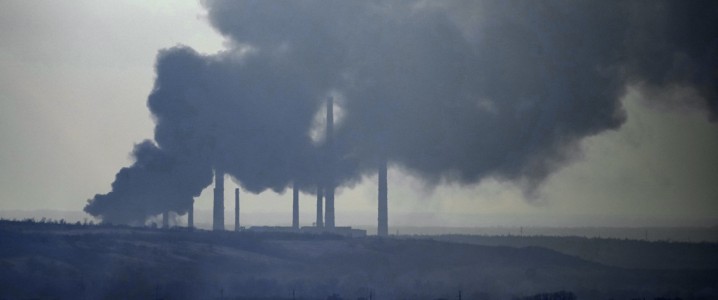
The geopolitical landscape of global energy has once again shifted, with recent, concentrated attacks on Russian oil and gas infrastructure signaling a potent escalation in efforts to disrupt Moscow’s energy complex. In a tightly choreographed series of events, key pipelines and refineries have sustained significant damage, raising critical questions for investors regarding future supply stability, price volatility, and the strategic decisions facing major oil producers. This is not merely a tactical disruption; it represents a strategic pivot aimed at crippling Russia’s ability to fuel its military and generate vital export revenues, with profound implications for global energy markets.
Russia’s Energy Arteries Under Direct Assault
The past week has seen an unprecedented intensity in strikes targeting Russia’s energy backbone. Most notably, the Kuibyshev-Lysychansk oil pipeline in Saratov Oblast, with an annual capacity to move 82 million tons of crude, was reportedly crippled on September 8th. This single line was a direct supplier of petroleum products to Russian military units, making its disablement a significant tactical blow. Hours earlier, at least four explosions rocked Penza Oblast, taking offline two main gas pipeline tubes with a combined capacity of 2 million barrels per day, along with two regional lines, all reportedly linked to military operations. These incidents underscore a strategic escalation, moving beyond isolated strikes to a more coordinated effort to systematically degrade Russia’s ability to transport and process hydrocarbons.
Beyond pipelines, Russia’s refining capacity has also been severely impacted. Rosneft’s Ryazan refinery, a behemoth capable of processing 260,000 barrels per day (representing approximately 5% of Russia’s national throughput), suffered another direct hit. Earlier strikes had already damaged Rosneft’s Saratov plant (140,000 bpd) and Lukoil’s Volgograd refinery, a crucial fuel supplier for southern Russia. The Ust-Luga port complex on the Baltic Sea, a vital export hub, also sustained heavy damage to one of its units, with repairs projected to take six months. With at least half a dozen major refineries disrupted in recent weeks, Russia faces an acute dilemma: prioritize domestic fuel supply amidst tightening markets, or boost crude exports to maintain revenue streams at a time when fresh coordinated sanctions from the EU and U.S. are on the table.
Market Reaction and the Price Floor
The immediate market response to these escalating attacks has been complex, reflecting a confluence of factors beyond just the direct supply disruption. As of today, Brent crude trades at $98.44, registering a modest daily dip of 0.96% within a range of $97.92 to $98.67. Similarly, WTI crude is at $90.07, down 1.21%. However, focusing solely on today’s intraday movements would be misleading. This short-term fluctuation must be viewed against the backdrop of a significant broader market correction; Brent prices have retreated sharply from $112.57 on March 27th to $98.57 on April 16th, representing a substantial 12.4% decline over the past two weeks.
These recent, high-impact attacks on Russian energy infrastructure introduce a critical new layer of supply-side risk that could challenge this prevailing bearish sentiment. While the market had been correcting downwards due to various macroeconomic concerns, the tangible reduction in Russia’s ability to process and transport oil and gas could establish a crucial floor for prices. Investors should recognize that the domestic fuel market in Russia was already facing tightness; these cumulative disruptions exacerbate that internal pressure, potentially limiting Russia’s crude export capacity or forcing difficult strategic choices that ripple through global supply chains.
Navigating Uncertainty: OPEC+, Inventories, and Investor Questions
The increased volatility stemming from the Russian infrastructure attacks directly impacts ongoing strategic discussions among major producers. Many of our readers are keenly asking about current OPEC+ production quotas and the models driving market sentiment. This heightened geopolitical risk injects a critical new variable into the equation for the upcoming OPEC+ Joint Ministerial Monitoring Committee (JMMC) meeting on April 18th, followed by the Full Ministerial meeting on April 20th. Will OPEC+ view these persistent Russian supply disruptions as a temporary hiccup, or as a more enduring tightening of global supply that warrants a reassessment of current output levels?
Further clarity will emerge from upcoming inventory data. Investors should closely monitor the API Weekly Crude Inventory report on April 21st and the EIA Weekly Petroleum Status Report on April 22nd, followed by their respective releases on April 28th and 29th. These reports will provide crucial insights into whether the reductions in Russian processing and transport capacity are translating into tangible inventory draws in key consuming regions, thereby offering a more concrete measure of the global supply impact. The market’s interpretation of these data points, combined with OPEC+’s stance, will largely dictate price direction in the near term.
The Long Game: Strategic Shifts and Geopolitical Premiums
The strategic implications of these attacks extend beyond immediate supply disruptions. By targeting refining capacity, Ukraine is effectively forcing Russia to alter its export mix, potentially pushing more crude onto the international market instead of refined products. This dynamic occurs precisely as the EU and U.S. are considering fresh, coordinated sanctions aimed at further choking Moscow’s oil revenues. This creates a fascinating and complex interplay: reduced domestic refining capacity might increase crude export volumes, but the overall revenue stream could be pressured by lower prices or tighter sanctions. The six-month repair estimate for the Ust-Luga port complex further reinforces the long-term nature of these disruptions.
For investors, this situation necessitates a renewed focus on geopolitical risk premiums in oil prices. The recurring nature and increasing sophistication of these attacks suggest that Russia’s energy infrastructure will remain a primary target, ensuring a persistent level of uncertainty in global supply. Companies with exposure to Russian energy, or those heavily reliant on stable global supply, must re-evaluate their risk profiles. While the market has recently been more concerned with demand-side pressures, the significant and sustained attacks on Russian energy assets serve as a potent reminder that supply-side shocks, driven by geopolitical conflict, remain a dominant force in shaping global oil and gas markets.


