

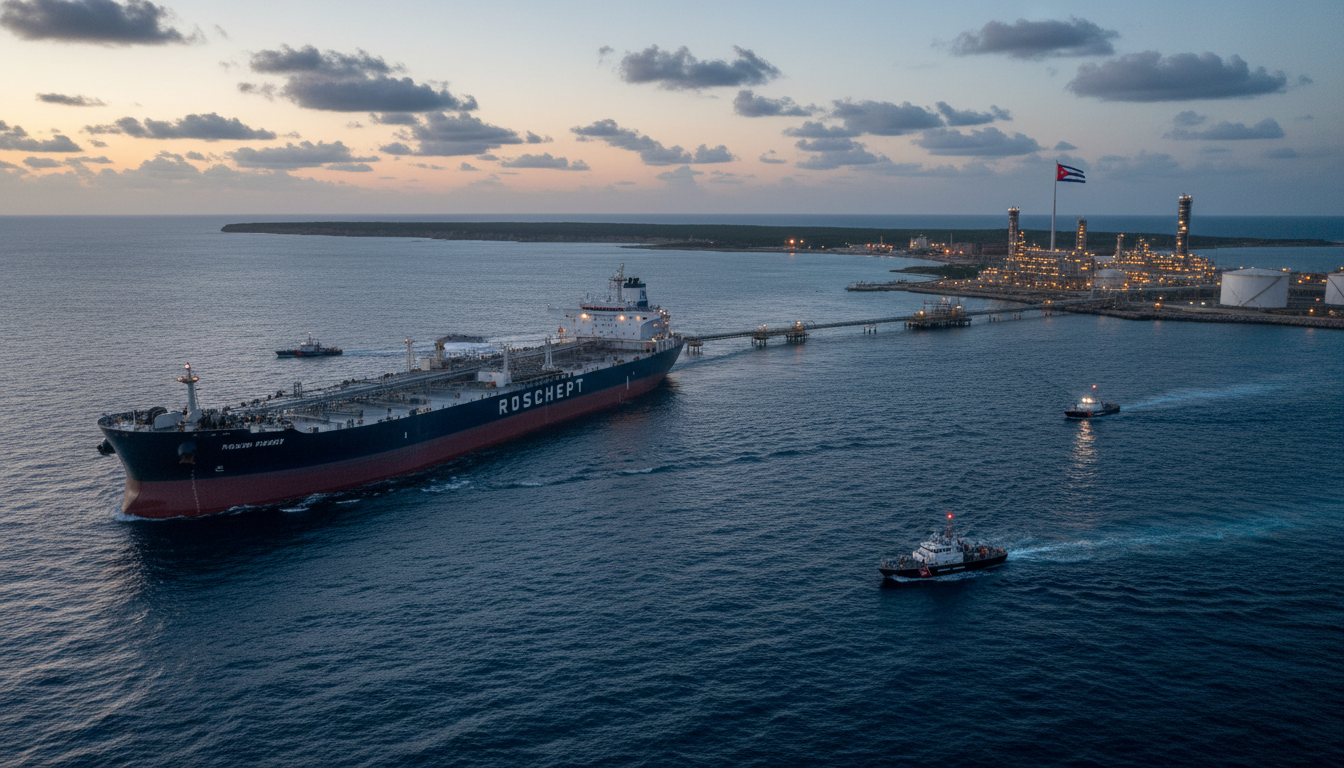
A significant development is unfolding in the complex world of global energy geopolitics, with a Russian fuel tanker reportedly poised to reach Cuba. This move is currently challenging existing United States policy, as Washington is reportedly weighing the option of momentarily suspending its restrictions to facilitate the vessel’s passage. For energy investors, this situation presents a fascinating study in the interplay of national security, foreign policy, and the global crude oil and refined products markets.
The tanker, identified as the Anatoly Kolodkin, has already reportedly entered Cuba’s exclusive economic zone, signaling an imminent arrival. This event directly confronts the robust sanctions framework the U.S. has imposed on the island nation. Earlier in the month, U.S. authorities had explicitly declared Russian tankers “banned” from delivering oil to Cuba. This aggressive stance is a cornerstone of the U.S. administration’s strategy, which aims to exert pressure on the Cuban government by severely constricting its access to vital energy resources, ultimately seeking a fundamental shift in the island’s political landscape.
Washington’s Evolving Stance and the Anatomy of Sanctions
The U.S. administration’s approach escalated significantly in late January, when an executive order was signed declaring a national emergency. This order not only established but also operationalized a process for imposing tariffs on goods originating from any country that provides oil or energy supplies to Cuba. The stated rationale behind this extraordinary measure was the protection of U.S. national security and foreign policy interests, citing the Cuban regime’s “malign actions and policies.” This declaration underpinned the comprehensive energy blockade, dramatically altering Cuba’s access to international energy markets and creating a profound impact on its domestic stability.
The immediate and tangible consequence of this stringent U.S. policy was a severe and widespread shortage of fuel across Cuba. Historically, Venezuela stood as Cuba’s primary oil supplier, a relationship that has been effectively severed due to the U.S. assumption of control over Venezuela’s oil industry. Furthermore, while Mexico had initially expressed intentions to continue supplying fuel to Cuba, these declarations were ultimately not followed by concrete actions. Mexican suppliers, cautious and pragmatic, demonstrated a clear reluctance to risk incurring the heavy U.S. tariff penalties, illustrating the far-reaching deterrent effect of Washington’s economic leverage. This left Cuba in an increasingly precarious energy position, scrambling for alternative sources of supply amid a tightening global landscape.
Russia’s Strategic Intervention: Geopolitical Gambit or Humanitarian Aid?
Amidst Cuba’s growing energy desperation and the potent U.S. sanctions regime, Russia emerged as a critical, albeit controversial, player. Moscow signaled its unambiguous intent to dispatch fuel shipments to Cuba, directly challenging both the existing blockade and the explicit threat of U.S. tariffs. The Russian embassy in Cuba characterized these forthcoming fuel deliveries as “humanitarian aid,” a designation that carries significant geopolitical weight and complicates the narrative surrounding international sanctions. This framing allows Russia to portray its actions as altruistic, even as it actively undermines U.S. foreign policy objectives in the region, providing a crucial lifeline to an isolated state.
The initial Russian vessel, reportedly carrying 730,000 barrels of crude oil, is anticipated to reach Cuba this week. This substantial cargo is critical for the island’s immediate energy needs. Intriguingly, reports indicate that Cuban government officials have been engaged in direct dialogue with U.S. counterparts in recent days, reportedly making certain concessions. One notable concession included facilitating a fuel delivery specifically for the U.S. embassy on the island, a move that suggests a complex, multifaceted negotiation behind the scenes. Furthermore, a second tanker, loaded with diesel fuel, is also reportedly en route, though marine traffic data places it anchored off the Venezuelan coast, adding another layer of complexity to its expected arrival timeline and the broader logistical challenge.
Investment Implications: Supply Lifeline and Market Dynamics
From an investor’s perspective, this Russian intervention carries significant implications for understanding energy market stability and geopolitical risk. The first tanker’s crude oil cargo, amounting to 730,000 barrels, represents a critical supply infusion for Cuba. Given the island’s average daily demand rate of approximately 100,000 barrels for its power plants, this initial shipment could alleviate the severe electricity shortages for roughly a week. Should the Cuban authorities implement strict rationing protocols, this considerable volume of crude could potentially sustain the nation’s energy requirements for up to a full month, providing a temporary but vital reprieve from the ongoing crisis. This capacity to sustain operations, even temporarily, can influence the short-term stability of the Cuban economy and, by extension, the geopolitical leverage of the various actors involved.
For investors monitoring the global oil and gas sector, this unfolding scenario highlights several key considerations. Firstly, it underscores the increasing challenges to the efficacy of unilateral sanctions in a multipolar world. The willingness of nations like Russia to circumvent or directly confront such measures can introduce volatility into regional energy flows and pricing. Secondly, it sheds light on the strategic importance of refined products like diesel, critical for industrial operations and transportation. Any sustained disruption or alternative sourcing strategies for these products in affected regions can create ripple effects across the broader energy supply chain. Finally, the potential for U.S. concessions, even minor ones like permitting embassy fuel, suggests a dynamic and evolving geopolitical landscape where dialogue, even under duress, remains a possibility, albeit one fraught with uncertainty.
Navigating Geopolitical Energy Risk: An Investor’s Outlook
The arrival of Russian oil in Cuba, under the watchful eye of a potentially flexible U.S. blockade, serves as a stark reminder of the inherent geopolitical risks embedded in the global energy market. For oil and gas investors, understanding these intricate dynamics is paramount. The interplay between economic sanctions, humanitarian aid rhetoric, and national security declarations creates a volatile environment that can impact crude oil futures, refined product margins, and the operational stability of energy assets. Companies with exposure to international shipping, particularly tanker operations, or those with significant investments in regions susceptible to geopolitical tensions, must continuously reassess their risk profiles.
Looking ahead, the success or failure of this Russian energy lifeline will undoubtedly influence future U.S. foreign policy decisions regarding Cuba and potentially other sanctioned nations. Will Washington’s consideration of a temporary waiver set a precedent, or is it an isolated incident driven by specific diplomatic engagements? The answers will shape investor confidence in the long-term effectiveness of sanctions as a foreign policy tool and, crucially, in the stability of energy supply lines globally. This situation provides a compelling case study for investors keen on understanding how geopolitical maneuvering directly translates into tangible risks and opportunities within the expansive and interconnected world of oil and gas.
