

Russian Oil Exports Face Critical Disruption Amid Escalating Attacks
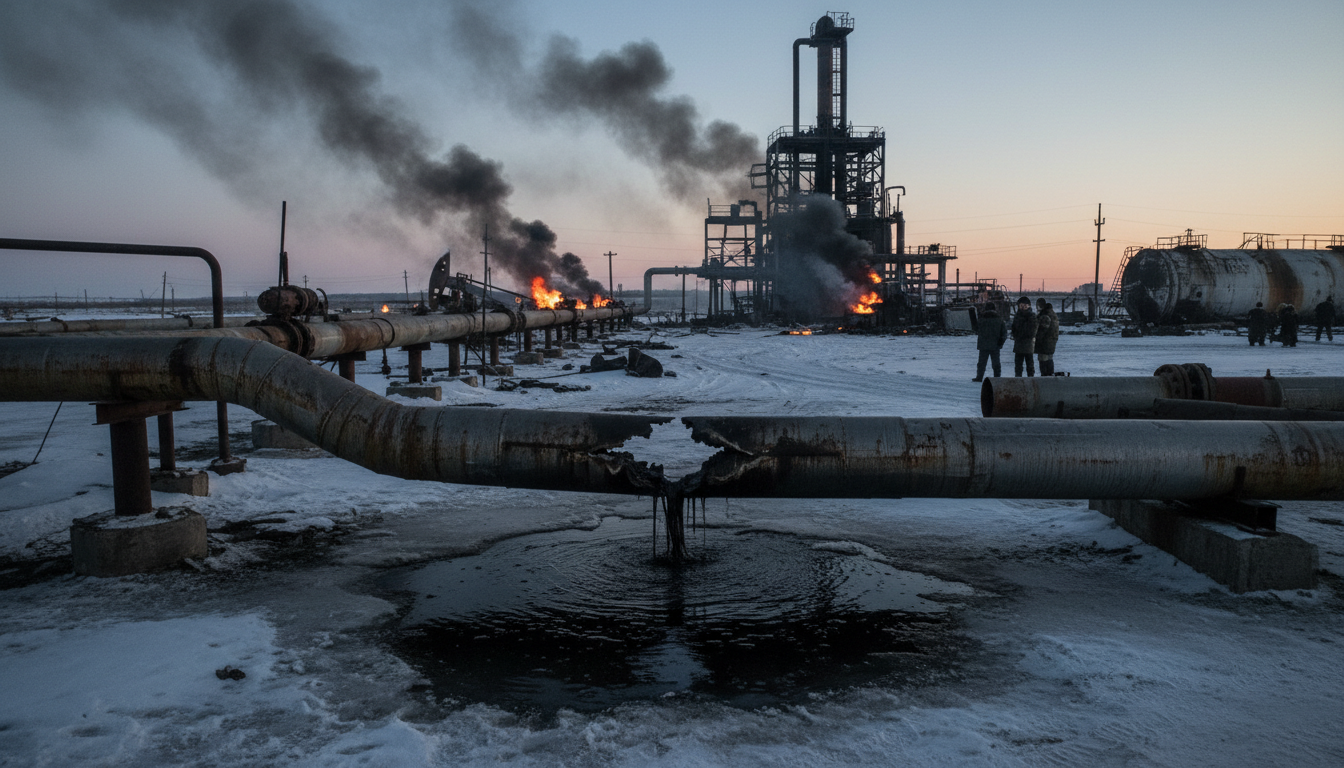
Investors are closely monitoring a significant escalation in geopolitical tensions impacting global energy markets, as recent strikes against Russia’s vital Baltic Sea export infrastructure force immediate and complex rerouting of crude and refined product flows. These attacks, particularly targeting the strategic ports of Primorsk and Ust-Luga, represent a substantial blow to Russia’s ability to move its oil to market, contributing to an already volatile global energy landscape.
The operational challenges are immense. Pipeline operator Transneft has reportedly initiated efforts to redirect crude volumes away from the affected Baltic terminals. This comes at a time when maritime risks are simultaneously intensifying across other critical shipping lanes, amplifying the urgency and difficulty of securing alternative routes for Russian energy exports.
The Baltic Bottleneck: Key Export Hubs Under Pressure
The impact on Russia’s export capacity is severe. According to analyses, nearly 40% of Russia’s total oil export capacity could be compromised, a figure that accounts for port outages, pipeline issues, and broader tanker-related disruptions. This figure underscores the immediate logistical crisis facing Russia’s energy sector and, by extension, global oil markets.
Primorsk alone stands as a colossal gateway, routinely handling over 1 million barrels per day (bpd) of Urals crude. Its disruption creates an immediate supply bottleneck for this key benchmark. Similarly, the port of Ust-Luga, a critical hub for refined products, processed nearly 33 million tons of oil products last year. The temporary incapacitation of both these facilities presents a formidable challenge that cannot be swiftly overcome, demanding complex logistical maneuvers under extreme pressure.
Nikolai Tokarev, CEO of Transneft, has openly acknowledged the profound difficulty in rerouting such massive volumes on short notice. The sheer scale of the displaced crude and product flows means that quick, seamless adjustments are simply not feasible, pointing to prolonged periods of potential disruption for Russian energy exports.
Navigating Limited Alternatives and Escalating Risks
While Russia possesses alternative export pathways, their capacity and safety are far from ideal. Options include shifting volumes toward Black Sea ports or utilizing inland pipeline routes. However, these alternatives come with significant limitations. The existing infrastructure capacity on these routes is finite, meaning it cannot fully absorb the displaced volumes from the Baltic without creating new chokepoints. Moreover, the Black Sea itself has become an increasingly perilous transit zone, with tanker attacks escalating notably in recent weeks, adding another layer of risk and cost to shipping operations.
This situation forces Russia to contend with a multifaceted set of constraints. They face diminished port capacity in the vital Baltic region, heightened operational risks for tankers traversing the Black Sea, and persistent complications arising from international sanctions and limited access to global shipping and insurance markets. Even if Russia can maintain its production levels, the process of transporting crude from the wellhead to international buyers is becoming exponentially more complicated, expensive, and uncertain.
For investors, this translates into higher operational costs for Russian energy producers and increased delivery risks, which will inevitably be priced into global oil benchmarks. The logistical entanglement adds a premium to crude, reflecting the difficulty and danger of moving it through conflict zones and sanctioned environments.
Global Supply Shocks and Surging Crude Prices
The disruption to Russian oil exports injects a fresh element of instability into an already precariously balanced global energy market. This development follows, and compounds, ongoing geopolitical tensions in the Middle East, including the de facto closure of the Strait of Hormuz to some traffic and subsequent oil and liquefied natural gas (LNG) production outages in various regions. The cumulative effect of these isolated but interconnected events is a significant tightening of global supply, putting intense upward pressure on crude prices.
Market reactions have been immediate and pronounced. On Thursday morning, Brent crude, the international benchmark, was actively trading above the $106 per barrel mark. This surge reflects growing investor concern over the resilience of global supply chains and the potential for prolonged shortfalls in availability. The confluence of attacks on Russian infrastructure, along with broader geopolitical flashpoints, creates a potent cocktail for energy market volatility.
Investor Outlook: Volatility Endures for Oil Markets
For energy investors, the current landscape underscores the critical importance of monitoring geopolitical developments and their direct impact on physical supply. The vulnerability of key energy infrastructure, coupled with persistent maritime risks and existing sanctions regimes, suggests that price volatility will remain a defining characteristic of oil markets in the near term. Companies with resilient supply chains, diversified export options, or exposure to alternative energy sources may offer a degree of insulation in this turbulent environment.
The situation highlights that disruptions in any major producing or exporting region can send significant ripples through the global energy complex, elevating commodity prices and influencing broader economic stability. Investors should brace for continued uncertainty, as the ability of Russia to effectively reroute and secure its energy exports will be a pivotal factor in the trajectory of oil prices and global energy security in the coming months.
