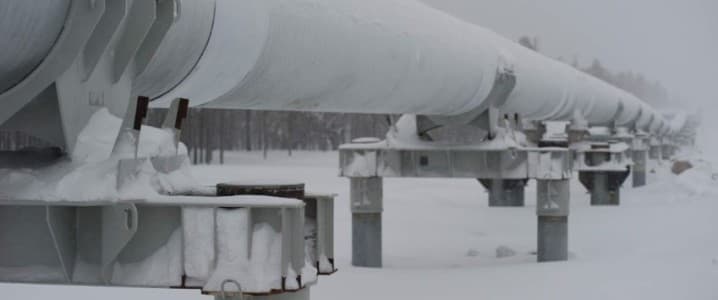
The global oil market is once again grappling with heightened supply uncertainty stemming from Russia, as a significant disruption at a critical pipeline hub threatens to tighten crude flows to Europe and export terminals. Reports indicate that Russia’s pipeline operator, Transneft, has reduced crude intake into its vast system by approximately 250,000 barrels per day following damage at the Kaleykino pumping station in Tatarstan. This station is not merely a waypoint; it’s a pivotal blending and dispatch hub capable of handling roughly 1 million bpd, feeding crude into the vital Druzhba pipeline network and onward to key export ports like Primorsk on the Baltic Sea and Novorossiisk on the Black Sea. The immediate market reaction has been swift, with crude benchmarks surging on the news, reflecting investors’ acute sensitivity to supply shocks. This latest incident, compounding existing logistical challenges and recent sanctions, underscores a persistent geopolitical risk premium now firmly embedded in the price of Russian crude and global energy markets.
Immediate Market Reaction and Underlying Supply Vulnerabilities
The news of the Kaleykino disruption quickly reverberated through the trading floors, sparking a notable rally in crude oil prices. As of today, Brent Crude trades at $93.86, marking a robust 3.79% increase within the day’s range of $89.11-$95.53. Similarly, WTI Crude has climbed to $90.22, up 3.2% from its daily low of $85.50. This immediate upward movement stands in stark contrast to the broader trend observed over the past fortnight, where Brent had seen a significant decline, shedding $23.49, or nearly 20%, from $118.35 on March 31st to $94.86 on April 20th. Today’s surge indicates that while market sentiment may have been bearish recently, any concrete threat to supply quickly reasserts bullish pressure. The 250,000 bpd intake cut, while not directly translating to an equal export loss, signals a system running below capacity. Kaleykino is instrumental in blending various crude streams into the Urals export grade, meaning any slowdown here affects not just volume but also the quality and availability of a specific, widely traded crude type. This incident adds to ongoing issues, including the suspension of southern Druzhba flows to Hungary and Slovakia since late January due to earlier infrastructure damage and unresolved disputes, further limiting the options for redirecting Russian barrels.
Addressing Investor Concerns in a Volatile Landscape
In a market characterized by such rapid shifts, investors are naturally seeking clarity on price direction and long-term forecasts. Our proprietary intent data reveals key questions from OilMarketCap readers this week, such as “is WTI going up or down?” and “what do you predict the price of oil per barrel will be by end of 2026?” These questions highlight the prevailing uncertainty. The short-term answer, as demonstrated by today’s price action, is that WTI, alongside Brent, is currently trending up, driven by renewed supply fears. However, predicting the end-of-year price requires a deeper analysis. The Russian pipeline damage, coupled with existing geopolitical tensions and sanctions – including the UK’s recent move against Transneft, which handles over 80% of Russia’s oil exports – creates a persistent “Russian crude premium.” This premium reflects the elevated risk associated with sourcing oil from the region, making non-Russian barrels relatively more attractive and often commanding higher prices. For investors, this means volatility is likely to remain a constant. The challenge lies in distinguishing between transient supply hiccups and fundamental shifts in the global supply-demand balance, positioning portfolios to capitalize on both short-term movements and long-term trends influenced by energy security concerns and the ongoing energy transition.
Forward-Looking Analysis: Upcoming Events and Geopolitical Crossroads
The ripple effects of the Kaleykino disruption extend beyond immediate price swings, influencing the narrative ahead of several crucial energy events in the coming weeks. Today, April 21st, marks the OPEC+ Joint Ministerial Monitoring Committee (JMMC) Meeting. While the group’s official stance typically focuses on market stability, a significant Russian supply disruption will undoubtedly be a silent, yet powerful, consideration for member states. Will this incident subtly reinforce arguments for maintaining current production quotas, or even hint at potential adjustments if global supply tightens further? The subsequent EIA Weekly Petroleum Status Reports on April 22nd and April 29th, alongside API Weekly Crude Inventory reports on April 28th and May 5th, will be critical barometers. Investors will scrutinize these reports for any signs of increased inventory drawdowns, particularly in Europe, as refiners potentially seek alternative crude sources or draw on existing stocks to compensate for reduced Russian pipeline flows. Furthermore, the EIA Short-Term Energy Outlook on May 2nd will offer an updated perspective on global supply and demand dynamics, potentially incorporating the implications of such infrastructure vulnerabilities. Monitoring the Baker Hughes Rig Count on April 24th and May 1st will provide insight into North American production trends, a crucial counter-balance to international supply shocks. The convergence of these scheduled data releases with ongoing geopolitical instability in a major producing region creates a fertile ground for continued market speculation and strategic adjustments for energy investors.
Investment Strategy Amidst Enduring Supply Risks
For discerning energy investors, the recent events underscore the imperative of a robust and adaptive investment strategy. The repeated disruptions to Russian pipeline infrastructure, whether due to damage or geopolitical maneuvering, highlight the persistent vulnerability of global supply chains. Companies with diversified asset portfolios, particularly those with exposure to less geopolitically fraught regions or strong refining capabilities that can handle a variety of crude grades, may prove more resilient. Investors should closely monitor the operational status of key infrastructure assets, not just in Russia but globally, as the stability of energy logistics becomes an increasingly important factor in valuation. Furthermore, the ongoing “Russian crude premium” suggests that securing reliable, non-sanctioned supply will continue to be a priority for refiners, potentially benefiting producers in alternative regions. This environment also places a spotlight on companies involved in energy infrastructure resilience, storage solutions, and those with strong trading arms capable of navigating complex supply routes. While the short-term market reacts to headlines, the long-term investment thesis in oil and gas must now inherently account for a higher degree of geopolitical and operational risk, rewarding those who prioritize supply security and optionality in their strategic decisions.


