Russia-Ukraine Energy War Fuels Price Volatility
The ongoing conflict between Russia and Ukraine has irrevocably redefined the landscape of geopolitical risk in energy markets. Far from a conventional struggle for territorial control or resource acquisition, this confrontation manifests as an unprecedented energy war, where critical infrastructure, rather than oil fields or gas reserves, serves as the primary battleground. Investors navigating the global oil and gas sector must keenly observe this evolving dynamic, as it sets a chilling precedent for future conflicts and exacerbates market volatility.
This strategic focus on energy infrastructure underscores a fundamental shift in modern warfare. Instead of vying for control over hydrocarbon deposits, both belligerents actively target power plants, high-voltage transmission lines, oil refineries, and fuel storage facilities. The deliberate disruption of energy networks represents a potent form of economic and logistical warfare, directly impacting civilian populations, industrial capacity, and military operations alike. For energy investors, this reality translates into elevated risks for physical assets and supply chain integrity across vulnerable regions.
Strategic Targeting of Energy Assets
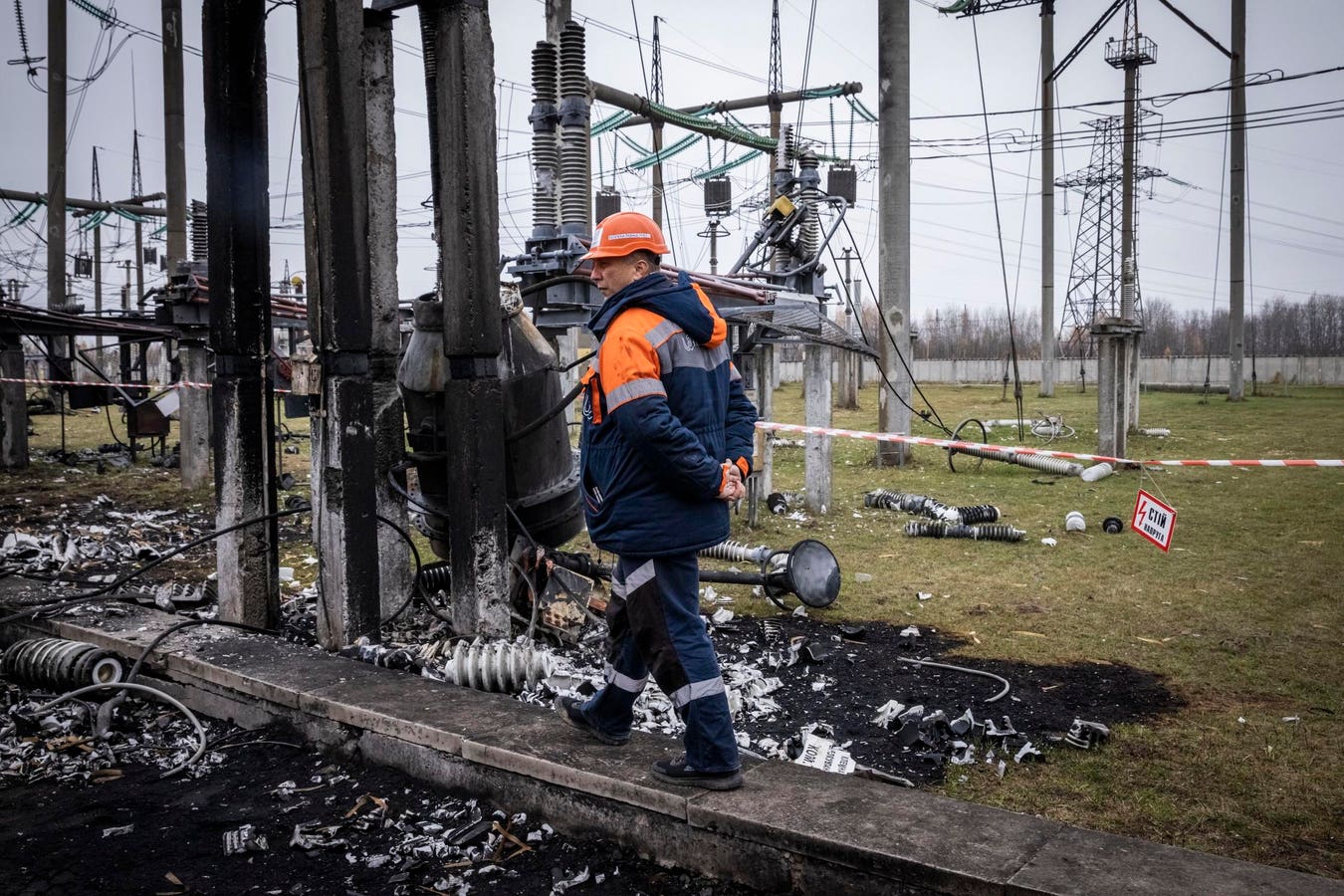
Russia’s campaign against Ukraine’s energy grid commenced following its initial failure to seize Kyiv and topple the Ukrainian government. Moscow’s strategy pivoted to a multi-pronged assault, encompassing military sites, civilian centers, and, crucially, the electrical infrastructure. This systematic targeting aimed to degrade Ukraine’s ability to sustain its population and military through the cold months. A stark illustration of this strategy emerged on November 10, 2022, when a worker surveyed the damage at a high-voltage substation switchyard in central Ukraine, partially destroyed by a missile strike that occurred on October 10. Such attacks caused widespread electricity and heating outages, intensifying the urgency of winter preparations and highlighting the vulnerability of critical utilities.
Ukraine’s response, though initially constrained, has evolved into a formidable counter-offensive against Russian energy assets. Kyiv’s targeting of sites within Russia began in 2024, following securing permission from Western allies to deploy long-range weaponry across the border. This strategic shift saw Ukrainian forces increasingly strike Russian oil refineries and fuel storage depots. These actions quickly demonstrated their effectiveness, severely damaging significant refining capacity far from the front lines, including facilities like the Ryazan refinery near Moscow and the Volgograd refinery situated near the northern Caspian Sea. Reports indicate that at least 15 other Russian refineries have sustained one or more strikes, significantly disrupting their operations and output.
By 2025, Ukraine advanced its capabilities further, developing proprietary drone technology, encompassing both hardware and software. This innovation granted Kyiv operational autonomy, circumventing the previous need for external permissions for cross-border operations. A notable demonstration of this enhanced capability occurred on June 1 with an attack codenamed “Spider’s Web,” which involved dispatching dozens of drones to each designated target site. This sophisticated, multi-drone assault signaled a profound escalation, projecting Ukraine’s ability to reach virtually any target within Russia. A similar, concentrated attack on multiple refineries simultaneously could inflict catastrophic damage on Russia’s refining capacity and its war economy.
Investment Implications and Market Volatility
The rationale behind Ukraine’s targeting strategy for Russian energy sites differs from Moscow’s but shares an overlapping objective of economic debilitation. Ukraine specifically focuses on refineries and storage facilities because these are the nexus for producing and stockpiling high-value refined fuels such as gasoline, jet fuel, and diesel. These products command significantly higher prices per unit volume than crude oil, rendering them a crucial revenue stream for Russia’s war effort. Moreover, the inherent flammability of these facilities makes them militarily vulnerable, amplifying the potential for destructive impact from successful strikes.
Comprehensive data collected over the past two years, as revealed by a joint investigation conducted by Radio Free Europe/Radio Liberty and Frontelligence Insight, confirms an increasing concentration of Ukrainian strikes on these critical refining and storage assets. This trend underscores a deliberate and escalating strategy aimed at undermining Russia’s ability to finance and fuel its military operations, directly impacting global energy market dynamics.
For investors, these developments carry profound implications. The systematic degradation of refining capacity in a major crude oil producer like Russia creates significant uncertainty in global refined product markets, potentially leading to price spikes and supply chain disruptions. This geopolitical risk premium factors heavily into commodity prices, influencing refining margins and the profitability of downstream operations worldwide. Energy companies with exposure to Russian assets or those reliant on stable global fuel supplies face heightened operational and financial risks. Furthermore, the precedent of energy infrastructure as a primary target elevates the risk profile for similar assets globally, demanding increased scrutiny of energy security and resilience in investment portfolios. Navigating this volatile environment requires a sophisticated understanding of geopolitical currents and their direct impact on the physical and financial aspects of the global oil and gas industry.