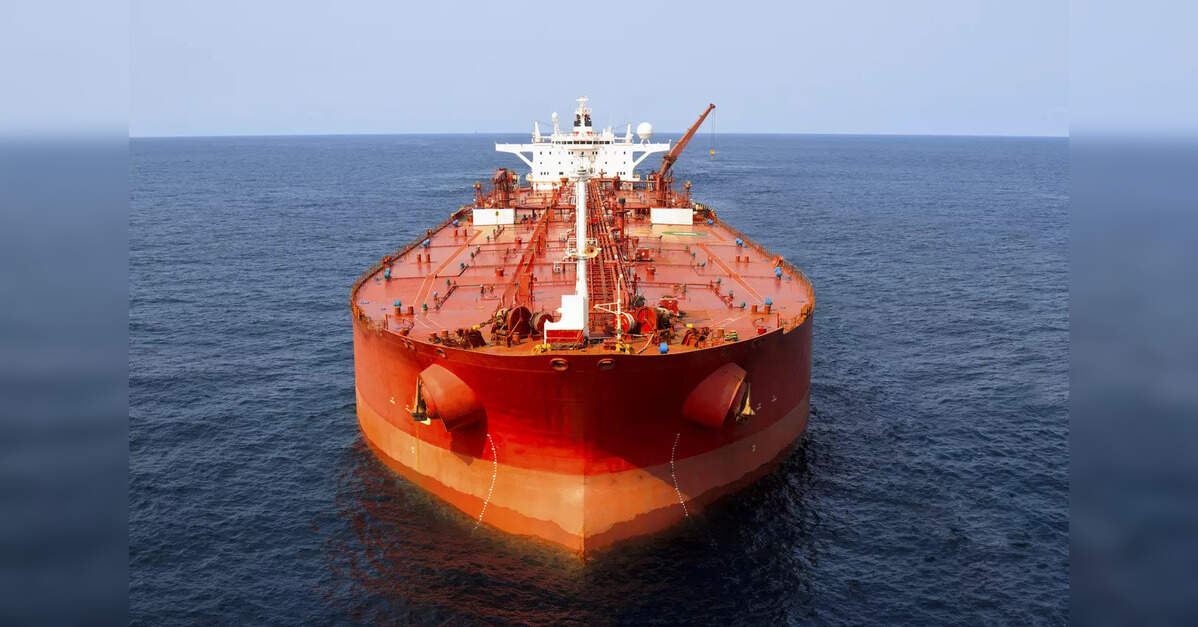
The recent renaming and Russian flag registration of the oil tanker previously known as the Bella 1, now the Marinera, marks a significant escalation in the ongoing global struggle against sanctions evasion in the energy sector. This development, occurring as the vessel actively evades U.S. Coast Guard forces in the Atlantic, is far more than a simple administrative change. It represents a potent signal of evolving geopolitical strategies aimed at circumventing international sanctions and highlights the increasing complexity and risk associated with global oil trade. For investors, this incident underscores critical vulnerabilities in supply chains, amplifies market volatility, and necessitates a deeper understanding of the “dark fleet” phenomenon.
The Marinera Saga: Russia’s Direct Hand in Sanctions Evasion
The saga of the Marinera, initially identified as the Bella 1, provides a stark illustration of the lengths to which state-backed entities are willing to go to facilitate illicit oil trade. After being approached by the U.S. Coast Guard in the Caribbean in late December, deemed a stateless vessel, and refusing a lawful boarding, the tanker has now been formally added to the Russian Maritime Register of Shipping, flying the Russian flag with Sochi as its home port. This move, facilitated by a state-controlled enterprise acting as an arm of the Kremlin’s maritime authority, is a direct challenge to U.S. enforcement efforts targeting Venezuelan oil exports.
The expert commentary suggesting that Russia is increasingly operating as a “sanctuary of last resort” for vessels involved in sanctioned oil movements from countries like Venezuela and Iran bears particular weight here. The Bella 1 had a history of flag hopping, previously registered in Panama, Palau, Liberia, and the Marshall Islands. However, Russia’s direct intervention in providing “overnight flag registration” elevates this from a private owner’s evasion tactic to a state-level endorsement of sanctions circumvention. This not only complicates U.S. efforts to interdict the vessel under international law but also introduces unprecedented legal and geopolitical ambiguities, pushing us into “unproven territory” for maritime sanctions enforcement.
Geopolitical Risks Fueling Crude Market Volatility
The ongoing cat-and-mouse game involving the Marinera is not an isolated incident; it’s a symptom of deeper geopolitical tensions directly impacting global energy markets. Such events contribute significantly to the price volatility that investors are currently navigating. As of today, Brent crude trades at $90.38, reflecting a slight dip of 0.06% in intraday trading, while WTI crude is at $86.68, down 0.85%. This slight pullback follows a period of notable volatility; our proprietary data indicates that Brent crude has declined by nearly 20% over the past 14 days, specifically from $118.35 on March 31st to $94.86 on April 20th, before today’s further adjustment.
This decline, while influenced by broader demand concerns and supply expectations, is inherently vulnerable to geopolitical shocks. The uncertainty surrounding the “Marinera” and the broader “dark fleet” operations injects an unpredictable element into supply dynamics. When our proprietary reader intent data reveals a consistent focus on market direction, with investors frequently asking “is WTI going up or down?”, it underscores how these geopolitical maneuvers contribute to a fundamentally uncertain outlook. The tacit Russian support for this evasion tactic signals a willingness to challenge U.S. foreign policy directly, which could lead to further retaliatory measures or an expansion of the “dark fleet,” potentially altering global crude flows and, in turn, pricing mechanisms.
The Expanding Dark Fleet and Its Economic Impact
The concept of the “dark fleet” — vessels operating outside conventional regulatory and insurance frameworks to transport sanctioned oil — is not new, but Russia’s overt involvement in its expansion represents a concerning evolution. This fleet undermines the effectiveness of sanctions, distorts market transparency, and creates an uneven playing field for legitimate shipping companies adhering to compliance standards. The economic impact extends beyond just the sanctioned entities; it affects insurance premiums, raises the risk profile for maritime trade routes, and makes accurate supply forecasting more challenging.
The U.S. has intensified its efforts to disrupt Venezuela’s oil industry as part of its pressure campaign, having already seized two other tankers involved in Venezuelan oil trade in December. The Marinera would have been the third. This aggressive enforcement, juxtaposed with Russia’s defiant support, suggests a growing bifurcation in the global oil shipping landscape. Investors must consider how this growing segment of untraceable, uninsured, or under-insured vessels impacts the integrity of the global oil market. The potential for accidents, environmental disasters, or further geopolitical flashpoints involving these ships adds a layer of unquantifiable risk to the entire sector.
Navigating Investment Risks and Upcoming Market Signals
For oil and gas investors, the Marinera incident and the broader implications of the expanding dark fleet necessitate a proactive approach to risk assessment. Companies with exposure to international shipping, commodity trading, or operations in geopolitically sensitive regions must conduct rigorous due diligence to avoid inadvertently supporting sanctioned activities or facing secondary sanctions. Questions from our readers, such as “How well do you think Repsol will end in April 2026,” highlight the critical need for companies to demonstrate robust compliance frameworks and transparency in their supply chains.
Looking ahead, investors should closely monitor several upcoming energy events for signals on market direction and policy responses. The OPEC+ JMMC Meeting on April 21st (today) will be crucial for understanding any potential shifts in production strategy that could react to or exacerbate geopolitical tensions. Following this, the EIA Weekly Petroleum Status Reports on April 22nd and April 29th, alongside the Baker Hughes Rig Count reports on April 24th and May 1st, will provide vital insights into U.S. supply and demand dynamics. The EIA Short-Term Energy Outlook on May 2nd will offer a more comprehensive forecast, potentially incorporating the long-term implications of these evolving geopolitical risks. The broader query our readers pose, “what do you predict the price of oil per barrel will be by end of 2026?”, underscores the long-term uncertainty stemming from these complex, intertwined factors of supply, demand, and geopolitical maneuvering. Staying informed on these developments is paramount for making strategic investment decisions in a market increasingly defined by political and logistical complexities.


