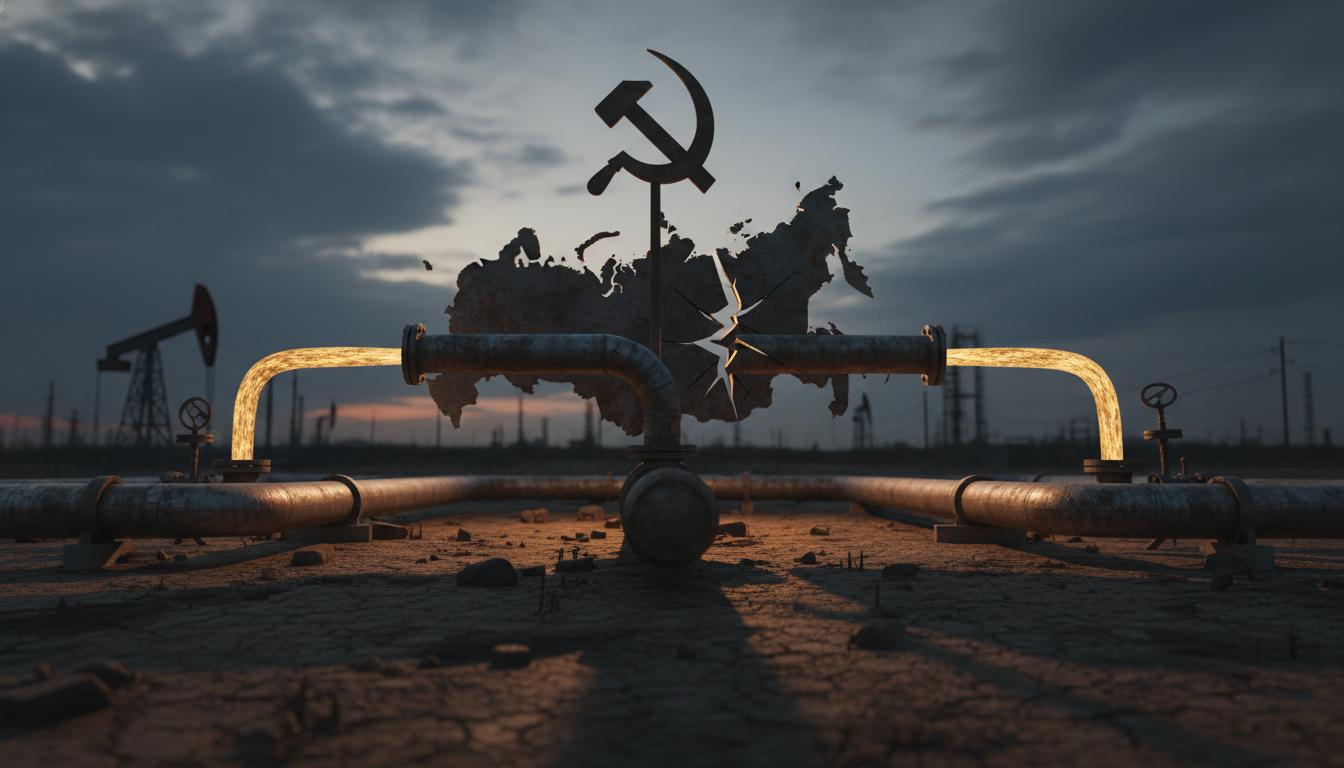
Druzhba’s Dual Currents: Russian Oil Flows and Geopolitical Tensions Reshape European Energy Map
The intricate web of European energy supply is once again at the forefront of global financial discourse, marked by contradictory developments along the crucial Druzhba pipeline. While Russian crude has reportedly recommenced its journey through the southern leg of the pipeline into the European Union, a starkly different narrative unfolds in the north. Russia has initiated a halt of Kazakh oil shipments via Druzhba’s northern route to Germany, effective May 1st, a move widely interpreted by regional experts as an act of geoeconomic retaliation, poised to significantly impact Berlin’s energy security.
The Southern Lifeline Reopens, Unblocking EU Aid
For months, the southern branch of the Druzhba pipeline, a vital artery feeding crude to Slovakia, Hungary, and the Czech Republic, remained offline. This stoppage, which began in January, was reportedly due to damage—with Ukraine attributing it to a Russian drone strike, while Russian and Hungarian officials pointed to Ukrainian sabotage. However, a significant shift occurred with reports confirming that oil flows resumed on April 22nd. This resumption is not merely an operational fix; it carries substantial geopolitical weight. It closely follows a political transition in Hungary, where the previous administration had been seen as an impediment to European assistance for Ukraine. The renewed flow through the southern Druzhba route now appears to clear the path for a much-anticipated 90-billion-euro aid package from the EU to Kyiv, underscoring how energy infrastructure remains deeply intertwined with broader geopolitical strategies and financial aid mechanisms.
Northern Blockade: Russia Halts Kazakh Oil to Germany
In stark contrast to the south, the northern branch of the Druzhba pipeline, which typically transports crude through Belarus to Poland and Germany, faces an abrupt cessation of Kazakh oil shipments. Officials from Kazakhstan have confirmed Russia’s claim of “a lack of technical capability” as the reason for this halt, particularly citing disruptions stemming from “recent attacks on Russian infrastructure.” As a result, May will see “zero transit” of Kazakh crude through the Russian city of Samara, a critical node in the Druzhba network, although Kazakh authorities suggest flows might resume in June if these “technical issues” can be resolved. This development has immediate and serious implications for Germany, as the cutoff directly threatens the operational continuity of a German refinery, a crucial supplier for the capital city of Berlin. Given Russia’s historical propensity to wield its control over energy conduits as an instrument of geopolitical pressure, market observers are quickly identifying this as a deliberate and hostile maneuver aimed squarely at Germany.
Kazakhstan’s Strategic Pivot Amidst Geopolitical Volatility
Despite the disruption to its Druzhba shipments, Kazakh officials have moved to allay concerns regarding their overall oil production targets for the year. Energy Minister Yerlan Akkenzhenov has publicly stated that this temporary halt will not compel Kazakhstan to reduce its total crude output. This resilience stems from Kazakhstan’s strategic reliance on other export routes. The overwhelming majority of Kazakh oil travels via the Caspian Pipeline Consortium (CPC) route. However, even this primary export channel has not been immune to regional instability, having itself been subjected to repeated Ukrainian drone attacks in recent months. The situation highlights Kazakhstan’s precarious position, navigating complex geopolitical currents while endeavoring to maintain stable energy exports to global markets, thereby underscoring the inherent risks in energy supply chains that traverse politically charged territories.
Assessing the Geopolitical Gambit and Market Implications
The dual developments on the Druzhba pipeline vividly illustrate the ongoing weaponization of energy infrastructure within the current geopolitical landscape. While the name ‘Druzhba’ translates to ‘friendship,’ the recent actions concerning Kazakh oil deliveries to Germany clearly signify anything but. Industry analysts, such as Benjamin Hilgenstock, have repeatedly emphasized that Russia retains the capacity to disrupt European energy security as long as the continent remains reliant on any imports originating from or passing through Russian territory. For investors in the oil and gas sector, this presents a persistent and elevated risk profile for European energy markets. The volatility introduced by these pipeline politics can lead to localized supply shocks, price discrepancies between regions, and heightened investment uncertainty in refining and distribution networks that have historically relied on stable Russian or transit-based crude flows.
Investment Outlook: Navigating Europe’s Fractured Energy Landscape
These latest turns of events underscore the critical need for robust energy diversification and resilience within Europe. For institutional investors and commodity traders, the continued weaponization of energy flows means incorporating a higher geopolitical risk premium into their assessments of European energy assets. While the resumption of southern Druzhba flows offers a momentary breath of relief for certain EU members and facilitates broader political cooperation, the northern blockade against Germany serves as a stark reminder of the enduring vulnerabilities. Companies with exposure to Central and Western European refining capacity, particularly those reliant on pipelines traversing Russia or Belarus, must continuously reassess their supply chain robustness. Furthermore, the emphasis on alternative routes, like the CPC, despite its own challenges, suggests potential opportunities for investment in non-Russian dominated infrastructure. The European energy landscape remains fractured and fraught with political machinations, demanding acute awareness and strategic agility from all market participants.