Russia’s Fiscal Tightrope: Energy Revenue Slump Widens Budget Chasm
Moscow’s federal coffers are under unprecedented strain, revealing a widening budget deficit driven primarily by a significant decline in oil and gas revenues coupled with persistently high military expenditures. This intensifying fiscal pressure represents a critical barometer for investors tracking global energy markets and assessing geopolitical stability.
April witnessed a substantial monthly shortfall of 1.05 trillion rubles, approximately $13 billion, marking a sharp reversal from the previous month’s surplus. This considerable deficit has dramatically inflated the cumulative budget gap for the first four months of the year, pushing it to 3.2 trillion rubles. This figure nearly triples the deficit recorded during the corresponding period in the prior year, underscoring a mounting financial challenge for the Kremlin amidst sustained high spending.
The Energy Sector’s Diminishing Contribution to State Finances
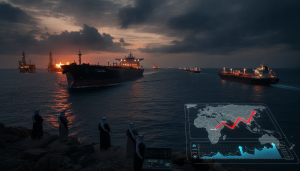
Oil and gas proceeds, historically the bedrock of Russia’s state finances, experienced a notable 12 percent year-over-year decline in April. This marks the third consecutive month of decreased energy income, a trend directly impacting the nation’s fiscal health. With energy sales traditionally contributing a substantial 30 percent to state income, the current downturn poses a significant threat to budget sustainability, particularly if crude prices remain subdued while military outlays for the conflict in Ukraine continue at record levels.
For the January to April period, aggregate oil and gas revenues collectively fell by 10 percent year-over-year, totaling 3.7 trillion rubles. Concurrently, government expenditures surged by an alarming 21 percent, reaching 15.5 trillion rubles over the same four months. This widening chasm between declining income and soaring expenses highlights the severity of the fiscal imbalance, presenting a daunting challenge for economic planners.
Non-Oil Revenues Offer a Partial, Yet Insufficient, Buffer
While the energy sector grapples with reduced income, non-oil revenue streams provided a partial offset, demonstrating a 23 percent year-on-year increase in April. Russia’s Finance Ministry expressed optimism that this category of income will “significantly” surpass its annual targets, with these positive adjustments already integrated into recent federal budget revisions. However, the ministry also issued a cautionary note regarding “substantial risks” to the more volatile oil and gas income. The revised fiscal blueprint now projects the overall budget deficit to triple compared to its initial forecast, primarily attributing this increase to the weaker outlook for energy export earnings. This acknowledgment by the finance ministry itself underscores the persistent vulnerability stemming from the energy sector.
Global Market Dynamics Exacerbate Fiscal Predicament
External market conditions are intensifying Russia’s fiscal predicament. Brent crude, a pivotal international benchmark, has traded near its lowest levels since early 2021 throughout May. Concerns over a potential global economic slowdown, partly fueled by international trade tensions, threaten to undermine energy demand and keep crude prices depressed. This challenging market environment, characterized by downward price pressure and demand uncertainty, is sparking considerable apprehension in Moscow. Investors monitoring the Russian energy complex should closely watch these global crude price movements, as they directly influence the state’s ability to fund its operations and strategic objectives.
The persistent decline in energy revenues, coupled with an escalating expenditure profile, paints a challenging picture for Russia’s financial stability. The nation’s reliance on oil and gas exports means that global crude market fluctuations directly translate into domestic fiscal pressures. This situation demands close attention from investors, as Russia’s financial health has far-reaching implications for energy supply dynamics, geopolitical stability, and commodity markets worldwide. The ability of non-oil revenues to truly cushion the budget, alongside the trajectory of global oil prices, will be key indicators of the Kremlin’s capacity to navigate these turbulent economic waters in the months ahead.