The global natural gas market is undergoing a significant structural realignment, with Russia’s energy sector at its epicenter. Despite a notable surge in exports to China and increasing domestic demand, Russia’s natural gas production experienced a 3.2% decline in the first half of 2025, settling at 334.8 billion cubic meters (bcm). This contraction underscores the profound impact of geopolitical shifts, particularly the cessation of Ukraine’s gas transit deal with Moscow in January. For investors navigating the complex energy landscape, this development signals a prolonged period of adjustment for Russia’s gas sector, with far-reaching implications for global supply dynamics and regional pricing.
The Permanent Shift in Russian Gas Export Infrastructure
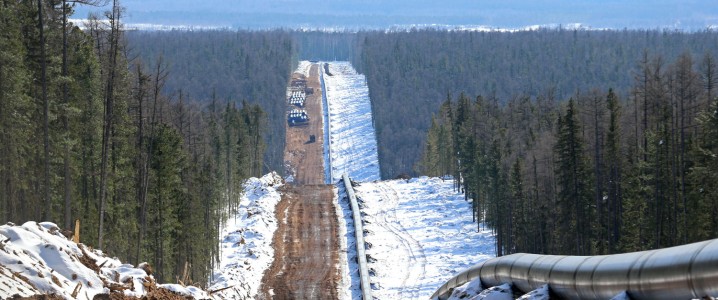
The 3.2% decline in Russia’s natural gas output in the first six months of 2025 is not merely a statistical blip; it represents a fundamental recalibration of the nation’s energy export strategy. The termination of the Ukrainian transit route, which accounted for over 15 bcm in 2024, effectively severed the last major pipeline corridor to the European Union. While gas shipments to Slovakia via TurkStream have seen an uptick, the pipeline’s capacity is simply insufficient to compensate for the lost volumes, cementing Europe’s pivot away from Russian pipeline gas. This infrastructure constraint leaves Russia reliant on a limited, east-facing pipeline network, primarily the Power of Siberia. While China has emerged as Russia’s premier gas customer, boosting intake by over 20% this year and occasionally exceeding contractual minimums, the Power of Siberia pipeline operates near its 38 bcm annual capacity limit. Without new infrastructure, significant additional volumes to China are not anticipated until a new Far East route potentially comes online in 2027. This timeline suggests that the current export bottleneck will persist for at least another two years, impacting Russia’s ability to monetize its vast gas reserves and reshape global LNG trade flows.
Domestic Demand and Mounting Financial Pressure
While export avenues shrink, Russia’s domestic natural gas consumption has paradoxically risen. A colder-than-average spring, coupled with ongoing government initiatives to expand household and industrial gas access, has driven this internal demand. Furthermore, Gazprom has actively pursued long-term agreements with Central Asian nations, though these new contracts offer only modest volume relief when weighed against the scale of the lost European market. The broader financial health of Russia’s energy sector remains under considerable pressure from Western sanctions. Ongoing discussions surrounding the Power of Siberia 2 pipeline, intended to significantly expand export capacity to China, remain stalled, highlighting the geopolitical and financial hurdles. The European Union’s implementation of a $47.60 per barrel price cap on Russian oil exports, enforced since July, further compounds these financial challenges. This cap restricts Moscow’s ability to maximize revenues from its oil sales, creating a cascading effect that limits investment and operational flexibility across its entire energy portfolio, including the struggling gas sector. Investors should recognize that these financial constraints will likely impede the swift development of new gas infrastructure or the exploration of alternative, capital-intensive export markets.
Navigating Market Volatility: Investor Concerns and Crude Benchmarks
Against this backdrop of structural shifts in natural gas, the broader energy market continues to exhibit volatility, a primary concern for our discerning readership. As of today, Brent crude trades at $94.88 per barrel, a slight dip from yesterday but reflecting a more significant downward trend from its recent highs. Just a few weeks ago, on March 26th, Brent was priced at $108.01, illustrating a sharp 12.4% decline to $94.58 by April 15th. WTI crude, a key North American benchmark, currently sits at $91.31, while U.S. gasoline prices hover around $2.99 per gallon. This dynamic environment, characterized by fluctuating crude prices and an evolving global gas supply picture, is clearly resonating with our investors. We are seeing a marked increase in inquiries regarding base-case Brent price forecasts for the next quarter, as well as requests for the consensus 2026 Brent outlook. Furthermore, the impact of Russia’s pipeline gas woes on the global LNG market is evident in investor interest surrounding Asian LNG spot prices. The interplay between crude oil benchmarks, refined product costs, and regional gas pricing will be crucial for portfolio managers to monitor, especially as the implications of Russia’s gas export challenges ripple through the global energy ecosystem.
Upcoming Catalysts and Strategic Outlook for the Energy Sector
The coming weeks are packed with critical events that will further shape the energy investment landscape, requiring close attention from market participants. The OPEC+ Joint Ministerial Monitoring Committee (JMMC) meeting on April 18th, swiftly followed by the Full Ministerial Meeting on April 20th, stands out as a pivotal moment. Any decisions regarding production quotas will directly influence global crude supply, impacting price stability and the revenue streams for major oil producers, including Russia. Beyond OPEC+, the consistent release of inventory data will provide crucial insights into market balances. The API Weekly Crude Inventory reports on April 21st and April 28th, along with the EIA Weekly Petroleum Status Reports on April 22nd and April 29th, will offer granular detail on U.S. supply and demand. These reports are vital for gauging the health of the North American market and its indirect influence on global pricing. For Russia’s gas sector specifically, the long-term outlook remains challenging. Without a breakthrough in Power of Siberia 2 negotiations or the successful, timely commissioning of the Far East route in 2027, the sector is likely to remain in a state of contraction. Investors should therefore focus on these forward-looking catalysts, understanding that geopolitical developments and infrastructure progress will be the primary drivers of future profitability and market positioning.


