

Oil markets continue to experience heightened volatility as the Middle East conflict escalates, with oil prices trending north on Wednesday, shortly after U.S. President Donald Trump signaled that the war in the Middle East is nearly complete. In remarks made a couple of days ago, Trump described the conflict as a “short-term excursion” that is ahead of schedule and is nearing its final phase. At 3.55 p.m. ET on Wednesday, Brent crude for April delivery was up over 5% to trade at $92.21 per barrel, while the corresponding WTI crude contract was up 5.13% to change hands at $87.73 per barrel.
In the meantime, the 32-member countries of the International Energy Agency (IEA) have unanimously agreed to a record release of 400 million barrels from emergency reserves in a bid to tame soaring oil prices.
“The oil market challenges we are facing are unprecedented in scale, therefore I am very glad that IEA Member countries have responded with an emergency collective action of unprecedented size,” said IEA Executive Director Fatih Birol. “Oil markets are global so the response to major disruptions needs to be global too. Energy security is the founding mandate of the IEA, and I am pleased that IEA Members are showing strong solidarity in taking decisive action together.”

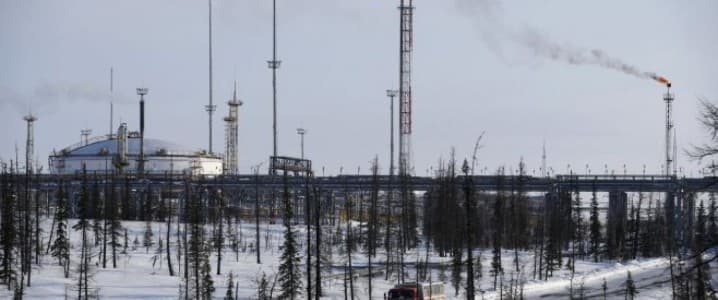
But here’s the kicker: Russia is the biggest beneficiary of the Middle East war, based on Standard Chartered analysis.
Related: Little-Known US Company Lands Important Pentagon Contract in Rare Earth Race
Russia is eagerly capitalizing on both higher market prices and desperate customers looking for alternate sources.
The U.S. Treasury has granted special permission for Indian refiners to purchase sanctioned Russian crude, as long as it was loaded onto a tanker before 5th March. StanChart notes that these loaded, but previously uncommitted, cargoes have been rapidly bought in the spot market, saying that this short-term waiver could potentially double the volume of Russia’s oil exports to India from 1 mb/d to 2 mb/d in the near term.
Russian crude surged 10.7% to trade at $100.67 per barrel at 1.45 pm ET, with Urals crude trading at a premium to the Brent international benchmark for the first time in history, primarily due to the severe supply shock in the Middle East and shifting trade dynamics in Asia. Facing a massive shortage of Middle Eastern “medium sour” crude (a grade similar to Urals), Indian refiners have turned aggressively to Russian supplies.
This surge in demand was facilitated by the 30-day waiver from the U.S. allowing Indian refiners to receive Russian crude already on tankers to stabilize local energy security. Brent is a light, sweet crude, whereas Urals is a medium sour grade. Because Middle Eastern production of sour crude is currently offline or unreachable, refiners that require this specific feedstock are paying a premium of $4 to $5 per barrel above Brent on a delivered basis to secure Russian barrels.
The Strait of Hormuz blockade largely remains unchanged, with transit limited to mostly Iranian and Chinese vessels whose modus operandi is operating without their transponders activated, making it difficult to estimate total volumes transiting the Strait. However, commodity analysts at Standard Chartered have predicted we could see a reduction in these dark fleet transits in the event of U.S. Navy escorts, or patrols to ensure safe passage, effectively removing Iranian sea-borne supply from the market. Such a pivot would, however, still result in a net drop in supply.
Related: No Magnets, No Drones: How China Controls the Future of Warfare
And it comes as Tehran warns the West that oil prices will soar to $200 a barrel as a result of the U.S.-Israeli campaign against Iran.
StanChart estimates that Middle East producers have been the biggest losers in the ongoing conflict, with the Strait of Hormuz impasse forcing Saudi Arabia to cut output by 2.0-2.5 mb/d; Iraq by 2.9 mb/d, UAE by 0.5-0.8 mb/d, Qatar by 0.5 mb/d and Kuwait by 0.5 mb/d. At the same time, a 45% reduction in Iranian gas flaring compared to pre-conflict levels suggests an additional 1 mb/d of Iranian crude may also be offline.
StanChart has reported that these producers are using alternate export routes where possible, with Saudi Arabia utilizing the temporary additional capacity in the East-West pipeline to transport the maximum 7 mb/d to the Red Sea. The commodity experts have predicted that this is likely to reach full capacity within a few days.
By Alex Kimani for Oilprice.com
More Top Reads From Oilprice.com
