

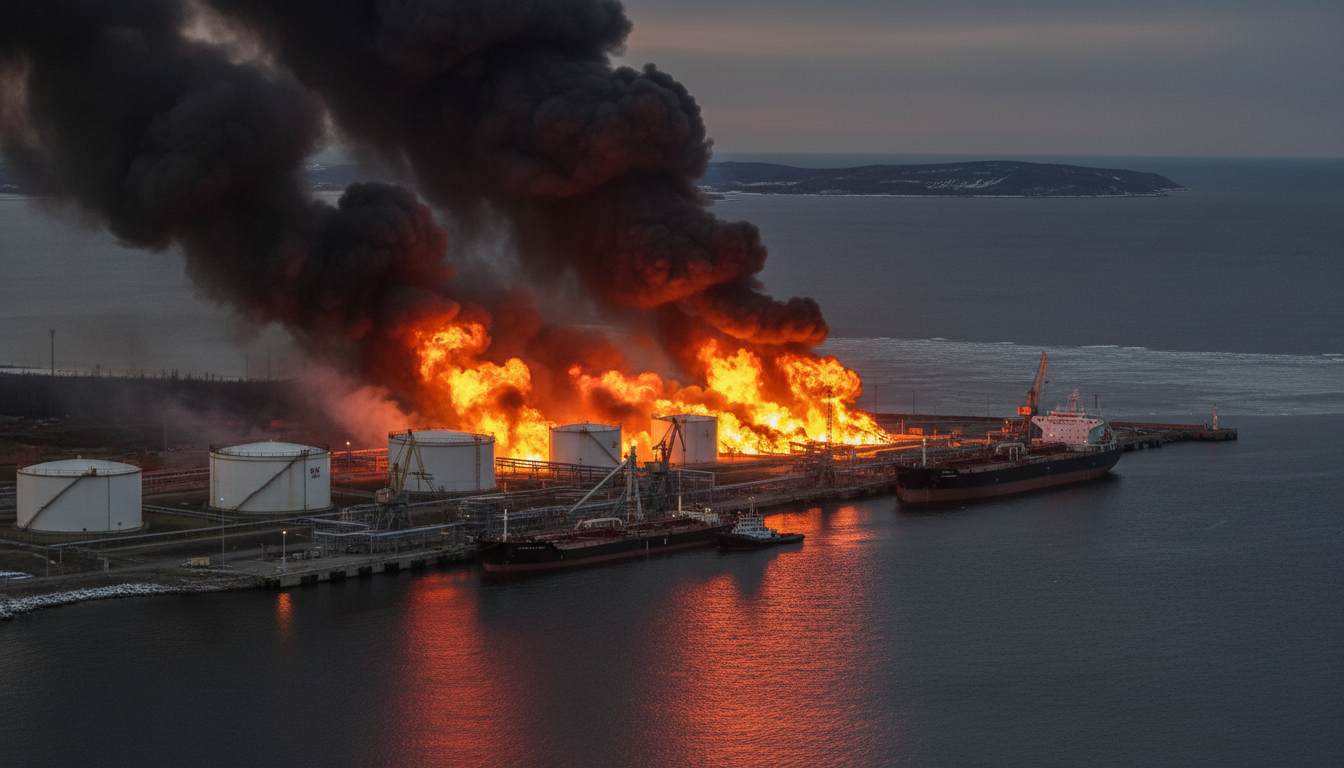
The geopolitical landscape continues to exert significant pressure on global energy markets, with Russia’s vital Baltic Sea oil export infrastructure once again under direct assault. Early Friday, the crucial loading ports of Primorsk and Ust-Luga reportedly experienced renewed fires, signaling a persistent campaign of Ukrainian drone attacks aimed at crippling Moscow’s crude export capabilities and diminishing the financial benefits Russia derives from elevated oil prices and its now seemingly unsanctioned crude.
Tracking by NASA satellite images, specifically from the Fire Information for Resource Management System, indicated the blazes at Primorsk and Ust-Luga had likely ignited several hours before detection. Alexander Drozdenko, the governor of Russia’s Leningrad region where these critical ports are situated, stated via Telegram that Russian defenses successfully intercepted 36 drones overnight, and air raid warnings had subsequently been lifted. Initial reports suggested no human casualties from these latest incidents.
Escalating Disruptions to Russia’s Northern Oil Lifeline
This week marks a notable intensification of attacks by Ukrainian forces against Russia’s Baltic Sea ports, severely disrupting loading operations and compelling temporary suspensions of activity. The pattern of targeting has been clear and effective. Earlier in the week, on Monday, drone strikes triggered significant fires at fuel storage tanks within Primorsk. Concurrently, operations at the neighboring Ust-Luga facility ceased amid the aerial bombardment, although they later partially resumed crude loadings.
The aggression escalated further on Wednesday. A subsequent attack on Ust-Luga resulted in a major conflagration, forcing a complete halt to all operations at the facility. These repeated strikes underscore a strategic effort to impair Russia’s ability to move its energy products to international buyers.
Primorsk and Ust-Luga: Pillars of Russian Export Strategy
Primorsk stands as an indispensable artery for Russia’s energy exports. This port is instrumental in shipping flagship Urals crude, a key grade on the global market, alongside low-sulfur diesel to a diverse array of international destinations. Notably, Primorsk also facilitates volumes associated with Russia’s “shadow fleet” – tankers operating outside conventional Western insurance and oversight, essential for circumventing sanctions and maintaining market access.
The sheer scale of Primorsk’s capacity, approximately 1 million barrels per day (bpd), highlights its pivotal role in Russia’s energy supply chain and its broader economic stability. The consistent targeting of such high-volume infrastructure sends ripples of concern through global oil markets, indicating a heightened risk premium for Russian crude.
Quantifying the Supply Impact: A 40% Reduction
The cumulative effect of these drone attacks is now registering as a substantial blow to Russia’s oil export infrastructure. According to calculations by Reuters, as much as 40% of Russia’s total oil export capacity is currently offline. This staggering figure accounts for a multifaceted array of disruptions, encompassing direct port outages, intermittent pipeline issues stemming from the attacks, and secondary tanker-related impediments as operators navigate increased risk.
Such a significant reduction in export capacity translates directly into financial pain for Russia. It severely hinders the nation’s ability to capitalize fully on the recent surge in global oil prices. Furthermore, it complicates efforts to fulfill demand from key markets like India, which has shown a renewed appetite for Russia’s unsanctioned crude amidst the evolving geopolitical landscape.
Global Supply Concerns Intensify
This substantial disruption to Russian oil flows arrives at an already precarious moment for global energy supply. The oil market is currently grappling with a de facto closure of the Strait of Hormuz, a critical maritime chokepoint in the Middle East, due to escalating regional tensions. The confluence of these two major supply-side shocks – reduced Russian exports from the Baltic and constrained flows from the Persian Gulf – creates an exceptionally tight market outlook for crude.
For investors, this dual threat to global oil supply channels represents a potent cocktail of risk and potential opportunity. The immediate implications point towards increased volatility and upward pressure on crude prices, as market participants scramble to account for a sudden and significant reduction in available supply from two disparate but equally crucial regions. Energy sector investments, particularly those in upstream production or alternative transportation solutions, may see heightened interest as the market adjusts to these profound shifts in global energy security dynamics.
The sustained targeting of Russian energy infrastructure highlights the ongoing militarization of economic warfare, with direct consequences for global crude flows and the broader energy balance. As long as these attacks persist, the inherent risks within the oil market will remain elevated, demanding careful consideration from all strategic energy investors.
