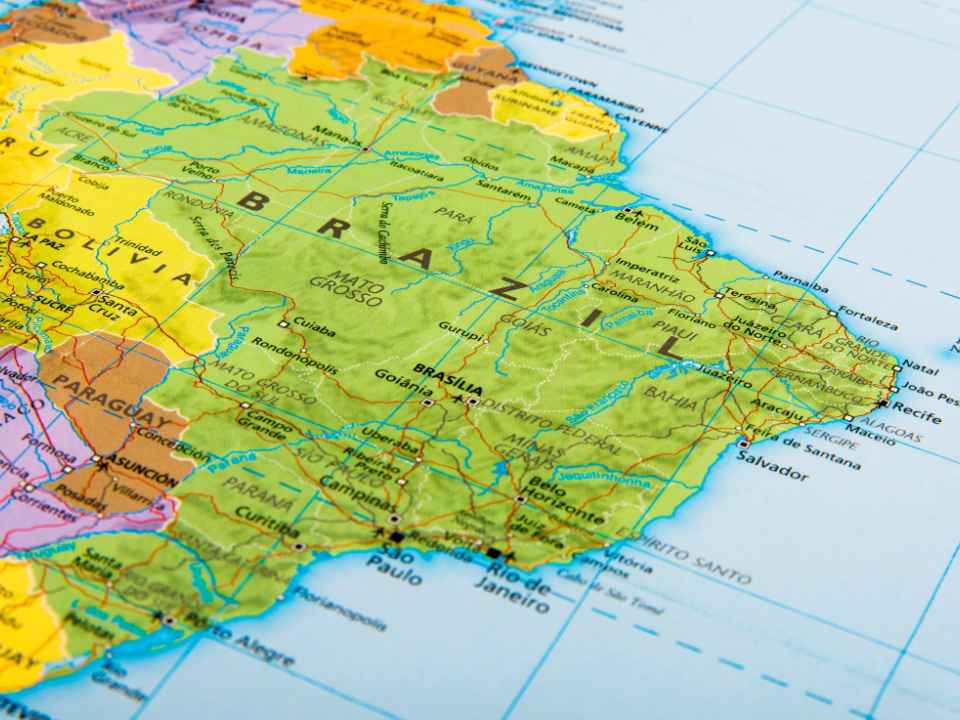
The global energy landscape is undergoing a profound transformation, and nowhere is this more evident than in the strategic alliances forming to build the infrastructure of the future. The recent Memorandum of Understanding (MoU) between Germany’s Rostock Port and Brazil’s Port of Pecém marks a significant milestone, aiming to establish a crucial transport corridor for green hydrogen, ammonia, and other clean fuels. This two-year agreement is not merely a handshake; it represents a foundational step in de-risking investments into Brazil’s burgeoning green hydrogen sector, particularly within Ceará’s advanced Pecém Industrial and Port Complex (CIPP), while simultaneously positioning Rostock as a vital import and distribution hub for Eastern Europe. For discerning investors, this pact signals a clear trajectory: the energy transition is accelerating, creating new opportunities and challenges that demand a forward-looking perspective.
Forging the Green Hydrogen Highway: A Strategic Imperative
The collaboration between Rostock and Pecém is driven by a clear strategic imperative for both nations. Germany, a major industrial powerhouse, faces an urgent need to secure diversified, clean energy imports to meet its ambitious decarbonization targets. Conversely, Brazil, with its abundant renewable resources – particularly solar and wind in regions like Ceará – is rapidly emerging as a global leader in green hydrogen production. The CIPP at Pecém is already one of Brazil’s most advanced green hydrogen hubs, attracting significant interest and investment. By anchoring Rostock as an import gateway, this partnership effectively creates an transatlantic “green hydrogen highway,” addressing Germany’s demand while providing a robust export market for Brazilian producers. As Gernot Tesch, Rostock Port Managing Director, noted, this is a strategic partnership that will enable Rostock to expand its role as an important energy production and import port, gaining access to one of the most exciting locations for green energy worldwide. This kind of international cooperation, as highlighted by Germany’s State Secretary Jochen Schulte, ensures the energy transition transcends national borders, fostering a truly global approach.
Navigating Volatility: Traditional Oil vs. Future Fuels
While the long-term vision of green energy corridors takes shape, the immediate energy market continues its volatile dance, offering a stark contrast to the stable, sustainable future promised by initiatives like Rostock-Pecém. As of today, Brent crude trades at $90.38 per barrel, marking a significant daily decline of 9.07% and fluctuating within a range of $86.08 to $98.97. Similarly, WTI crude has seen a sharp drop to $82.59, down 9.41%, with its daily range spanning $78.97 to $90.34. This immediate downturn follows a broader trend for Brent, which has shed a substantial $20.91, or 18.5%, over the past 14 days, falling from $112.78 on March 30th to $91.87 just yesterday. Even gasoline prices reflect this pressure, currently at $2.93 per gallon after a 5.18% decrease today. This persistent volatility in fossil fuel markets, driven by geopolitical tensions, supply-demand imbalances, and macroeconomic factors, underscores the urgency for nations to diversify their energy matrices. For investors, this dual reality presents a dilemma: how to navigate the short-term swings of traditional oil while strategically positioning for the structural shift towards cleaner, more stable energy sources like green hydrogen, which this Rostock-Pecém pact helps facilitate.
Investor Pulse: Deciphering Long-Term Energy Bets
Our proprietary reader intent data reveals a keen interest among investors in understanding the trajectory of energy markets, particularly regarding the long-term outlook for crude prices. Many are asking, “what do you predict the price of oil per barrel will be by the end of 2026?” While precise forecasts are inherently challenging given the myriad of unpredictable variables, the establishment of robust green energy corridors like the one between Rostock and Pecém provides a crucial long-term counter-narrative to perpetual fossil fuel dependence. These developments signal a structural shift that will, over time, temper demand growth for crude, even if short-term supply disruptions or geopolitical events cause spikes. Investors are also querying about “OPEC+ current production quotas,” highlighting the ongoing tension between managed supply in traditional markets and the burgeoning, decentralized nature of renewable energy projects. Companies with significant refining or petrochemical assets, such as Repsol, which our readers are asking about for April 2026 performance, will need to strategically adapt their portfolios. Those that proactively invest in green hydrogen production, infrastructure, and off-take agreements stand to gain significantly as this new energy economy scales. The Rostock-Pecém corridor is a prime example of the type of infrastructure investment that will define future energy security and profitability.
Upcoming Catalysts: Short-Term Swings and Long-Term Shifts
The immediate future holds several key events that will undoubtedly influence short-term energy markets and investor sentiment, even as the longer-term structural shift towards green energy gains momentum. Today, April 18th, marks the OPEC+ Joint Ministerial Monitoring Committee (JMMC) meeting, followed by the Full Ministerial meeting tomorrow, April 19th. These gatherings are critical for any signals regarding production quotas, which could inject further volatility into crude prices. Beyond the OPEC+ decisions, weekly data releases will provide crucial snapshots of supply and demand dynamics. The API Weekly Crude Inventory report on April 21st, followed by the EIA Weekly Petroleum Status Report on April 22nd, will offer insights into U.S. inventory levels. Investors will also keenly watch the Baker Hughes Rig Count on April 24th for indications of future drilling activity. These events, and their subsequent releases on April 28th (API), April 29th (EIA), and May 1st (Baker Hughes), represent the pulse of the traditional oil and gas sector. However, while these short-term catalysts create trading opportunities and risks, the strategic importance of pacts like Rostock-Pecém lies in their ability to decouple energy security from these daily fluctuations. Savvy investors will balance their exposure to these near-term market forces with strategic allocations towards the foundational infrastructure and projects underpinning the green energy transition.