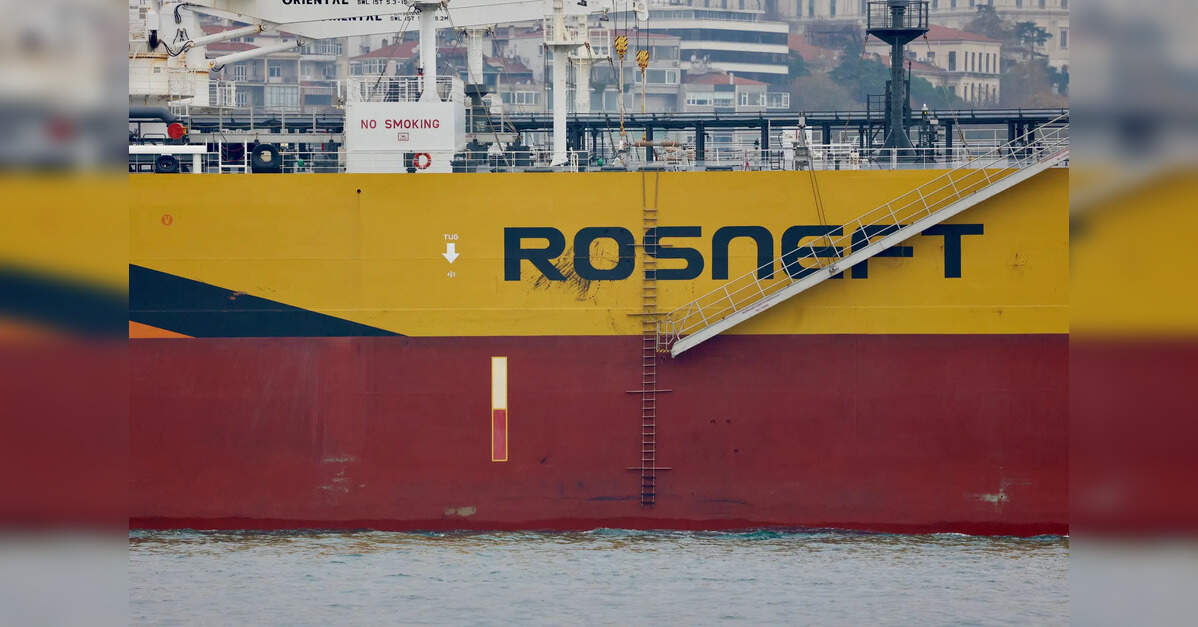
The global oil market continues to present a complex web of geopolitical maneuvers and economic imperatives, with investors closely scrutinizing every shift in supply dynamics. A prime example is the recent resilience of Rosneft, Russia’s largest oil exporter, in maintaining its dominant position within the Indian crude oil market. Despite the imposition of US sanctions last October targeting key Russian energy entities, Rosneft delivered substantial volumes to major Indian refiners throughout December. This continued flow underscores the intricate challenges of sanction enforcement and highlights India’s strategic importance as a crucial buyer of discounted Russian crude. For investors, understanding the mechanisms behind this sustained trade, its impact on global crude prices, and future geopolitical catalysts is paramount to navigating the evolving energy landscape.
Sanctions Efficacy and India’s Strategic Imperative
The US sanctions, enacted on October 22nd with a one-month grace period for existing transactions, aimed to curb the flow of Russian oil and limit Moscow’s revenue. Yet, Rosneft demonstrated remarkable adaptability, supplying an impressive 820,000 barrels per day (bpd) to Indian refiners during the first half of December. This figure accounted for approximately 70% of India’s total 1.15 million barrels per day (mbd) in Russian oil imports during that period. While Lukoil, another sanctioned entity, saw its Indian procurement cease, a collection of lesser-known Russian suppliers—including RusExport, MorExport, Zarubezhneft, and Rusvietpetro—collectively stepped in to deliver an additional 330,000 bpd. This fragmentation of supply channels suggests a deliberate strategy to circumvent restrictions. Major Indian players like Indian Oil, which imported 400,000 bpd, Reliance Industries at 366,000 bpd, and Nayara Energy with 228,000 bpd, remained significant recipients. Notably, Reliance Industries indicated that its December procurements were part of “pre-existing transactions” being wound down, though a person familiar with their operations stated no Russian cargoes had been loaded after November 12th. Nayara Energy’s continued reliance on Russian crude, stemming from its 49% Rosneft ownership and prior EU sanctions, further complicates the picture, illustrating how ownership structures can create persistent dependencies and challenges for sanctions regimes.
Global Price Volatility and India’s Discounted Advantage
The enduring appeal of Russian crude for Indian refiners is fundamentally economic, especially given the current volatile market conditions. As of today, Brent crude trades at $91.87, reflecting a significant 7.57% decline within the day, having ranged between $86.08 and $98.97. WTI crude similarly sits at $84.00, down 7.86%, moving within a range of $78.97 to $90.34. This daily dip is part of a broader trend; over the past two weeks, Brent has shed 18.5% of its value, falling from $112.78 to its current level. Such a pronounced softening in global prices amplifies the strategic advantage of securing deeply discounted Russian barrels. Indian refiners, including state-run BPCL which received 155,000 bpd, are maximizing their margins by capitalizing on these lower acquisition costs. This aggressive procurement strategy by India’s refining giants effectively puts downward pressure on global benchmarks by absorbing a significant volume of crude that might otherwise struggle to find a market, thereby influencing the supply-demand balance and contributing to the recent price corrections.
Navigating Future Geopolitical Headwinds and Market Catalysts
Looking ahead, the sustainability of Rosneft’s supply to India remains a critical question for investors. The “winding down” of pre-existing contracts suggests a potential inflection point, but the emergence of new, smaller Russian suppliers indicates an ongoing effort to maintain market access. Investors must closely monitor upcoming energy events for signals on market direction and potential policy shifts. The OPEC+ Ministerial Meeting scheduled for April 18th is particularly crucial. With Brent prices experiencing a notable downturn, the cartel’s decision on production quotas could significantly impact global supply and the relative attractiveness of discounted Russian oil. Should OPEC+ opt for further cuts to stabilize prices, the economic incentive for India to continue procuring Russian crude at a discount would intensify. Furthermore, the weekly API and EIA crude inventory reports, due on April 21st/22nd and April 28th/29th respectively, will provide vital insights into global stock levels and refinery utilization rates. These reports will offer a clearer picture of demand strength, including the impact of India’s strategic buying, and can either reinforce or challenge the current price trajectory. The ongoing geopolitical backdrop, combined with these near-term catalysts, will shape future trading mechanisms and the overall efficacy of energy sanctions.
Investor Outlook: Opportunities and Risks in a Fragmented Market
Investors are actively seeking clarity on the trajectory of global oil prices, with a recurring question surfacing: what will the price of oil per barrel be by the end of 2026? While precise predictions are elusive, Rosneft’s sustained market presence in India offers a key piece of the puzzle. If Russia can consistently reroute substantial crude volumes to price-sensitive buyers like India, it effectively adds supply to the global market, potentially capping upside price movements for non-sanctioned barrels. This dynamic also influences the effectiveness of OPEC+’s efforts to manage supply and price, as some investors question how Rosneft’s continued high output interacts with the cartel’s stated quotas. For refining companies like Reliance Industries and Indian Oil, their demonstrated ability to secure discounted crude significantly bolsters their profitability and competitive edge, making them potentially attractive investments. Conversely, entities like Nayara Energy, with direct Russian ownership, face an elevated geopolitical risk premium that demands careful consideration. Investors must remain vigilant, analyzing not just headline price movements but also the intricate logistical and geopolitical strategies that underpin global energy trade, particularly as the efficacy of sanctions and the adaptability of supply chains continue to evolve.


