
Close Menu
  • Home
  • Market News
    • Crude Oil Prices
    • Brent vs WTI
    • Futures & Trading
    • OPEC Announcements
  • Company & Corporate
    • Mergers & Acquisitions
    • Earnings Reports
    • Executive Moves
    • ESG & Sustainability
  • Geopolitical & Global
    • Middle East
    • North America
    • Europe & Russia
    • Asia & China
    • Latin America
  • Supply & Disruption
    • Pipeline Disruptions
    • Refinery Outages
    • Weather Events (hurricanes, floods)
    • Labor Strikes & Protest Movements
  • Policy & Regulation
    • U.S. Energy Policy
    • EU Carbon Targets
    • Emissions Regulations
    • International Trade & Sanctions
  • Tech
    • Energy Transition
    • Hydrogen & LNG
    • Carbon Capture
    • Battery / Storage Tech
  • ESG
    • Climate Commitments
    • Greenwashing News
    • Net-Zero Tracking
    • Institutional Divestments
  • Financial
    • Interest Rates Impact on Oil
    • Inflation + Demand
    • Oil & Stock Correlation
    • Investor Sentiment

Subscribe to Updates

Subscribe to our newsletter and never miss our latest news

Subscribe my Newsletter for New Posts & tips Let's stay updated!

What's Hot

Oil surges as Strait of Hormuz traffic nearly halts amid Middle East war

March 2, 2026

JPMorgan: Oil Prices Could Hit $120 Per Barrel

March 2, 2026

Markets on Edge as US-Iran Conflict Intensifies

March 2, 2026
Facebook X (Twitter) Instagram Threads
Oil Market Cap – Global Oil & Energy News, Data & Analysis
  • Home
  • Market News
    • Crude Oil Prices
    • Brent vs WTI
    • Futures & Trading
    • OPEC Announcements
  • Company & Corporate
    • Mergers & Acquisitions
    • Earnings Reports
    • Executive Moves
    • ESG & Sustainability
  • Geopolitical & Global
    • Middle East
    • North America
    • Europe & Russia
    • Asia & China
    • Latin America
  • Supply & Disruption
    • Pipeline Disruptions
    • Refinery Outages
    • Weather Events (hurricanes, floods)
    • Labor Strikes & Protest Movements
  • Policy & Regulation
    • U.S. Energy Policy
    • EU Carbon Targets
    • Emissions Regulations
    • International Trade & Sanctions
  • Tech
    • Energy Transition
    • Hydrogen & LNG
    • Carbon Capture
    • Battery / Storage Tech
  • ESG
    • Climate Commitments
    • Greenwashing News
    • Net-Zero Tracking
    • Institutional Divestments
  • Financial
    • Interest Rates Impact on Oil
    • Inflation + Demand
    • Oil & Stock Correlation
    • Investor Sentiment
Oil Market Cap – Global Oil & Energy News, Data & Analysis
Home » Rise in dengue fever outbreaks across the Pacific driven by the climate crisis, experts say | Pacific islands
Climate Commitments

Rise in dengue fever outbreaks across the Pacific driven by the climate crisis, experts say | Pacific islands

omc_adminBy omc_adminAugust 12, 2025No Comments4 Mins Read
Share
Facebook Twitter Pinterest Threads Bluesky Copy Link


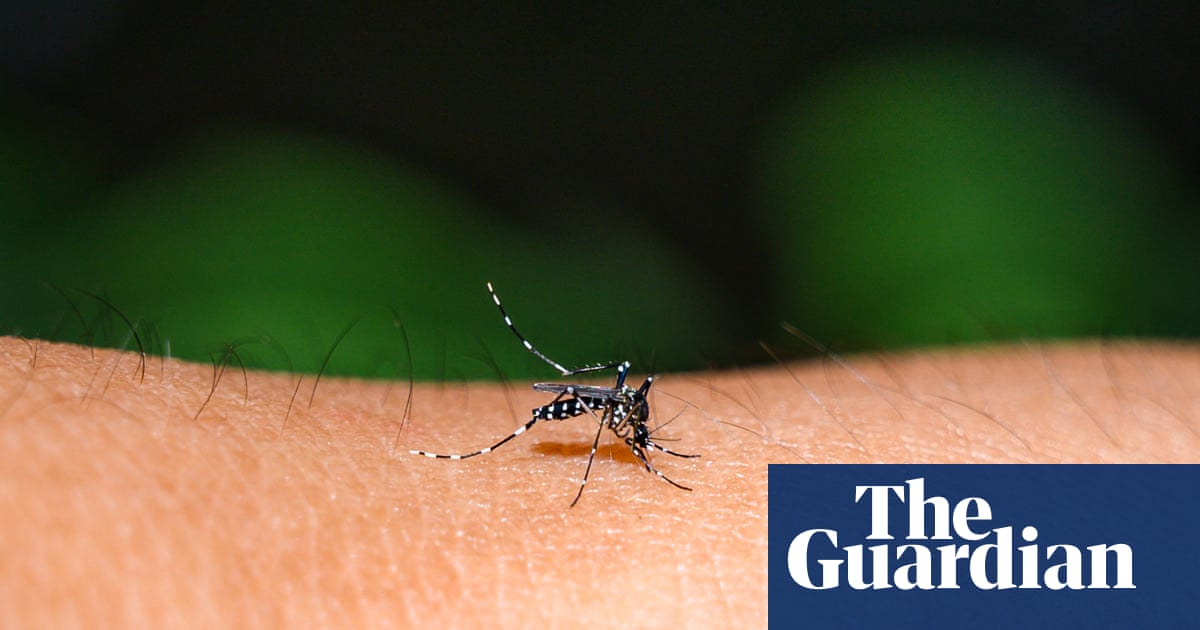
The climate crisis is driving a sharp rise in dengue fever cases across the Pacific islands, experts say, as infections hit their highest level in a decade and several countries declare emergencies.

Pacific Island countries and territories have reported 16,502 confirmed cases and 17 deaths since the start of 2025, according to the Pacific Syndromic Surveillance System (PSSS), which collaborates with the World Health Organization (WHO) and other agencies. Infections across the region are at the highest level since 2016, the WHO said. Fiji, Samoa and Tonga are among the worst affected.

Dr Paula Vivili, deputy director general of the Pacific Community (SPC), said historically dengue outbreaks were seasonal.

“However, due to climate change, transmission seasons are lengthening, and some areas are experiencing year-round dengue risk,” Vivili said.

Dengue fever, a viral illness spread by Aedes mosquitoes, causes high fever, severe headache, joint and muscle pain, rash, and in severe cases can be fatal. Rising temperatures, rainfall and increased humidity are creating ideal breeding conditions for Aedes mosquitoes, even in areas previously unsuitable for transmission.

“Dengue is one of the first real disease-related phenomena that we can lay at the foot of climate change,” said Dr Joel Kaufman, epidemiologist and director of the Center for Exposures, Diseases, Genomics and Environment at the University of Washington.

“Rainfall raises the waterline over mosquito eggs laid just above the surface, which then hatch – that’s part of the natural breeding cycle. Heavy rains can also increase stagnant water sources, creating more opportunities for mosquitoes to breed,” he said.

Kaufman warned these outbreaks pointed to a wider public health challenge.

“It is in the vanguard of what will certainly be many types of human disease that become more common and more serious as the planet warms.”

Since declaring an outbreak in April, Samoa has confirmed six dengue-related deaths, including two siblings, and more than 5,600 cases. This year Fiji has recorded eight deaths and 10,969 cases. Tonga has reported over 800 cases and three deaths since declaring an outbreak in February.

These outbreaks underscore the region’s vulnerability to climate-sensitive diseases, which are expected to intensify as global temperatures rise.

Pacific Island countries produce just 0.03% of global greenhouse gas emissions, according to the Intergovernmental Panel on Climate Change (IPCC), but face some of the most severe climate-related health threats, including vector-borne diseases.

Recent months have brought extreme rainfall to parts of the Pacific including Palau, Papua New Guinea and Solomon Islands, while severe drought has gripped parts of the Marshall Islands, Papua New Guinea, Nauru and Fiji, according to the New Zealand National Institute of Water and Atmospheric Research (NIWA). Forecasts show these contrasts will continue into October.

Although higher rainfall has been attributed to ideal conditions for mosquito breeding, Kaufman said that extreme weather events can also increase transmission of mosquito-borne diseases. Seriously dry or very dry conditions were recorded across large parts of the Pacific in the first half of the year, according to NIWA.

“We might have thought the dryness would reduce mosquito-borne infections, but it seems that’s not what happens,” Kaufman said. “Instead, there’s an acceleration of transmission.”

Across the Pacific, national responses have varied. Samoa, Cook Islands and American Samoa have declared emergencies. The Cook Islands has conducted island-wide clean-ups, intensified surveillance and targeted spraying. Tonga has worked with the WHO to bolster its outbreak response in its worst-hit islands, while Tuvalu has turned to social media and health campaigns to promote preventive measures. Samoa has held school clean-ups and boosted public health messaging. New Zealand has sent a clinical team and NZ$300,000 ($178,000) worth of medical supplies to Samoa, alongside on-the-ground personnel and ongoing coordination with Samoan health officials.

But experts say these measures are being undermined by inadequate surveillance.

“Current disease surveillance systems are rarely sufficient to manage dengue, as evidenced by the continual growth of dengue in the region, and more generally globally,” said Dr Bobby Reiner, disease ecologist at the Institute for Health Metrics and Evaluation at the University of Washington.

Mosquito control tools are methods used to reduce the population of Aedes mosquitoes that spread dengue, such as removing breeding sites, applying larvicides or spraying insecticides. They can also include biological controls, personal protection measures and community clean-up campaigns to prevent mosquito bites and transmission.

Still, Reiner said many mosquito control tools had never been proven to reduce transmission, with most responses reactive and often “wastefully chasing the outbreak, applying effort too late”.


Source link

Share. Facebook Twitter Pinterest Bluesky Threads Tumblr Telegram Email
omc_admin
  • Website

Related Posts

Winter getting shorter in 80% of major US cities, new data shows | US weather

February 27, 2026

Trump officials move to kill system that protects US from chemical disasters | US Environmental Protection Agency

February 27, 2026

US ‘bullying’ could scupper carbon levy on shipping, warn experts | Shipping emissions

February 26, 2026
Add A Comment
Leave A Reply Cancel Reply

Top Posts

Federal Reserve cuts key rate for first time this year

September 17, 202513 Views

Inflation or jobs: Federal Reserve officials are divided over competing concerns

August 14, 20259 Views

Oil tanker rates to stay strong into 2026 as sanctions remove ships for hire – Oil & Gas 360

December 16, 20258 Views
Don't Miss

Oil surges as Strait of Hormuz traffic nearly halts amid Middle East war

By omc_adminMarch 2, 2026

(Bloomberg) – Oil prices posted their largest single-day gain in four years as conflict in…

Oil Could Pass $100 as Strait of Hormuz Traffic Halts

March 2, 2026

Global oil prices may spike in next few days but calm down in longer term

March 2, 2026

Global oil prices may spike in next few days but calm down in longer term

March 2, 2026
Top Trending

Datamaran Launches New ESG Regulation Monitoring Solution

By omc_adminMarch 2, 2026

Standard Chartered Earns Over $1 Billion in Sustainable Finance Income

By omc_adminMarch 2, 2026

Digital Product Passports Are Coming, and 2026 Is When the Real Work Begins

By omc_adminMarch 2, 2026
Most Popular

The 5 Best 65-Inch TVs of 2025

July 3, 202515 Views

AI’s Next Bottleneck Isn’t Just Chips — It’s the Power Grid: Goldman

November 14, 202514 Views

The Layoffs List of 2025: Meta, Microsoft, Block, and More

May 9, 202510 Views
Our Picks

Equinor Discovers More Oil around Snorre offshore Norway

March 2, 2026

Hopes for Suez Canal Revival Dashed

March 2, 2026

Israel Pauses Leviathan Gas Production

March 2, 2026

Subscribe to Updates

Subscribe to our newsletter and never miss our latest news

Subscribe my Newsletter for New Posts & tips Let's stay updated!

Facebook X (Twitter) Instagram Pinterest
  • Home
  • About Us
  • Advertise With Us
  • Contact Us
  • DMCA
  • Privacy Policy
  • Terms & Conditions
© 2026 oilmarketcap. Designed by oilmarketcap.

Type above and press Enter to search. Press Esc to cancel.