Strategic Recalibration: India’s Enduring Appetite for Russian Crude Amidst Geopolitical Crosscurrents
The global energy landscape continues its dynamic evolution, with geopolitical tensions and economic imperatives driving strategic shifts across major consuming nations. A prime example is India’s recent recalibration of its crude import strategy, particularly from Russia. After a brief hiatus, Reliance Industries has resumed importing Russian crude, signaling a clear prioritization of energy security and advantageous pricing, even as it navigates a complex web of international scrutiny. This move by one of the world’s largest refiners, controlling the massive Jamnagar complex, has significant implications for global oil flows, refining economics, and investor sentiment, highlighting the delicate balance between supply chain resilience and geopolitical alignment.
Navigating Sanctions: India’s Persistent Pursuit of Discounted Barrels
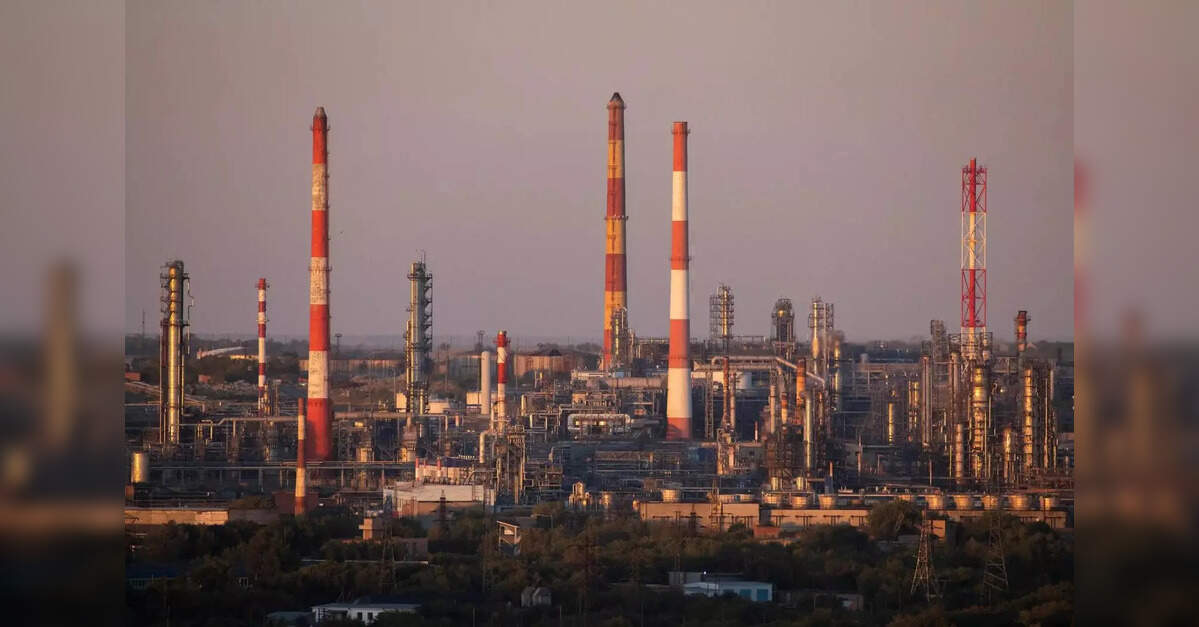
Reliance’s decision to restart Russian crude imports, following a temporary pause attributed to heightened US scrutiny and the blacklisting of entities like Rosneft PJSC and Lukoil PJSC, underscores a resilient strategic pivot rather than a full retreat. The refiner, which had previously secured a substantial term deal for 500,000 barrels per day from Rosneft, has now diversified its sourcing. Data indicates at least three tankers, carrying nearly 2.2 million barrels of Urals crude, are en route to Jamnagar, with deliveries scheduled for early this month. These cargoes are reportedly supplied by a new cohort of traders including Alghaf Marine DMCC, Redwood Global Supply FZ LLC, RusExport, and Ethos Energy. Notably, Alghaf Marine and Redwood Global have faced sanctions from the UK, with Alghaf Marine identified as a successor to a Middle Eastern branch of Litasco, Lukoil’s trading arm. This intricate network of new suppliers allows Indian refiners to tap into Russian crude, albeit through more circuitous routes, mitigating direct exposure to sanctioned entities while still benefiting from competitive pricing. While Russian oil deliveries to Reliance’s Jamnagar refinery complex saw a dip to approximately 270,000 barrels per day in December, representing under 20 percent of its total global imports, down from over 40 percent in the January to November period, the current restart indicates a determined effort to restore these volumes, albeit with a refined sourcing strategy.
Market Dynamics and Refining Margins in a Volatile Environment
The return of Indian refiners like Reliance, alongside state-owned Indian Oil Corp. and Bharat Petroleum Corp., to the Russian crude market is fundamentally driven by compelling economic incentives. The deep discounts offered on Russian Urals crude, combined with the inherent challenges of securing stable and affordable alternatives, present a strong financial argument for these refiners. As of today, Brent Crude trades at $90.24, reflecting a -0.21% movement within a daily range of $93.87 to $95.69. Similarly, WTI Crude stands at $86.68, down -0.85% for the day, with a range of $85.50 to $87.49. This snapshot follows a notable 14-day Brent trend, which saw prices decline by $23.49, or nearly 19.8%, from $118.35 on March 31st to $94.86 on April 20th. Such significant volatility in benchmark prices makes the deeply discounted Russian barrels even more attractive, bolstering refining margins for companies that can effectively procure and process them. These refiners are primarily processing the crude for domestic fuel consumption, insulating them somewhat from export market complexities and further strengthening the case for maintaining these strategic purchases. The ability to secure feedstock at a lower cost provides a critical competitive edge in a global market characterized by fluctuating demand and persistent supply-side uncertainties.
Investor Focus: Peering into Future Price Trajectories
The renewed flow of Russian crude to India feeds directly into the concerns expressed by investors regarding the future trajectory of oil prices. Questions about whether WTI will trend up or down, or predictions for oil prices by the end of 2026, dominate current investor queries. This heightened interest reflects the inherent uncertainty in the market. On one hand, sustained demand from major consumers like India, coupled with ongoing geopolitical risks, could provide a floor for prices. On the other, the willingness of refiners to absorb discounted barrels, potentially increasing overall supply availability, could cap upward movements. Investors are keenly watching the interplay between these supply-side shifts and global demand signals. The strategic choices made by nations like India, balancing their energy needs against international pressures, play a pivotal role in shaping this delicate equilibrium. For investors, understanding these complex dynamics, especially how major players secure their feedstock and manage geopolitical risks, is crucial for developing robust investment strategies in the energy sector.
Upcoming Events and Investment Strategy
The immediate horizon holds several critical events that could significantly influence oil market dynamics and, by extension, investment opportunities. The OPEC+ Joint Ministerial Monitoring Committee (JMMC) Meeting on April 21st is a paramount event. Investors will be scrutinizing any signals regarding production policy, particularly against the backdrop of fluctuating global demand and persistent geopolitical tensions affecting supply routes. Following this, the EIA Weekly Petroleum Status Reports on April 22nd and April 29th will provide fresh data on US crude inventories, refining activity, and product demand – key indicators for the health of the world’s largest oil consumer. The Baker Hughes Rig Count reports on April 24th and May 1st will offer insights into North American production trends, signaling future supply potential. Furthermore, the EIA’s Short-Term Energy Outlook on May 2nd will present comprehensive forecasts for global and domestic energy markets, offering a valuable forward-looking perspective on supply, demand, and price expectations through 2026. For investors, these events are not isolated data points but interconnected pieces of a larger puzzle. The continued strategic sourcing by Indian refiners, combined with these upcoming reports and policy decisions, will dictate short-to-medium term market movements. Maintaining an agile investment posture, responsive to both geopolitical shifts and fundamental market data, remains paramount for navigating the inherent volatility of the oil and gas sector.


