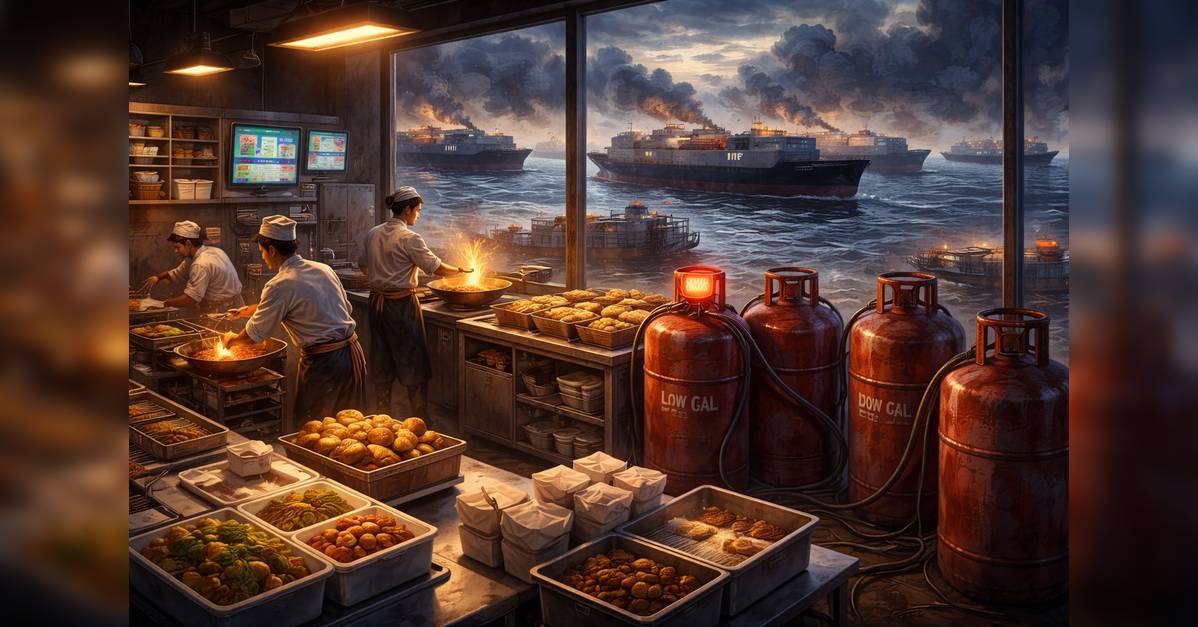
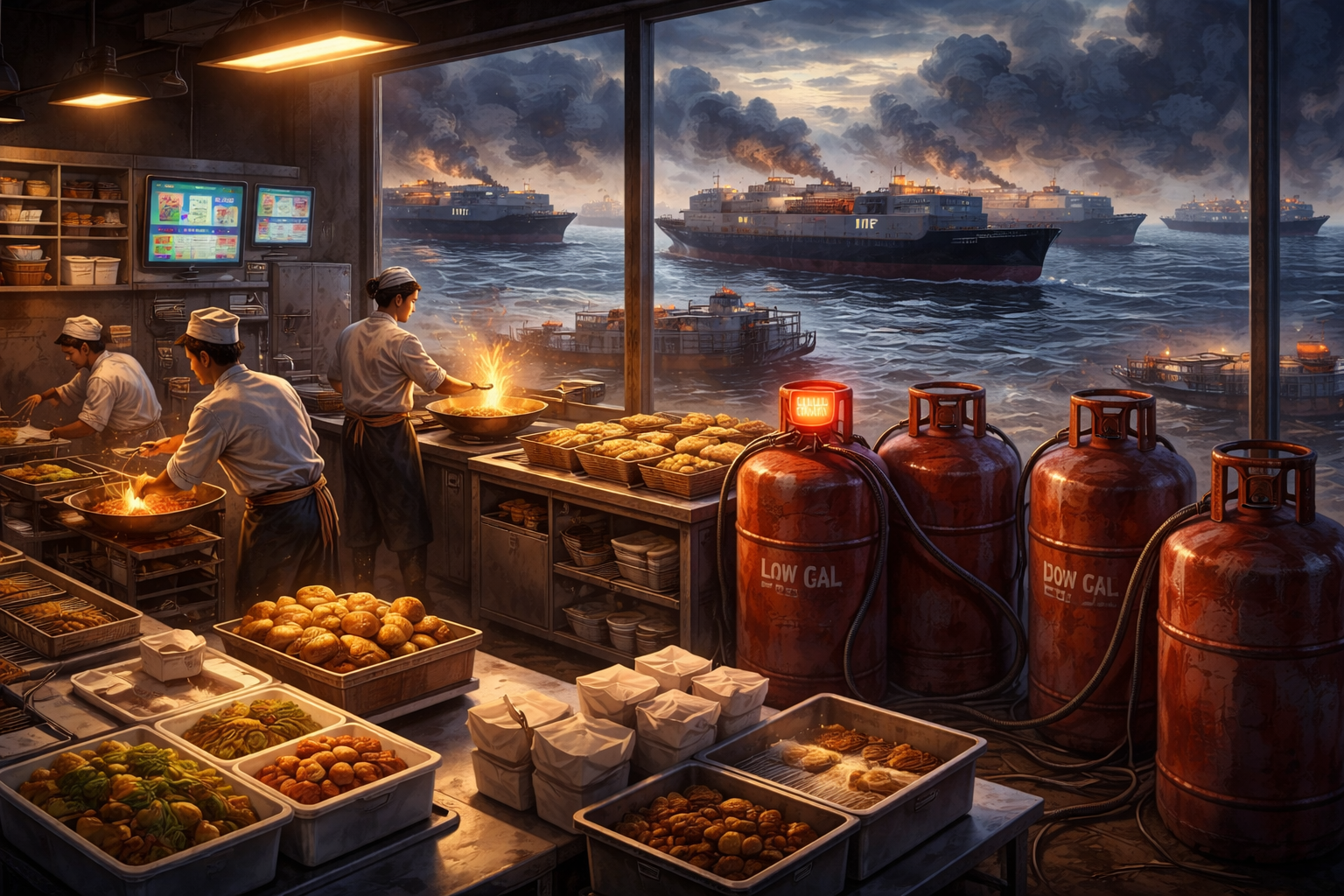
Restaurant industry insiders said they continued to face constraints on sourcing LPG despite government assurances on increasing supplies and that the situation, if persisted, could lead to retrenchments and salary cuts.
Things are uncertain and people are “running from pillar to post”, said Anjan Chatterjee, founder of Speciality Restaurants that owns brands such as Mainland China and Oh! Calcutta. “If restaurants and eateries are unable to do business, the first ones to ghit will be people down below,” he said.
“While we hope supplies improve soon, currently, the situation is dynamic and we don’t know how things will pan out. At the ground level, particularly for local and street-side eateries, things are much worse,” he added.
While the LPG supply is still inadequate, the situation at the ground level has improved somewhat, said Sagar Daryani, president of the National Restaurant Association of India and founder of Wow! Momo. However, the industry will see an impact on P&L, as well as on menus and operating hours, he added. “Smaller players which cannot bear the loss will see job cuts and the bigger players may bear the brunt for a while.”
According to industry executives, while the government had assured that 20 per cent of the average monthly commercial LPG requirement would be allocated to businesses and that additional supply measures were being worked out to support hotels and restaurants, uncertainty on gas supplies continued.
Losses are inevitable, said Pradeep Shetty, vice-president of the Federation of Hotel & Restaurant Associations of India and spokesperson of the Hotel and Restaurant Association (Western India). Shetty previously said that the allocation might still be insufficient to sustain operational costs and meet the demand of the hospitality sector, particularly for establishments handling large-scale catering and high-volume food preparation. According to him, nearly 30 per cent of hotels and restaurants had shut operations due to the LPG shortage.
Rashmi Daga, founder of cloud kitchen chain FreshMenu, said 20 per cent of her units were not operational currently, and the ones that were operational were seeing 20-25 per cent less business.
“At a central level, we are trying to move to firewood cooking, bring in induction, electric stoves, etc. But one can’t just move seamlessly to electric equipment given that summer months will also see power cuts,” she said. “One can’t even plan for perishables without knowing if gas is available the next day. Right now, the industry is bracing for 40-60 days of pain, but who knows, it could continue for months, too. If this happens, we will have no choice but to send some workers home.”
Small restaurants and caterers who deal with large-scale functions are the worst hit, said industry executives. “Suppliers are telling us to wait for 15 days. The on-ground situation is very challenging and it’s actually worsening for a lot of our members,” said Kirit Budhdev, general secretary of the Federation of All India Caterers.
Small eateries, which take workers on a daily basis, will see an immediate cutback in manpower, said Aditya Narayan Mishra, managing director and CEO of staffing services company CIEL HR.
“For instance, if a restaurant has to close shop or run for fewer days in a week, they will not be employing helpers, local delivery boys, etc., who typically get paid Rs 500-700 daily. This segment, which accounts for the largest number of people employed, is already seeing an impact,” he added.
Ganesh Shetty, president of the Pune Restaurant and Hoteliers Association, said he was planning to meet the district collector to apprise him of the situation. “Our members are still being told by agencies and suppliers that the supply is not for them but for other priority sectors like hospitals. Smaller restaurants have already shut down and they are not operational in Pune,” he said.