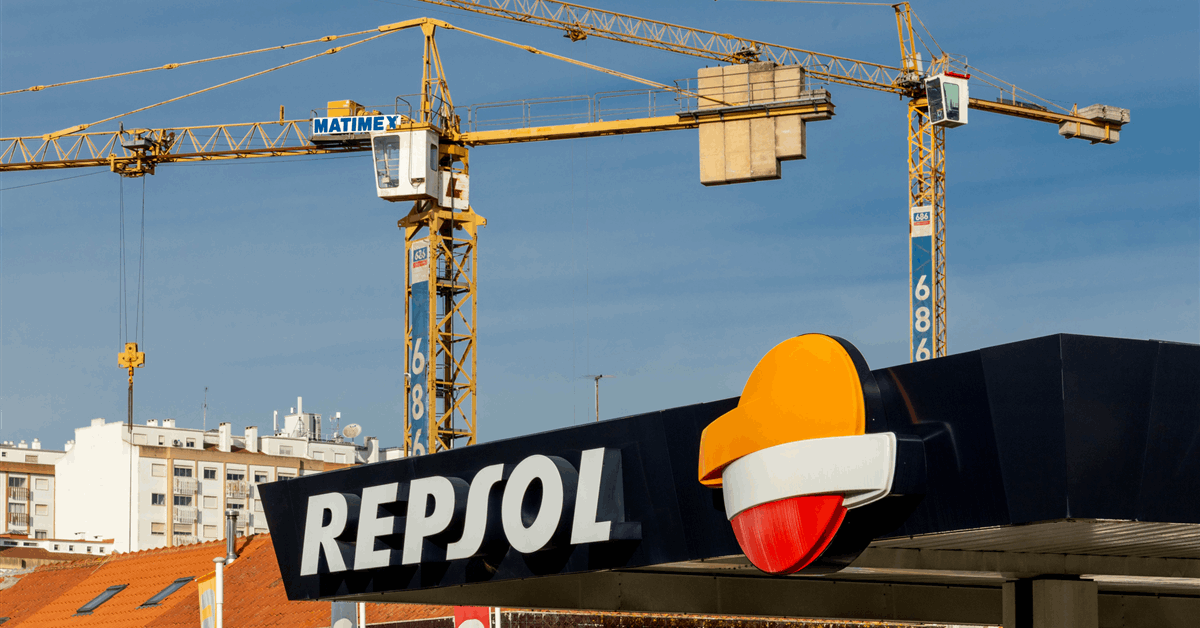
Repsol’s recent announcement regarding the expansion of its renewable diesel network to over 1,500 retail stations across Spain and Portugal signals a significant acceleration in the energy major’s strategic pivot towards decarbonization. This move is not merely an operational update; it represents a tangible commitment to the energy transition, offering investors a clearer vision of Repsol’s future revenue streams and risk mitigation strategies in an increasingly volatile global energy market. As traditional crude benchmarks exhibit notable fluctuations, Repsol’s aggressive pursuit of renewable liquid fuels positions the company as a frontrunner in providing viable, scalable solutions for existing combustion engine fleets, which remain the dominant force in European transport.
Repsol’s Renewable Network: A Decarbonization Power Play
The establishment of over 1,500 retail points for Repsol’s Nexa Diesel firmly entrenches the company as a leader in Europe’s renewable fuel landscape. With more than 210 million liters sold year-to-date and over 40% of its total service station network now offering renewable options, Repsol is demonstrating that the shift to lower-carbon fuels is not a distant aspiration but a current market reality. This aggressive deployment addresses a crucial segment of the market: the vast majority of existing vehicles. Despite the growing narrative around electric vehicles, internal combustion engines still comprise 97% of the Spanish and broader European vehicle fleet, accounting for 87% of new vehicle sales in Spain this year alone. Repsol’s 100% renewable Nexa Diesel, identifiable by its distinct pink color, offers a direct pathway to significantly reduce the carbon footprint of these vehicles, boasting up to a 90% reduction in CO2 emissions compared to conventional fuels. This focus on immediate, scalable impact through existing infrastructure underscores a pragmatic approach to decarbonization that resonates with both consumers and policymakers striving to meet ambitious climate targets.
Navigating Volatility: Repsol’s Diversification Amidst Shifting Crude Prices
In a global energy landscape defined by persistent price swings, Repsol’s strategic investment in renewable fuels offers a compelling diversification play for investors. As of today, Brent crude trades at $90.22, reflecting a slight dip of 0.23% within a daily range of $93.87 to $95.69. This stability, however, masks a more significant underlying volatility. Looking at the broader trend, Brent crude has seen a substantial decline, dropping nearly 20% from $118.35 on March 31st to $94.86 on April 20th. Similarly, WTI crude sits at $86.67, down 0.86% for the day. These sharp fluctuations highlight the inherent risks associated with a singular focus on traditional fossil fuels. Repsol’s expansion into renewable diesel and gasoline, which are produced from renewable origin raw materials and offer significant carbon reductions, positions the company to capture value from a different, less commodity-driven market segment. This strategy provides a hedge against the unpredictable nature of crude oil prices, offering a more stable and environmentally compliant revenue stream that appeals to an increasingly ESG-conscious investor base.
Production Prowess and Future Growth Catalysts
Repsol’s commitment extends beyond retail distribution to robust production capabilities, laying a solid foundation for future growth. The company’s Cartagena complex stands as a beacon of this industrial shift, operating the Iberian Peninsula’s first facility dedicated exclusively to industrial-scale production of renewable fuels, including sustainable aviation fuel (SAF) and renewable diesel. Launched on March 4, 2024, this facility boasts an impressive annual capacity of 250,000 metric tons. Furthermore, Repsol achieved a significant technological milestone at its Tarragona complex with the industrial-scale production of 100% renewable gasoline. This innovative product, compatible with all gasoline vehicles without modification, reduces net CO2 emissions by over 70% compared to conventional gasoline. Currently available at 20 service stations in key regions like Madrid and Catalonia, Repsol plans to expand its availability to 30 stations by year-end, targeting cities such as Bilbao, Tarragona, Valencia, and Zaragoza. The strategic partnership with Honeywell for formulation development underscores a commitment to cutting-edge technology. Looking ahead, the planned construction of another renewable road and maritime fuel plant at its Puertollano complex by 2026 signals continued investment in scaling production. These production assets, coupled with secured agreements to supply heavy-duty transport companies like Scania, Grupo Sese, XPO, and Serveto, demonstrate a clear pathway to monetizing their renewable fuel portfolio and capturing significant market share in the commercial transport sector.
Addressing Investor Sentiment and Upcoming Market Signals
Investors are increasingly scrutinizing energy companies’ transition strategies, with questions frequently surfacing around individual company performance and the long-term trajectory of oil prices. A common sentiment reflected in investor inquiries this week, for example, is a direct interest in Repsol’s performance, with many asking “How well do you think Repsol will end in April 2026?” and “What do you predict the price of oil per barrel will be by end of 2026?”. Repsol’s proactive stance in renewable fuels directly addresses these forward-looking concerns. By diversifying its revenue streams away from absolute reliance on volatile crude prices, Repsol aims to build a more resilient and predictable earnings profile. The company’s strategic alignment with decarbonization targets set by Spain and the European Union mitigates regulatory risks and positions it favorably for evolving market demands. Moreover, investors should closely monitor upcoming macro energy events that will shape the broader market narrative. The EIA’s Short-Term Energy Outlook, scheduled for May 2nd, will provide crucial projections for both traditional and renewable energy sectors. These insights could further validate Repsol’s strategic pivot by highlighting long-term demand shifts or regulatory drivers favoring sustainable fuels. As the market digests these reports and other key data points like the OPEC+ JMMC Meeting on April 21st and weekly EIA Petroleum Status Reports, Repsol’s tangible progress in renewable fuels will offer a compelling investment thesis, demonstrating foresight and adaptability in a rapidly changing energy landscape.


