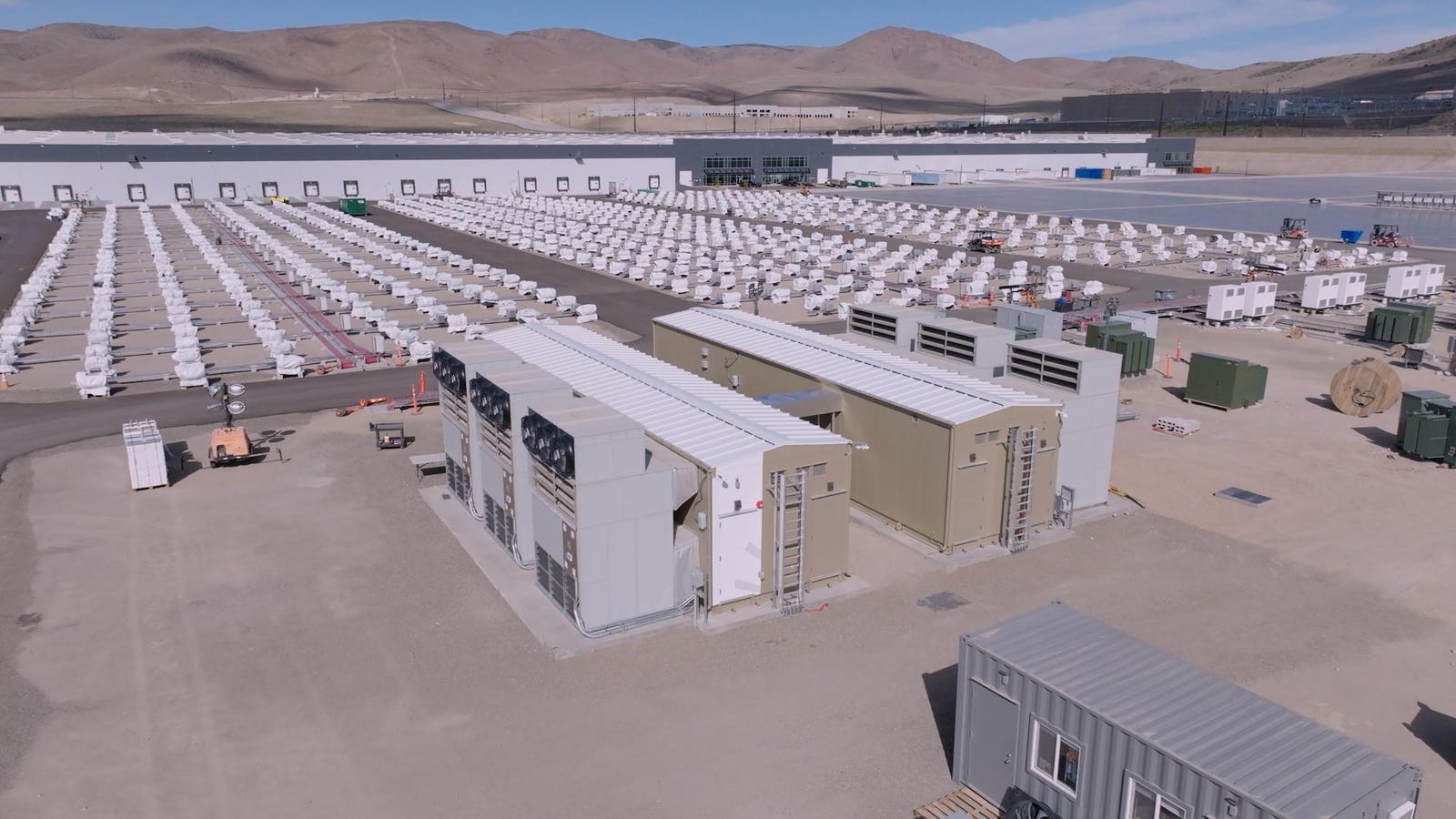
The energy investment landscape continues its dynamic evolution, with significant capital flowing into solutions designed to address burgeoning electricity demand. A prime example is Redwood Materials, a frontrunner in lithium-ion battery recycling and a critical supplier of materials for new cells, which recently secured an impressive $350 million in its latest funding round. This infusion of capital, led by venture firm Eclipse with strategic participation from Nvidia’s investment arm, underscores a profound market conviction in grid-scale energy storage systems. The company’s total funds raised now stand at $2.2 billion, with an estimated valuation exceeding $6 billion, signaling a robust appetite for infrastructure plays that can power the future, particularly the insatiable energy needs of AI data centers.
Strategic Imperative: Powering the Future Grid
Redwood Materials, founded in 2017 by Tesla co-founder JB Straubel, is not just about recycling; it’s about establishing a resilient U.S. supply chain for vital battery components. The company’s core mission involves recovering valuable elements like cobalt, nickel, copper, and lithium from used batteries, then refining and reintroducing these materials into the manufacturing of new cathode materials. This integrated approach addresses both sustainability and supply security, reducing reliance on foreign processing capabilities. The latest funding will directly accelerate the expansion of its energy storage deployments, alongside refining and materials production capacity, and bolster its engineering and operations teams. Its recent partnership with General Motors to source lithium-iron phosphate (LFP) battery cells for large-scale energy storage systems highlights the strategic pivot towards grid-level solutions, catering to the high demand from utilities and, increasingly, AI data center operators. This shift positions Redwood at the nexus of the energy transition, providing foundational infrastructure for an electrified economy.
Navigating Volatility: Traditional Energy and the Transition
While significant capital is channeled into advanced energy solutions like grid batteries, the traditional oil and gas market continues to exhibit its characteristic volatility, a crucial factor for investors balancing portfolios. As of today, Brent crude trades at $90.38 per barrel, reflecting a sharp daily downturn of 9.07%, with prices oscillating between $86.08 and $98.97. Similarly, WTI crude has seen a significant decline, now at $82.59, down 9.41% within a day range of $78.97 to $90.34. Our proprietary market analysis reveals that this isn’t an isolated event; Brent has witnessed a substantial drop of nearly 20% in just the past two weeks, falling from $112.78 on March 30th to its current level. Gasoline prices also reflect this downward pressure, presently at $2.93, a 5.18% decrease. This ongoing fluctuation in crude prices underscores the inherent risks and opportunities within the fossil fuel sector, even as the broader energy landscape witnesses unprecedented investment in electrification and storage. Investors must weigh the immediate returns and market dynamics of conventional energy against the long-term, structural growth drivers in areas like grid battery expansion.
Anticipating Future Moves: OPEC+ and Inventory Signals
The interplay between traditional energy market events and the accelerating energy transition is a critical area for investors to monitor. Our upcoming energy calendar highlights several key events that will likely shape short-term market sentiment and crude price trajectories. Investors are keenly watching the OPEC+ Joint Ministerial Monitoring Committee (JMMC) Meeting scheduled for April 19th, swiftly followed by a full OPEC+ Ministerial Meeting on April 20th. These gatherings are pivotal, as any adjustments to production quotas or strategic outlooks can significantly impact global supply-demand balances, directly influencing crude prices. Furthermore, the weekly API and EIA crude inventory reports, slated for April 21st, 22nd, 28th, and 29th, will offer crucial insights into U.S. supply levels and refinery activity. The Baker Hughes Rig Count on April 24th and May 1st will provide a pulse check on drilling activity. While these events directly pertain to the fossil fuel sector, their broader implications for energy costs and economic stability can indirectly affect the investment calculus for cleantech companies like Redwood Materials. A stable, or even declining, traditional energy price environment might, paradoxically, accelerate the adoption and investment in alternative grid solutions as industries seek greater energy independence and cost predictability.
Addressing Investor Focus: Valuation, Policy, and Long-Term Demand
Our proprietary reader intent data reveals a strong investor focus on the long-term outlook for crude oil, with many asking for predictions on prices by the end of 2026, and seeking clarity on OPEC+ production quotas. While precise forecasts are challenging, the strategic decisions made by entities like OPEC+ will certainly influence the commodity market’s trajectory, alongside global economic growth, geopolitical stability, and the accelerating pace of the energy transition. For companies like Redwood, valuation metrics, currently estimated north of $6 billion, reflect investor confidence not just in the technology, but in the leadership. The team, comprising Tesla veterans including JB Straubel, brings unparalleled experience in scaling battery and energy storage operations. Despite policy headwinds that have occasionally impacted the U.S. EV market, such as past adjustments to tax credits and public charging station funding, the underlying demand for grid-scale energy storage appears less susceptible to these specific policy fluctuations. The relentless growth of AI data centers, coupled with the broader electrification push, creates an almost insatiable demand for reliable, large-scale power solutions. This structural demand provides a robust investment thesis for companies like Redwood, offering a compelling long-term growth story irrespective of short-term crude market gyrations or transient policy shifts affecting other segments of the cleantech sector.