

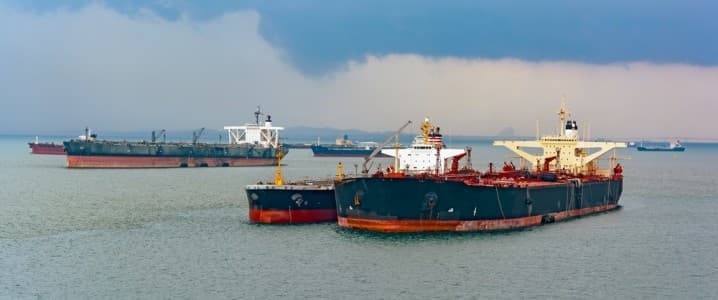
Record volumes of nearly 40 million barrels of sanctioned Iranian, Russian, and Venezuelan crude are idling in floating storage on tankers near China, according to Kpler data cited by Bloomberg on Monday.
The crude volumes in floating storage, with more than three-quarters of the tankers laden with Iranian oil, have jumped by 17% compared to the week before the Middle East war started.
The proximity to China and the willingness of Chinese refiners, especially the private crude processors, to buy sanctioned crude could ease – to an extent – the major disruption of global oil supplies following the halt of tanker traffic in the Strait of Hormuz.
Moreover, the Chinese strategy to build up reserves during a nearly year-long buying spree at relatively low prices is now paying off, as the world’s top crude importer has some buffer to power through the early days of the severely disrupted oil flows out of the Middle East, analysts say.
Two-thirds of the crude volumes currently amassed near China – most of which from Iran, per Kpler estimates – sit on tankers anchored in the Yellow Sea, and the rest are in the South China Sea.
China could soak up, in the near term, Iranian and Russian crude that’s been sitting in floating storage for weeks.
India, Asia’s second-largest and the world’s third-largest crude importer, would be a competitor for the Russian barrels after the United States last week issued a temporary one-month license to India allowing it to purchase Russia-origin crude loaded on vessels before or on March 5.
India, the world’s third-largest crude importer, depends on Middle East supply for about 60% of its imports, and the de facto halted tanker traffic in the Strait of Hormuz has put severe pressure on its supplies.
“With the waiver now in place, refiners could quickly resume purchases, potentially pushing Russian inflows around 1.8 to 2 Mbd in the near term,” analysts at Kpler said on Friday.
However, they warned that “While this provides a short-term logistical buffer, it cannot fully offset India’s ~2.6 Mbd exposure to Middle Eastern crude, and competition from Chinese buyers for the same Russian barrels will limit the upside.”
By Charles Kennedy for Oilprice.com
More Top Reads From Oilprice.com
