While the broader financial news cycle might be buzzing about esoteric technological advancements like quantum computing capturing investor interest, seasoned oil and gas investors know that the real drivers for portfolio performance remain firmly rooted in energy market fundamentals. The allure of groundbreaking tech, with its promises of exponential growth, often distracts from the tangible, immediate, and impactful forces shaping the global energy landscape. For those focused on crude oil, natural gas, and refined products, the current market dynamics, geopolitical shifts, and a packed calendar of industry-specific events demand our undivided attention. Let’s cut through the noise and delve into what truly matters for your energy investment strategy.
Navigating Current Market Volatility in Energy
The past few weeks have underscored the inherent volatility of crude markets, a stark reminder that even robust sectors face significant headwinds. As of today, Brent Crude trades at $90.38 per barrel, a notable decline of 9.07% within the day’s range of $86.08 to $98.97. Similarly, WTI Crude stands at $82.59, down 9.41%, having fluctuated between $78.97 and $90.34. This intraday swing reflects a profound uncertainty gripping traders. Looking back, the trend is equally telling: Brent has shed $22.40, or 19.9%, moving from $112.78 on March 30, 2026, to its current $90.38 on April 17, 2026. This downward pressure, despite underlying supply concerns, indicates broader macroeconomic anxieties and perhaps a recalibration of demand expectations. Meanwhile, gasoline prices have also felt the pinch, trading at $2.93, down 5.18% today within a range of $2.82 to $3.1. Savvy investors are closely monitoring these price movements, recognizing that such swift declines can present both risks and opportunities for entry or exit, particularly for companies with varying cost structures and hedging strategies.
Quantum Computing’s Distant Promise Versus Immediate Energy Imperatives
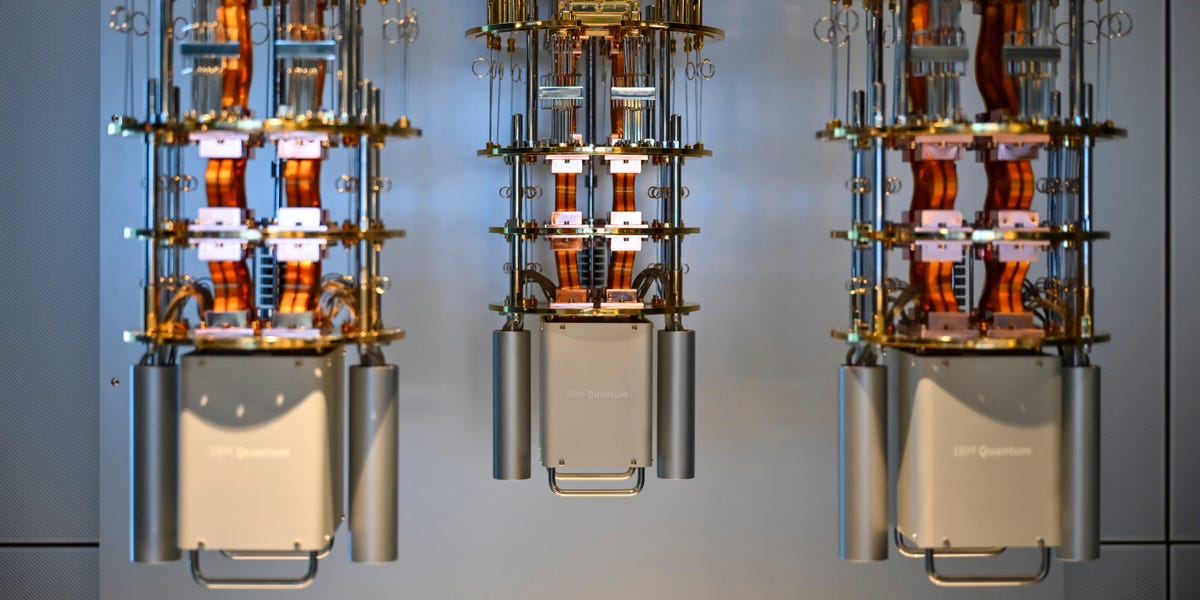
The financial world has certainly taken notice of quantum computing’s potential, with recent trials in bond markets by IBM and HSBC, and studies from Vanguard, highlighting its application in complex financial modeling. Companies like Rigetti Computing, D-Wave Quantum, IonQ, and Quantum Computing have seen significant stock gains, with some rising as much as 165% in the past month. While the prospect of processing vast datasets at unprecedented speeds is intriguing, particularly for optimizing complex supply chains, geological modeling, or even carbon capture simulations within the energy sector, its practical, widespread application remains a distant horizon. For oil and gas investors, capital allocation today is driven by immediate market forces: geopolitical stability, OPEC+ decisions, inventory levels, and drilling activity. While we acknowledge the transformative potential of advanced technologies in the very long term, the investment thesis for energy companies in 2026 hinges on tangible production, demand growth, and strategic capital expenditure, not speculative technological breakthroughs that are still years, if not decades, from commercial energy sector adoption. Our focus remains on assets that generate real cash flow in the current commodity price environment.
Anticipating Market Shifts: The Impact of Upcoming Energy Events
The immediate future holds several critical catalysts that will undoubtedly shape crude oil prices and investor sentiment. This Sunday, April 19, 2026, the OPEC+ Full Ministerial Meeting is scheduled. This gathering is paramount, as the cartel’s collective decisions on production quotas directly impact global supply and, consequently, price stability. Investors are keenly awaiting any signals regarding deeper cuts or a maintenance of current levels, especially in light of the recent price depreciation. Following this, the market will scrutinize weekly inventory data: the API Weekly Crude Inventory reports are due on Tuesday, April 21, and again on Tuesday, April 28. These will be closely followed by the EIA Weekly Petroleum Status Reports on Wednesday, April 22, and Wednesday, April 29, providing crucial insights into U.S. supply and demand dynamics. Finally, the Baker Hughes Rig Count on Friday, April 24, and May 1, will offer a real-time gauge of upstream activity and future production trends. Each of these events carries the potential to trigger significant market movements, demanding proactive analysis and strategic positioning from energy investors.
Addressing Key Investor Questions: The Road Ahead for Oil & Gas
Our proprietary reader intent data reveals a clear focus among OilMarketCap.com investors on the fundamental drivers of energy markets. One recurring question is: “What do you predict the price of oil per barrel will be by the end of 2026?” While precise predictions are challenging, our analysis suggests continued volatility, with geopolitical tensions, global economic growth trajectories, and OPEC+ policy being the dominant variables. A sustained recovery above the $100 mark for Brent would likely require a significant tightening of supply, potentially driven by more aggressive OPEC+ cuts or unexpected disruptions. Conversely, a global economic slowdown could push prices further down. Another common query revolves around “OPEC+ current production quotas.” As of the previous agreement, the group has maintained a disciplined approach to balancing the market, and investors will be looking for confirmation or adjustment of these quotas at the upcoming April 19 meeting. Furthermore, investors are specifically asking, “How well do you think Repsol will end in April 2026?” Companies like Repsol, with integrated operations spanning upstream, refining, and renewables, are particularly sensitive to both crude price fluctuations and refined product margins. Their performance in April will be heavily influenced by the immediate aftermath of the OPEC+ decision, the weekly inventory reports, and the broader economic outlook impacting European demand. Monitoring their operational efficiency and strategic hedging will be key to assessing their near-term trajectory.


