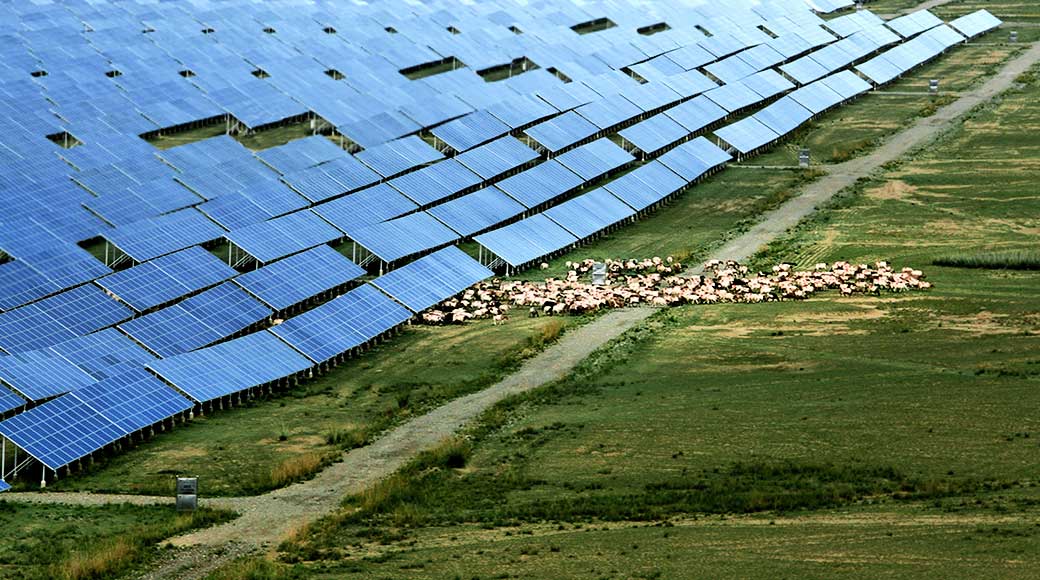
In the vast, high-altitude landscapes of northwest China, Qinghai Province is rapidly emerging as a critical case study in the global energy transition, demonstrating an ambitious dual strategy of large-scale clean energy deployment alongside aggressive ecological restoration. For astute oil and gas investors, Qinghai offers more than just a glimpse into China’s future energy mix; it presents a tangible example of how integrated sustainability initiatives can underpin robust, long-term infrastructure development, influencing regional energy security and global commodity demand. This analysis delves into Qinghai’s pioneering approach, connecting its localized successes to the broader market dynamics and investor concerns shaping the energy sector.
Qinghai’s Green Blueprint: Balancing Ecology and Energy Dominance
Qinghai’s strategic importance extends beyond its energy ambitions. Positioned at the headwaters of the Yangtze, Yellow, and Lancang (Mekong) rivers, the province is a cornerstone of water security and biodiversity for hundreds of millions. Provincial authorities have undertaken significant ecological restoration, notably reducing desertified land in key areas like Shazhuyu Township from an alarming 90% to just 12.3%. This commitment to reversing environmental degradation is not merely altruistic; it forms a resilient foundation for long-term economic activity, including the very infrastructure required for renewable energy. Currently, clean energy sources power an impressive 90.6% of Qinghai’s electricity, establishing it as one of China’s lowest carbon power systems. This integrated approach signals a mature understanding that sustainable development, rather than being a constraint, is a prerequisite for robust, enduring energy infrastructure, offering a template for other regions grappling with resource management and energy transition.
Scaling Renewables: Qinghai’s Solar Thermal Leadership and Market Implications
Beyond traditional wind and solar photovoltaic, Qinghai has made a decisive move into advanced dispatchable renewable technologies, specifically solar thermal power. The province currently boasts a combined operational and under-construction solar thermal capacity of 2.06 million kilowatts, the highest total nationwide. This focus on solar thermal is particularly significant for investors, as it addresses a key challenge of intermittent renewables: grid stability. Unlike conventional solar PV, solar thermal power plants can store energy, allowing for consistent power generation even after sunset. This positions Qinghai not only as a massive renewable generation base but also as a vital testing ground for next-generation grid integration. The successful scaling of dispatchable clean energy in such an ecologically sensitive and geographically challenging region provides a compelling proof-of-concept for broader adoption, potentially accelerating the global shift away from fossil fuels in base-load generation and influencing long-term demand forecasts for conventional energy sources.
Navigating Macro Headwinds: Oil Market Dynamics and Investor Sentiment
While Qinghai charts a course for a cleaner energy future, the broader oil and gas market continues to grapple with significant volatility. As of today, Brent crude trades at $91.87, reflecting a notable 7.57% decline in a single day, within a range of $86.08 to $98.97. Similarly, WTI crude stands at $84, down 7.86% from its daily high. This recent downturn extends a trend observed over the past two weeks, where Brent has fallen from $112.57 on March 27th to $98.57 just yesterday, marking a substantial 12.4% decrease. This sharp correction underscores the market’s sensitivity to supply-demand signals and geopolitical developments. Our reader intent data reveals significant investor concern, with many asking about the trajectory of oil prices by the end of 2026. This immediate focus on short-term price movements highlights the ongoing tension between the imperative for energy transition, exemplified by regions like Qinghai, and the persistent reliance on hydrocarbons for global energy needs. Investors are keenly evaluating how these short-term price fluctuations will influence capital allocation in both traditional and renewable energy sectors, seeking clarity on the balance between immediate returns from conventional assets and long-term growth opportunities in clean energy.
Forward Outlook: Upcoming Events and Strategic Positioning for Energy Investors
The coming weeks are packed with critical events that will undoubtedly shape the near-term trajectory of the oil and gas market, demanding careful attention from investors. The immediate spotlight falls on the OPEC+ Joint Ministerial Monitoring Committee (JMMC) meeting scheduled for April 17th, followed by the full OPEC+ Ministerial Meeting on April 18th. These gatherings are pivotal, as any decisions on production quotas will directly impact global supply and price stability, addressing questions our readers frequently pose regarding OPEC+ policies. Beyond these high-stakes discussions, weekly data releases such as the API Crude Inventory on April 21st and 28th, and the EIA Weekly Petroleum Status Report on April 22nd and 29th, will offer crucial insights into U.S. supply and demand dynamics. The Baker Hughes Rig Count on April 24th and May 1st will further inform market participants about upstream activity. For investors contemplating their portfolio strategy, understanding these immediate market movers is essential, even as the long-term narrative shifts towards cleaner energy. The rapid advancements in regions like Qinghai, demonstrating viable and scalable clean energy solutions, provide a forward-looking perspective, suggesting that while short-term volatility in oil markets persists, the strategic imperative for investment in renewable energy infrastructure is only accelerating.


