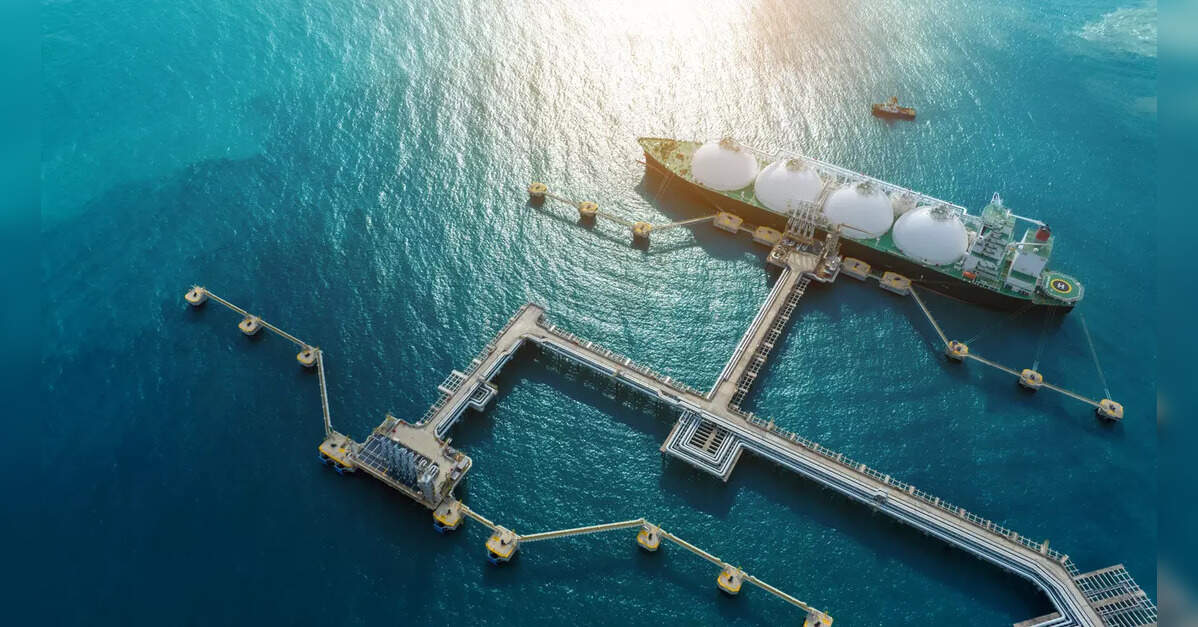
The global energy landscape has been jolted by news of attacks on Qatar’s liquefied natural gas (LNG) facilities, leading to a complete halt in production and a significant disruption of supplies to key importing nations, most notably India. This geopolitical escalation in the West Asia region, specifically targeting a critical energy producer, immediately triggers concerns over global gas supply stability, price volatility, and the security of vital shipping lanes. For energy investors, this situation demands immediate attention, as it not only impacts a substantial portion of India’s energy mix but also adds a fresh layer of risk premium to an already tense market, raising fundamental questions about short-term supply resilience and long-term investment strategies in the sector.
Immediate Fallout: India’s LNG Supply Under Duress
The cessation of LNG production in Qatar has sent ripples directly through India’s energy sector. India, a nation heavily reliant on long-term LNG contracts with Qatar for approximately 40% of its annual 27 million tonnes of imported LNG, is now facing a substantial supply deficit. Cargoes have been temporarily suspended, leading to immediate supply cuts of up to 40% for a broad spectrum of industrial consumers and city gas distribution (CGD) companies. Petronet LNG Ltd, India’s largest LNG importer, has confirmed its inability to dispatch vessels to Qatar’s Ras Laffan loading port due to the closure of the Strait of Hormuz, a critical maritime chokepoint. Both Petronet and QatarEnergy have issued force majeure notices, signaling an unavoidable breakdown in contractual obligations due to the prevailing hostilities and material risks to maritime navigation. This disruption forces industrial users to consider costlier alternative fuels, while the city gas sector warns of severe stress, potentially eroding the price advantage of compressed natural gas (CNG) and accelerating a shift towards electric vehicles, a structural risk to gas demand in the long term.
Market Dynamics: Geopolitical Risk vs. Current Price Realities
The geopolitical developments in West Asia, particularly the closure of the Strait of Hormuz and the attack on Qatar’s LNG infrastructure, inject a fresh wave of uncertainty into the global energy markets. As of today, Brent Crude trades at $90.38, while WTI Crude stands at $82.59, both showing a 0% change for the day, reflecting a momentary pause despite the grave news. However, this stability belies recent volatility; Brent, for instance, has seen a notable decline over the past 14 days, dropping from $112.78 on March 30th to its current level, a significant decrease of nearly 20%. This prior downward trend was likely influenced by broader supply-demand dynamics and easing fears that had previously built in a substantial risk premium. The current LNG outage and the Strait of Hormuz situation, however, introduce a renewed upward pressure on energy prices. While direct impacts on crude oil prices might not be immediate, the principle of interconnected energy markets suggests that a major disruption in LNG supply and the heightened risk in a critical shipping lane will inevitably feed into broader investor sentiment, potentially reversing recent crude price declines and pushing gasoline prices, currently at $2.93, higher as the market reprices geopolitical risk.
Addressing Investor Concerns: Navigating Price Volatility and Supply Security
Our proprietary reader intent data reveals that investors are keenly focused on the direction of energy prices, with questions like “is WTI going up or down” and “what do you predict the price of oil per barrel will be by end of 2026?” dominating discussions. The Qatar LNG outage directly complicates these forecasts. For India’s CGD operators, the prospect of replacing contracted Qatari volumes with spot LNG priced at more than double the contracted rate highlights a critical vulnerability in global gas supply chains. This scenario not only impacts the profitability of gas distributors but also threatens to erode the competitive edge of CNG, pushing consumers towards electric vehicles and potentially creating a permanent demand shift. Investors in LNG-dependent economies or companies with significant exposure to long-term gas contracts must re-evaluate their risk models. The immediate spike in spot LNG prices, coupled with the long-term uncertainty stemming from regional conflicts, underscores the need for diversification and robust supply chain resilience. The end-of-2026 oil price will heavily depend on the duration and intensity of these geopolitical tensions, as well as the ability of alternative suppliers to fill any sustained gaps.
Forward-Looking Analysis: Key Catalysts on the Horizon
With the current instability, investors must keep a close watch on upcoming events that could provide further direction for energy markets. The OPEC+ Joint Ministerial Monitoring Committee (JMMC) meeting on April 20th, followed by the full OPEC+ Ministerial Meeting on April 25th, will be critical. Any decisions regarding crude oil production levels could either exacerbate or alleviate the supply concerns stemming from the West Asia conflict. Should OPEC+ decide against increasing output, or even consider further cuts, crude prices could react sharply upwards, especially given the heightened geopolitical risk. Furthermore, the weekly API and EIA crude inventory reports on April 21st/22nd and April 28th/29th, respectively, will offer crucial insights into the immediate supply-demand balance in the United States, a significant indicator for global markets. The Baker Hughes Rig Count on April 24th and May 1st will provide a look into future production trends. These scheduled events, against the backdrop of the Qatar LNG outage and Strait of Hormuz disruptions, will serve as essential catalysts for price movements and inform strategic investment decisions in a market defined by elevated geopolitical risk and the imperative of energy security.


