

Global LNG Market Navigates Volatility Amid Idled Fleets and Shifting Demand
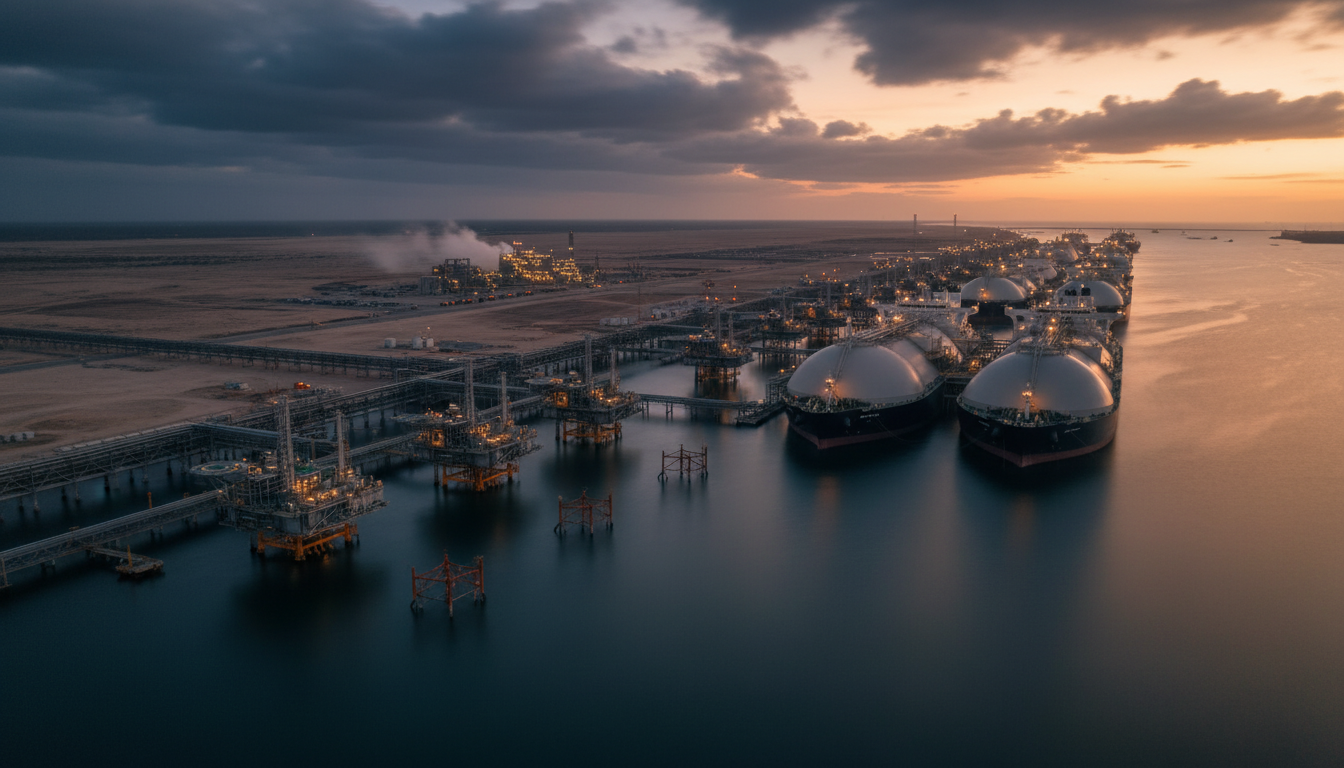
The intricate ballet of global liquefied natural gas (LNG) trade is currently performing a complex, often unpredictable, sequence for investors. A recent analysis reveals a significant portion of Qatar’s dedicated LNG carrier fleet, almost 50 vessels, currently sits idle across various Asian maritime hubs. This unprecedented accumulation of empty vessels, observed in locations like West India, Sri Lanka, the Strait of Malacca, and offshore Singapore, signals a profound shift in the immediate dynamics of the superchilled fuel market.
Each of these sophisticated LNG carriers typically boasts a formidable capacity of approximately 170,000 cubic meters of natural gas, translating to a substantial 72,000 tons of liquefied gas. With more than four dozen such vessels reported as stationary, this represents a potential transport capacity loss exceeding 3.456 million tons of LNG. For investors monitoring the energy sector, this idled capacity from a major global supplier like Qatar highlights current logistical bottlenecks and market imbalances, urging a closer look at the efficiency and resilience of global energy supply chains.
Geopolitical Tensions Reshape Shipping Dynamics
The global fleet of LNG carriers, numbering around 800 vessels, has long been a focal point for market analysts. Prior to the recent escalation of geopolitical tensions in the Middle East, industry experts frequently cautioned that this fleet size would prove insufficient to meet projected increases in global LNG demand. However, the current landscape has introduced a paradoxical twist: with Qatar’s LNG production reportedly facing disruptions linked to the conflict, the previously anticipated pressure on tanker supply may temporarily abate. This complex interplay between geopolitical events, production stability, and shipping availability creates a volatile environment for investors in both the LNG production and maritime transport sectors.
The implications for shipping economics are significant. While fewer cargoes from a major exporter could depress spot freight rates, the strategic importance of these vessels remains undiminished. Investors in shipping companies and energy infrastructure must weigh the short-term impact of reduced demand against the long-term fundamentals of growing global reliance on natural gas and the eventual return of full production capacity from key players like Qatar.
China’s Arbitrage and Asia’s Shifting LNG Appetite
Amidst this global disruption, China has emerged as a pivotal player, actively reshaping regional LNG trade flows. Leveraging robust domestic stockpiles and a period of relatively lukewarm internal demand, China has aggressively engaged in reselling liquefied gas to other Asian nations. March alone saw China re-exporting a record-breaking ten LNG cargoes, an unprecedented monthly high according to leading energy analytics firms. This strategic maneuver by Beijing underscores the increasing sophistication of global commodity trading and China’s growing influence in balancing regional energy supply and demand, presenting opportunities and challenges for other market participants.
However, the broader Asian LNG market is simultaneously grappling with a significant downturn in demand. The lingering effects of Middle Eastern instability, coupled with intense competition from Europe for available cargoes, have driven LNG prices higher. This supply tightness and elevated pricing have directly impacted consumption patterns across Asia, leading to the sharpest decline in liquefied natural gas imports since the height of the COVID-19 pandemic lockdowns in December 2020. Last month, total Asian LNG imports registered at 20.6 million tons, marking an 8.6% year-on-year contraction—a stark indicator for investors of rapidly evolving market conditions and potential shifts in regional energy strategies.
Investor Outlook: Navigating Uncertainty in Natural Gas Investments
For astute investors, these converging market forces paint a complex picture for the natural gas sector. The idling of a substantial portion of Qatar’s LNG fleet, even if temporary, highlights the vulnerability of global energy supply chains to geopolitical events. The pre-existing tightness in global LNG shipping capacity, now offset by production disruptions, necessitates careful evaluation of future freight rates and vessel construction plans. Moreover, China’s aggressive re-export strategy demonstrates the increasing importance of market arbitrage and regional stock management in price discovery and supply balancing.
The contraction in Asian LNG demand, driven by higher prices and European competition, signals potential headwinds for long-term demand growth projections and the economic viability of future liquefaction projects. Investors must consider how these dynamics might influence final investment decisions (FIDs) for new LNG terminals and associated infrastructure. The overall environment demands a nuanced approach, prioritizing resilience, diversification, and a deep understanding of the geopolitical undercurrents shaping the global energy landscape. Monitoring these trends will be crucial for positioning portfolios effectively within the dynamic world of oil and gas investments.
