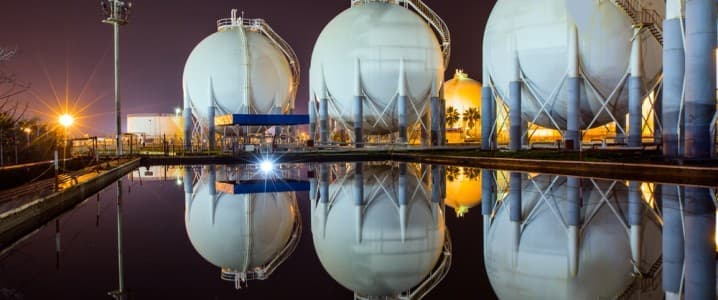
The global liquefied natural gas (LNG) market is once again under the microscope, as recent events in Qatar have triggered significant supply chain disruptions, particularly impacting major importers like India. Following military attacks on its Ras Laffan and Mesaieed Industrial City facilities, QatarEnergy, a pivotal player in global LNG supply, announced a halt to production. This immediate cessation, coupled with existing uncertainties surrounding tanker traffic through the Strait of Hormuz, has sent ripples across energy markets, forcing key Indian gas marketers to scramble for alternative supplies. For investors, this scenario underscores the inherent volatility of energy markets, the critical importance of supply diversification, and the persistent geopolitical risks that shape global commodity prices.
India’s Immediate Supply Shock and the Scramble for Spot LNG
India, ranking as the world’s fourth-largest LNG importer, finds itself in a precarious position. Highly dependent on Middle Eastern cargoes, the nation is a significant customer of Qatari LNG and also relies heavily on ADNOC Gas from the UAE. With Qatar’s production suspended, major Indian gas marketing firms have already begun informing industrial clients of impending supply reductions, ranging from 10% to 30%. Petronet LNG, India’s largest importer, notified GAIL (India) and other distributors of reduced allocations. In response, GAIL and Indian Oil Corporation are actively planning tenders for spot LNG supply, a stark pivot from previous strategies. Earlier this year, India, a notably price-sensitive buyer, had been hesitant to lock in long-term LNG deals, with Petronet’s CEO, Akshay Kumar Singh, indicating a need for Asian LNG prices to nearly halve to significantly boost imports. This current crisis forces India back into a spot market where prices have recently seen substantial increases, challenging its cost-sensitive approach and highlighting the immediate implications of geopolitical instability on national energy security.
Current Market Dynamics Amidst Geopolitical Volatility
The current market environment reflects a complex interplay of supply shocks and broader economic indicators. As of today, Brent crude trades at $90.38, showing a surprising resilience despite the Qatari disruption, holding within a daily range of $86.08 to $98.97. WTI crude similarly hovers at $82.59. While these crude benchmarks appear relatively stable today, it’s crucial to acknowledge the underlying volatility. Notably, Brent crude has experienced a significant downturn over the past fortnight, shedding nearly 20% from $112.78 on March 30th to its current level. This prior unwinding of geopolitical risk premium might be cushioning the immediate price reaction to the Qatar news, suggesting that some of the speculative froth had already dissipated. However, the interruption of about 20% of global LNG supply transiting the Strait of Hormuz, alongside the Qatari output halt, has already driven Asian and European gas prices to levels not seen since 2022. This divergence between crude and natural gas reflects localized supply pressures for LNG, while global crude balances are influenced by a broader set of factors.
Investor Concerns and Forward-Looking Price Trajectories
Investor sentiment, as evidenced by proprietary reader intent data, reveals a deep uncertainty regarding future energy prices. A recurring question this week, particularly concerning WTI’s direction and the broader oil price outlook for the end of 2026, underscores the market’s current state of flux. While predicting precise price points remains challenging due to the multitude of variables, the Qatari situation adds another layer of complexity to these forecasts. The immediate impact is most pronounced in regional LNG markets, where supply tightness is evident. For crude, the sustained geopolitical tension in the Middle East, even if not directly impacting current production rates outside of specific incidents, provides a constant bullish undercurrent. The broader trajectory of oil prices will hinge on the delicate balance between OPEC+ production policies, global demand growth, and the ongoing geopolitical premium. Investors are clearly grappling with how these multifaceted risks translate into tangible price movements and investment opportunities.
Navigating the Future: Key Events and Strategic Implications
Looking ahead, several key events on the energy calendar will provide critical insights for investors navigating this turbulent landscape. The upcoming OPEC+ Joint Ministerial Monitoring Committee (JMMC) Meeting on April 20th, followed by the full OPEC+ Ministerial Meeting on April 25th, will be paramount. Any signals from these gatherings regarding production quotas or supply strategies could significantly influence crude oil prices, potentially offsetting or exacerbating the current geopolitical premium. Furthermore, weekly inventory data, such as the API Weekly Crude Inventory reports on April 21st and April 28th, and the EIA Weekly Petroleum Status Reports on April 22nd and April 29th, will offer granular detail on supply-demand balances in key markets. For the LNG sector, the Qatari disruption highlights the ongoing need for investment in diversified liquefaction and regasification capacity, particularly in regions vulnerable to supply shocks. Long-term energy security remains a critical investment theme, suggesting continued capital allocation towards resilient supply chains and alternative energy sources, as the volatility witnessed in the Middle East underscores the fragility of existing frameworks.


