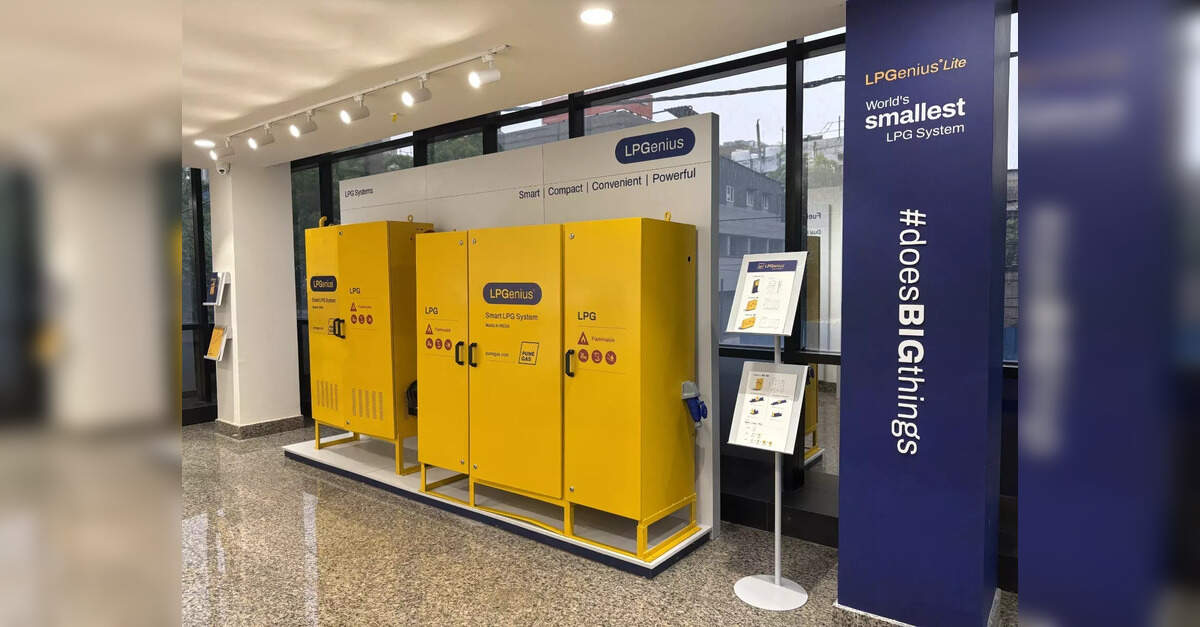
India’s rapid industrialization and growing emphasis on sustainable energy solutions are creating a dynamic landscape for gas providers. Against this backdrop, Pune Gas’s strategic expansion into North India with its first wholly-owned Experience Centre in Okhla, Delhi, represents a significant move. This facility, the company’s seventh overall, is poised to capitalize on the substantial commercial and industrial (C&I) energy demand across key states like Uttar Pradesh, Rajasthan, Madhya Pradesh, and Uttarakhand, offering specialized gas systems and consultation. For investors, this development signals a focused effort to capture a crucial segment of India’s evolving energy market, addressing long-standing inefficiencies and aligning with broader environmental objectives.
Strategic Play in India’s Industrial Energy Transition
The C&I sector in India presents a compelling growth story for gas-based solutions. Despite India consuming 30,916 TMT of LPG in FY 2022-23, a mere 16 percent was utilized by industrial and commercial entities. This highlights a vast untapped potential, as many businesses continue to rely on less efficient and more polluting fuels such as diesel, furnace oil, kerosene, and even wood. Pune Gas is directly targeting this inefficiency, particularly in North India, where over 7.12 lakh industrial and commercial LPG users frequently encounter operational challenges like LPG cylinder freezing, leading to significant gas loss. The new Delhi Experience Centre is designed to showcase end-to-end solutions, including advanced vaporiser systems and gas infrastructure components, facilitating a seamless transition for businesses.
The company’s flagship offerings, LPGenius, FuelFusion, and LeakCheck, are tailored to address these pain points directly. LPGenius, designed for LOT (Liquid Off-Take) 47.5 kg cylinders, promises to eliminate cylinder freezing and sweating, delivering an impressive 20-30 percent in cost savings. FuelFusion, a dual-fuel system, enables diesel generators to run on a combination of diesel and LPG, significantly reducing emissions and supporting international energy and climate goals. Furthermore, LeakCheck enhances safety by providing reliable gas leak detection for both commercial and industrial premises. These innovative solutions have already demonstrated substantial impact, with the company reporting that its systems have helped businesses save an estimated ₹1,400 crore annually by mitigating fuel inefficiencies. This track record underscores Pune Gas’s ability to deliver tangible economic and environmental benefits, making its expansion a potent force in the region’s energy transition.
Navigating Volatile Commodity Markets: Implications for Gas Adoption
The timing of Pune Gas’s aggressive push into North India coincides with a period of significant volatility in global commodity markets, a factor that invariably influences the economics of fuel switching. As of today, April 18, 2026, Brent Crude trades at $90.38 per barrel, marking a notable 9.07% drop within the day’s range of $86.08-$98.97. WTI Crude shows a similar trend, now at $82.59, down 9.41% from its open. This daily dip follows a broader decline, with Brent having shed over 18% in the last two weeks alone, falling from $112.78 on March 30th to $91.87 yesterday. Such sharp movements in crude prices directly impact the cost of competing fuels like diesel and furnace oil. While a sudden downturn in crude might temporarily narrow the immediate cost-saving differential for businesses considering a switch, the long-term structural advantages offered by Pune Gas’s systems remain compelling.
For instance, the LPGenius system’s promise of 20-30% cost savings from enhanced efficiency and reduced gas loss is a fundamental value proposition that transcends short-term commodity price fluctuations. Moreover, the environmental benefits of FuelFusion, which helps businesses meet sustainability targets by reducing emissions, offer a strategic advantage irrespective of the daily crude ticker. The core inefficiencies Pune Gas addresses – such as cylinder freezing and the operational costs associated with traditional fuels – are persistent challenges for North Indian industries. Therefore, while global crude dynamics warrant careful monitoring, Pune Gas’s offerings provide a more stable and predictable operational cost base, appealing to businesses seeking long-term efficiency and environmental compliance.
Addressing Investor Queries: Long-Term Outlook for Industrial Gas Solutions
Our proprietary reader intent data reveals a strong investor focus on the long-term trajectory of oil prices, with questions such as “what do you predict the price of oil per barrel will be by end of 2026?” frequently appearing. This underscores the market’s quest for clarity amidst persistent volatility. In this context, Pune Gas’s strategy offers an interesting investment thesis. While the broader energy market grapples with crude price predictions and the performance of oil majors like Repsol (another frequent investor query), Pune Gas is carving out a niche rooted in fundamental operational improvement and cleaner energy adoption within a rapidly growing economy.
The structural drivers for increased gas adoption in India’s C&I sector are robust. Government policies increasingly favor cleaner fuels, and businesses are under pressure to improve efficiency and reduce their carbon footprint. Pune Gas’s solutions, by enabling businesses to save substantial amounts (₹1,400 crore annually) and operate more sustainably, position the company as a key enabler of this transition. This focus on efficiency and sustainability provides a degree of insulation from the extreme swings of global crude prices, making it an attractive play for investors seeking growth in India’s domestic energy infrastructure. The expansion into Delhi, a critical hub for industry and commerce, further solidifies its commitment to a market with inherent long-term growth potential, irrespective of short-term commodity headwinds.
Key Catalysts and Forward-Looking Indicators
For investors monitoring the broader energy landscape, upcoming events could influence the market sentiment and competitive dynamics for all energy sources. Investors must closely monitor upcoming energy events, particularly with OPEC+ meetings scheduled for this weekend, April 18th (JMMC) and 19th (Full Ministerial). Any decisions regarding production quotas could significantly impact global crude benchmarks, which in turn affect the relative attractiveness of alternative fuels in the C&I sector. Following these, weekly data points like the API Weekly Crude Inventory (April 21st, 28th) and the EIA Weekly Petroleum Status Report (April 22nd, 29th) will provide crucial insights into supply-demand dynamics in major markets, indirectly shaping the price stability for all energy sources, including LPG and natural gas.
Furthermore, the Baker Hughes Rig Count reports (April 24th, May 1st) offer a forward-looking perspective on future oil and gas production capacities, a factor that contributes to long-term price stability. While Pune Gas’s business model is fundamentally driven by localized C&I demand and efficiency gains, these global macro events dictate the broader energy cost environment. A sustained period of high crude prices would accelerate the shift towards gas solutions due to increased cost savings, while a prolonged downturn might slightly temper the pace of adoption for some businesses, though the long-term drivers for efficiency and sustainability remain intact. Pune Gas’s expansion is strategically timed to capture the long-term energy transition in India, positioning it to benefit from these overarching trends.


