

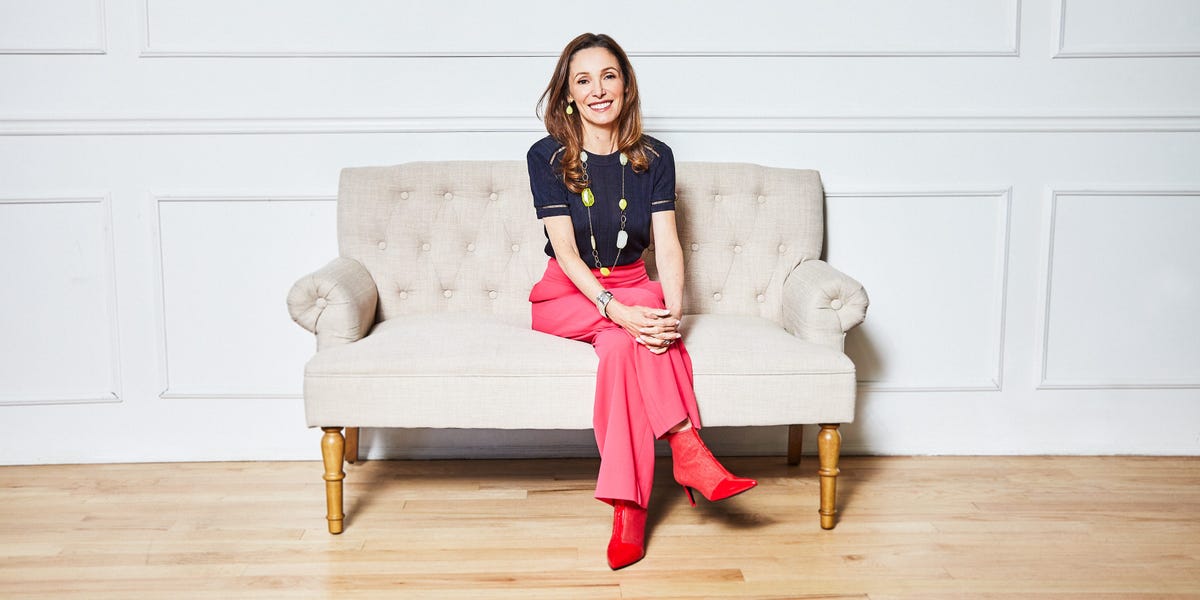
This as-told-to essay is based on a conversation with Teresa Barreira, chief marketing officer of Publicis Sapient, the advertising company’s tech arm. It’s been edited for length and clarity.
The role of the CMO has been under attack for years. And honestly, some of it is very well deserved.
Part of the reason is that the role has never actually been consistently defined. If you walk into 10 different companies, you will find 10 different versions of what a CMO is supposed to do. In some places, it’s about brand. In other places, it’s about demand. In others, it’s about communications.
That inconsistency has made the role easy to question and really easy to cut.
If you want more stories that give you an inside look at the changes shaping marketing, subscribe to Business Insider’s weekly newsletter, CMO Insider.
It’s the most exciting corporate job, but it’s the hardest because everybody thinks they can become a marketer.
Too many CMOs have been doing the business of marketing, which is the role of a VP of marketing. The business of marketing is doing campaigns, managing channels, communications, engagements, and brand.
The role of the CMO should be to do the business of the company: vision, deciding where the company is going, what the company stands for, and how it grows. What decisions do we need to make today to define the future? How do we go to market? Those are very different than running marketing campaigns.
The impact of AI on CMOs
What AI has done is expose what’s already there. It created a mirror. It’s forcing a reckoning that is long overdue.
The uncomfortable truth is that what CMOs have been doing for a lot of years is coordination, reporting, briefs, approvals, and production. That’s not strategic vision. And AI is exposing that. The CEO says, “Wait, can AI not do this today?”
AI amplifies whatever judgment already exists in the organization. It raises the floor and amplifies the ceiling.
A lot of CMOs use AI because the CEO said, “Everybody should use AI.” But they may have added AI to an existing and broken workflow and process of thinking. It just amplifies bad behavior. So you might get a little bit faster, but you just increase your inefficiencies.
How we’re using AI at Publicis Sapient
When AI came on the scene three years ago, I told my team to use it and experiment. After six months, I told them, “Come back and tell me how you’re going to change your ways of working.”
Here’s the truth. Six months later, nobody did.
Everybody embraced it, but they didn’t change how they do the work. They were just doing the work with AI as their companion, as a co-pilot.
I wanted to get to autonomy really fast. We built our own autonomous campaign agent. What we learned from that process is that we could make it autonomous, but the quality wasn’t very good.
We decided to take a first principles approach. We mapped every function across my entire marketing organization, and over 700 tasks we do on a daily basis across our team.
The reality is that 80% to 90% of those tasks can all be accelerated or done by AI. About 40% of those can run end-to-end with AI agents.
I’ll give you an example. We launch about five campaigns a month. To bring a campaign to market, it took us about 50 handoffs — people talking to people. We can orchestrate it with AI in 11 steps.
We can get to market faster, we can do volume if we want to, we can reduce costs, but the most important thing is: What do you do with the savings? What do you do with your time?
What I’ve done with every single function is redefine the job. We created new job descriptions focused on that 20% that we think is the most valuable, which only humans can do.
We realized that if AI can do all these tasks, what skills are required of humans? Many are very soft skills: judgment, intuition, plasticity, pattern recognition, and the ability to live in the abstract.
AI is not going to be as brave as humans are. The things in my career that had the highest impact were based a lot on my intuition and where I went against the grain.
The AI will tell me not to do that.
