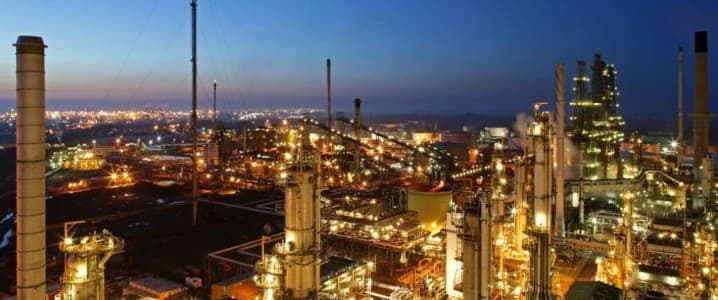
Phillips 66 (NYSE:PSX) is positioning itself for a dynamic energy future, as evidenced by its robust 2026 capital budget of $2.4 billion. This strategic allocation, comprising $1.3 billion for growth initiatives and $1.1 billion for sustaining operations, underscores the company’s commitment to capital discipline while aggressively pursuing opportunities in an evolving market. For investors, this budget signals a clear dual-pronged strategy: fortifying its integrated NGL value chain and petrochemical footprint while simultaneously advancing its renewable fuels portfolio. This analysis delves into the implications of this capital plan, examining its alignment with market trends, investor sentiment, and upcoming industry catalysts.
Strategic Capital Deployment Targets Integrated Downstream Growth
The $2.4 billion capital plan for 2026 reflects Phillips 66’s strategic imperative to enhance its position as a leading integrated downstream energy provider. A significant portion of this growth capital is directed towards expanding the company’s NGL wellhead-to-market strategy, with the Midstream segment alone receiving $1.1 billion, including $700 million for growth projects. This allocation is set to bolster pipeline and fractionation capacity in key basins and increase gas processing capabilities. Joint ventures, particularly with Chevron Phillips Chemical (CPChem) and WRB Refining, are also crucial beneficiaries, funding world-scale petrochemical facilities on the U.S. Gulf Coast and in Ras Laffan, Qatar, with commercial operations targeted for 2026. This integrated approach, as CEO Mark Lashier emphasized, is designed to maximize shareholder returns through high-return refining and NGL investments, alongside critical sustaining capital for operational reliability.
Midstream Resilience Amidst Crude Volatility: An Investor’s Perspective
In a market characterized by pronounced volatility, Phillips 66’s emphasis on its Midstream NGL business appears particularly astute. While the broader crude market has experienced notable swings—Brent crude, for instance, is currently trading around $91.87 per barrel, reflecting a sharp intraday decline of over 7.5%, and WTI crude has similarly fallen to $84, down nearly 7.9% today—the demand for NGLs often demonstrates greater stability, particularly as feedstock for the petrochemical industry. This recent market turbulence follows a two-week period where Brent had already shed $14, or 12.4%, from $112.57 on March 27 to $98.57 yesterday. This backdrop of fluctuating crude prices, which directly impacts refining margins and the cost of feedstocks for petrochemical operations, highlights the value of PSX’s integrated NGL strategy. By expanding its NGL infrastructure, Phillips 66 aims to capture value across the entire chain, from production to market, potentially insulating it from some of the acute price pressures experienced in pure-play refining or upstream segments. Investors frequently ponder the future trajectory of oil prices, often asking about predictions for crude per barrel by the end of 2026. Phillips 66’s diversified portfolio, with its strengthened midstream component, offers a degree of resilience against such price uncertainties, contributing to a more predictable revenue stream.
Balancing Traditional Energy and Renewable Transition
Beyond its robust midstream and petrochemical investments, Phillips 66 is actively navigating the energy transition with significant capital directed towards renewable fuel initiatives. The conversion of its San Francisco-area refinery into the Rodeo Renewable Energy Complex exemplifies this dual strategy. Expected to become one of the world’s largest facilities of its kind, Rodeo is designed to produce renewable diesel and sustainable aviation fuel from waste feedstocks, such as used cooking oil, fats, and greases. The recent commencement of commercial operations, integrated with a solar facility, marks a pivotal step in this direction. This forward-looking investment positions Phillips 66 to capitalize on growing demand for cleaner fuels while leveraging its existing refining expertise and infrastructure. It demonstrates a strategic pivot that acknowledges long-term environmental goals without abandoning the profitability of its conventional energy assets, creating a balanced portfolio that can appeal to a broader range of investors.
Activist Pressure and Forward-Looking Market Catalysts
Phillips 66’s strategic direction is also unfolding under the close scrutiny of activist investor Elliott Management, which has acquired a significant stake and is advocating for a strategic review, potentially including a spin-off or sale of the midstream business. This pressure intensifies the need for the company to demonstrate clear value creation and robust shareholder returns from its capital investments. The increased 2026 capex, particularly its focus on high-return growth projects, is a direct response to this imperative, aiming to validate the integrated model. Looking ahead, the broader energy market remains highly sensitive to key events that could significantly influence Phillips 66’s operating environment and investor sentiment. The upcoming OPEC+ Joint Ministerial Monitoring Committee (JMMC) and full Ministerial meetings on April 17th and 18th, respectively, are critical. Any adjustments to production quotas will directly impact global crude supply and, consequently, feedstock costs for PSX’s refining and petrochemical operations. Similarly, the weekly API and EIA crude inventory reports, scheduled for April 21st, 22nd, 28th, and 29th, will offer crucial insights into demand trends and market balances. These, coupled with the Baker Hughes Rig Count reports on April 24th and May 1st, will paint a clearer picture of upstream activity and future supply, all directly influencing the profitability and strategic positioning of an integrated player like Phillips 66.
Conclusion: Capital Discipline Meets Strategic Evolution
Phillips 66’s increased 2026 capital budget reflects a deliberate strategy to reinforce its core strengths in midstream and petrochemicals while making meaningful strides in renewable fuels. By allocating capital towards high-return growth projects and ensuring the reliability of existing assets, the company aims to deliver sustained shareholder value amidst a volatile energy landscape. The interplay of internal strategic execution, external activist pressure, and dynamic market forces, heavily influenced by upcoming OPEC+ decisions and inventory data, will define Phillips 66’s trajectory. For investors, the company’s commitment to capital discipline alongside its strategic evolution presents a compelling narrative in an energy market that demands both resilience and foresight.


