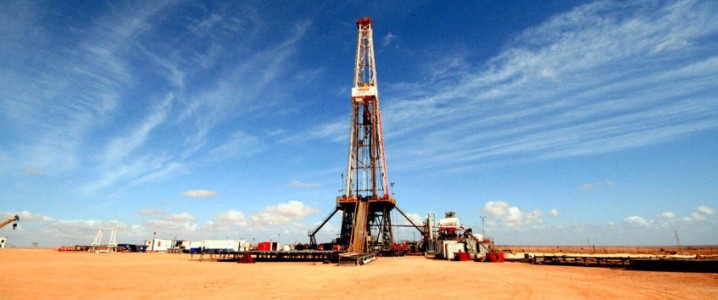
The latest data from the US oil and gas sector paints a complex picture for energy investors. While headlines might focus on weekly fluctuations, a deeper dive reveals a persistent trend of declining drilling activity. The total number of active rigs in the United States recently fell by 7, pushing the count to 547. This includes a notable 6-rig drop in oil-focused operations, bringing that total to 432. Such declines are not isolated incidents; the year-over-year comparison shows a significant reduction of 34 total rigs and 47 oil rigs. This contraction in drilling, particularly in the Permian Basin which saw a 1-rig decrease to 270, raises questions about future supply trajectories and producer sentiment, especially when juxtaposed against today’s robust crude prices.
The Persistent Rig Count Contraction and Production Paradox
The recent dip in the US active rig count underscores a strategic shift among producers, moving away from aggressive expansion towards capital discipline. With 547 total rigs now active – down 34 from this time last year – and oil rigs specifically falling by 47 year-over-year to 432, the industry’s footprint is undeniably shrinking. Even gas rigs, despite a year-over-year gain of 12, saw a 2-rig decrease this past week to 109. This trend is evident across key basins; the Permian Basin, a cornerstone of US production, experienced a 1-rig decline to 270, a figure 35 rigs lower than a year ago. The Eagle Ford remained unchanged at 41 active rigs, still 6 below its count from last year. Curiously, this reduction in drilling activity has not yet translated into a significant drop in overall output. Recent data indicates US crude oil production actually edged up to 13.435 million barrels per day (bpd), just shy of the all-time high set in early December 2024. This suggests efficiency gains and a backlog of completed wells are temporarily offsetting the slowdown in new drilling starts, but it raises a critical question for investors: how long can production growth be sustained without a more robust drilling program?
Navigating Price Volatility: Today’s Market Versus Past Swings
Understanding the current drilling landscape requires a clear grasp of market pricing dynamics. While the recent rig count decline was observed against a backdrop where WTI was trading around $65.06 and Brent at $67.59, down substantially from the prior week, the present market tells a different story. As of today, April 15, 2026, Brent crude trades at $95.58, up 0.83% on the day, having ranged between $91 and $96.89. WTI crude also stands strong at $91.75, reflecting a 0.51% daily gain within a range of $86.96 to $93.30. These are significantly higher price points than those accompanying the rig count reduction we’ve analyzed. However, current strength doesn’t negate the underlying volatility impacting producer decisions. Our proprietary data reveals that despite today’s robust prices, Brent crude has experienced a notable pullback of nearly 9% over the past two weeks, dropping from $102.22 on March 25 to $93.22 by April 14. This recent oscillation, even within an elevated price environment, reinforces producer caution. The memory of sharp price corrections influences investment strategies, leading companies to prioritize shareholder returns and capital discipline over aggressive drilling, even when spot prices appear highly attractive.
Investor Outlook: Anticipating Key Catalysts and Forward Price Direction
The prevailing uncertainty around future oil prices is a recurring theme among our readership. Many investors are actively seeking a reliable base-case Brent price forecast for the next quarter, signaling a strong demand for stability and clarity amidst the current market fluctuations. This highlights the critical role of upcoming calendar events in shaping investor sentiment and producer strategies. The energy calendar is packed with potential market movers. We will closely watch the next Baker Hughes Rig Count reports on April 17 and April 24 for fresh indications of drilling activity trends. However, the most significant catalysts for crude price direction will likely emerge from the OPEC+ sphere. The Joint Ministerial Monitoring Committee (JMMC) meeting on April 18, followed by the Full Ministerial OPEC+ Meeting on April 20, are pivotal. Any decisions regarding production quotas will directly impact global supply balances and, consequently, crude benchmarks. Furthermore, the weekly API and EIA crude inventory reports on April 21/22 and April 28/29 will offer crucial insights into short-term supply and demand dynamics in the US, adding layers of volatility that investors must factor into their forecasts. These events collectively will either reinforce current price levels, push them higher, or introduce new downward pressure, directly influencing the appetite for increased drilling investment.
Strategic Prudence Over Production Push
The observed disconnect between relatively high current crude prices and the sustained decline in US drilling activity points to a strategic shift within the oil and gas industry. Producers, burned by past boom-and-bust cycles, are exhibiting remarkable capital discipline. This means prioritizing free cash flow, debt reduction, and shareholder returns over a rapid ramp-up in production, even when prices suggest otherwise. Factors contributing to this prudence extend beyond mere price volatility; they include ongoing inflationary pressures on equipment and labor, supply chain bottlenecks for critical components, and an overarching investor demand for sustainable financial performance. While US crude production has shown resilience, even increasing slightly despite fewer rigs, this largely reflects efficiency gains and the completion of previously drilled wells. Without a sustained increase in active drilling, the long-term growth trajectory of US oil supply faces significant headwinds. This strategic hesitation, driven by a combination of market memory and evolving corporate priorities, has profound implications for global supply dynamics and for investors seeking to understand the future direction of the energy market.