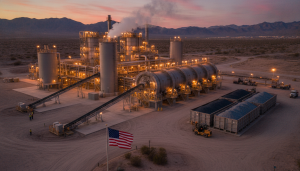
The ambitious push towards electrification continues to reshape the global energy landscape, yet the path is rarely smooth. A recent development from Volkswagen’s battery subsidiary, PowerCo, regarding its Gigafactory in Sagunt, Spain, offers a potent illustration of the execution challenges inherent in this monumental transition. While the automotive giant plans to commence series production of its crucial small electric vehicles (EVs) in Spain by mid-2026, the dedicated local battery supply from the Sagunt plant isn’t expected to come online until July 2027. This temporal mismatch, while seemingly minor, holds significant implications for the pace of EV adoption, supply chain resilience, and ultimately, the long-term demand outlook for traditional oil and gas. For investors tracking the energy transition, understanding these real-world bottlenecks is crucial for discerning genuine momentum from aspirational timelines.
Battery Bottlenecks: A Reality Check for EV Timelines
PowerCo’s strategic investment in Sagunt near Valencia is designed to be a cornerstone of Volkswagen’s Iberian EV production strategy. The facility is slated to deliver battery cells for four small EV models, including the Cupra Raval and VW ID. Polo from Martorell, and the Skoda Epiq and VW ID. Cross from Navarra, all scheduled to begin series production in 2026. However, proprietary industry insights indicate the Sagunt factory’s series production, with an initial combined annual capacity of 20 GWh from two blocks, won’t commence until July 2027. This timeline represents a slight adjustment, with pilot production now anticipated for September or October 2026, later than the previously targeted July 2026.
While the delay might appear concerning for VW’s EV rollout, the company has reportedly established robust contingency plans. Initially, cells are expected to be sourced from PowerCo’s German plant in Salzgitter, assuming its mid-2026 production start proceeds as planned. Should further delays arise, the option to procure cells from China remains on the table. This “Make AND Buy” strategy underscores the capital intensity and inherent risks in establishing complex, high-tech manufacturing at scale. For oil and gas investors, these supply chain intricacies suggest that the widely predicted, rapid acceleration of EV penetration might encounter more friction than often assumed, potentially extending the demand horizon for liquid fuels.
Market Jitters Amidst Energy Transition Headwinds
The complexities of the energy transition are playing out against a backdrop of significant volatility in crude markets. As of today, Brent crude trades at $90.38 per barrel, representing a substantial 9.07% decline within the day, with its range fluctuating from $86.08 to $98.97. Similarly, WTI crude has seen a sharp 9.41% drop, settling at $82.59, having traded between $78.97 and $90.34. Gasoline prices have also followed suit, currently at $2.93, down 5.18%.
This daily turbulence is not an isolated event. Our proprietary market data reveals a striking trend: Brent crude has shed $22.4, or nearly 20%, over the past 14 days, falling from $112.78 on March 30th to today’s $90.38. Such significant downside movement reflects a confluence of factors, including global macroeconomic concerns, potential shifts in inventory data, and ongoing debates about the true pace of demand destruction from alternative energy sources. While the PowerCo delay is specific to battery production, it contributes to a broader narrative of execution risk in the green energy sector, which can indirectly temper overly aggressive forecasts for EV-driven oil demand erosion.
Upcoming Catalysts and Investor Focus: Navigating 2026 and Beyond
Our proprietary reader intent data highlights that investors are keenly focused on understanding the future trajectory of energy markets. A prominent question this week centers on “what do you predict the price of oil per barrel will be by end of 2026?” Another investor specifically asks, “How well do you think Repsol will end in April 2026?” These inquiries underscore the immediate need for clarity amidst market uncertainty and the strategic positioning of integrated energy companies.
The coming weeks will bring several critical events that could significantly influence these price predictions. Investors should closely monitor the OPEC+ Joint Ministerial Monitoring Committee (JMMC) meeting on April 19th, followed by the full OPEC+ Ministerial Meeting on April 20th. Any signals regarding production quotas will directly impact global supply. Furthermore, the API Weekly Crude Inventory reports on April 21st and April 28th, alongside the EIA Weekly Petroleum Status Reports on April 22nd and April 29th, will provide vital insights into U.S. inventory levels and demand trends. The Baker Hughes Rig Count on April 24th and May 1st will offer an early indication of future drilling activity and potential supply growth. For a company like Repsol, which is deeply rooted in Spain and has significant traditional oil and gas operations while also investing in renewables, these market dynamics and the pace of EV integration (even with battery delays) directly impact its profitability and strategic direction, making its performance a key indicator for the broader sector.
Strategic Implications for Oil & Gas Investment Portfolios
The PowerCo Sagunt situation, with its delayed battery production yet firm EV manufacturing timelines, serves as a powerful reminder that the energy transition is not a monolithic, linear process. It is characterized by complex supply chains, technological hurdles, and significant capital outlays that introduce inherent execution risks. For oil and gas investors, this translates into several key takeaways.
Firstly, the timeline for peak oil demand may be pushed further out than some aggressive forecasts suggest. Delays in critical infrastructure like battery factories mean that while EV adoption is growing, the foundational components are not always keeping pace with vehicle assembly lines. This provides a potential extended runway for traditional hydrocarbon demand. Secondly, it highlights the importance of diversified and resilient energy companies. Firms that can navigate both the ongoing demand for conventional energy and strategically pivot towards lower-carbon solutions, while managing the operational complexities of new technologies, are better positioned for long-term value creation. Lastly, the current market volatility, evidenced by the sharp drops in Brent and WTI, underscores the need for a disciplined investment approach. Investors must remain agile, focusing on companies with strong balance sheets, robust free cash flow generation, and a clear strategy for adapting to an evolving energy landscape, rather than being swayed by short-term headlines or overly optimistic projections.