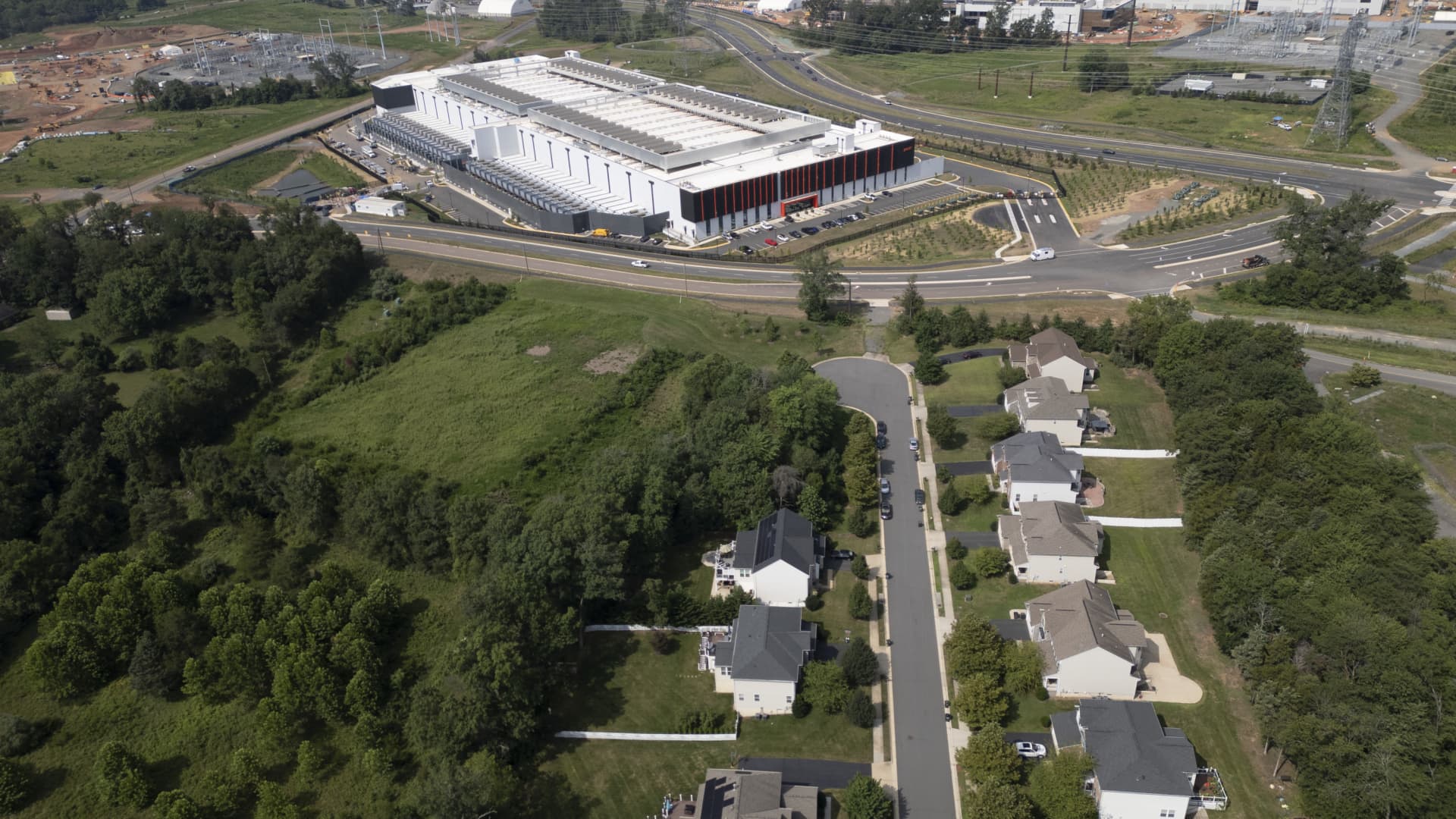
The relentless ascent of artificial intelligence has long been touted as a guaranteed catalyst for unprecedented electricity demand, a narrative that has fueled bullish sentiment across segments of the energy market, particularly for natural gas. However, proprietary intelligence from OilMarketCap.com suggests a brewing political storm could significantly temper these projections. A remarkable bipartisan alignment, spanning from Democratic Socialist Senator Bernie Sanders to staunch Republican Governor Ron DeSantis, is signaling a broad political reckoning over the AI industry’s insatiable energy appetite. This emerging consensus, driven by concerns over grid stability, escalating utility costs, and labor market disruption, presents a critical new variable for oil and gas investors previously banking on unchecked growth in AI-driven energy consumption.
The Unexpected Bipartisan Threat to AI’s Energy Trajectory
The convergence of Senator Bernie Sanders, an independent representing Vermont, and Florida Governor Ron DeSantis, a leading Republican figure, on the issue of AI data center proliferation is a profound indicator of shifting political winds. Senator Sanders has explicitly called for a national moratorium on data center construction, emphasizing the need to “slow this process down” and question the industry’s societal impact beyond technological advancement. Concurrently, Governor DeSantis has introduced an AI bill of rights, granting local communities the power to block data center construction, citing immediate concerns about the nation’s “limited grid capacity.” This alignment, despite their ideological differences, underscores a growing public and political apprehension about the tangible costs of the AI boom.
While neither Florida nor Vermont are primary hubs for data centers, the political fallout from rising utility bills has already manifested in key electoral outcomes. Virginia, home to the world’s largest data center market, saw surging residential electricity prices play a significant role in a recent gubernatorial election. This pattern is likely to repeat, especially as the federal Energy Information Administration forecasts residential electricity prices to climb approximately 5% in 2025 and another 4% on average nationwide in 2026. This tangible impact on household budgets is politicizing what was once considered an unmitigated economic good, forcing policymakers to reconsider the unchecked expansion of energy-intensive AI infrastructure. For energy investors, this means the previously assumed exponential growth in electricity demand from AI is now subject to greater regulatory and community-level scrutiny, potentially slowing the build-out of new power generation capacity, particularly gas-fired plants.
Market Dynamics: Crude Volatility and Emerging Demand Headwinds
The broader energy market is currently navigating its own set of complexities, and this emerging political pushback against AI’s energy footprint adds another layer of uncertainty. As of today, Brent Crude trades at $90.38, reflecting a slight dip of 0.06% within a day range of $93.87 to $95.69. Similarly, WTI Crude is priced at $86.68, down 0.85%, fluctuating between $85.50 and $87.49. These figures follow a notable trend for Brent, which has seen a significant decline of $23.49, or nearly 20%, over the past 14 days, falling from $118.35 on March 31st to $94.86 on April 20th. While these movements are primarily driven by global macroeconomic factors, geopolitical tensions, and traditional supply-demand dynamics, the nascent political resistance to AI data centers introduces a long-term demand variable that cannot be ignored.
For investors, the question is how this translates into future demand for crude oil and natural gas. While direct crude consumption for data centers is minimal, the broader energy complex is interconnected. A slowdown in electricity demand growth, particularly for natural gas-fired power generation, could ease pressure on gas prices and, by extension, impact fuel switching decisions and industrial energy consumption patterns. This political friction adds a layer of caution to previously robust long-term demand forecasts, especially for natural gas, which is a primary fuel source for new power generation capacity. The nuanced understanding of these interconnected dynamics is crucial for portfolio positioning in a volatile market.
Investor Focus: Navigating Future Energy Price Uncertainty
Our proprietary reader intent data reveals a clear and persistent focus among OilMarketCap.com investors on future price direction. Questions such as “is wti going up or down” and “what do you predict the price of oil per barrel will be by end of 2026?” highlight the paramount concern over market trajectory. Previously, the anticipated surge in AI-driven energy demand was a significant bullish factor for long-term energy price outlooks, particularly for natural gas and associated infrastructure. However, the bipartisan political pushback challenges this assumption directly.
Investors must now integrate this new regulatory risk into their long-term models. The potential for moratoria on data center construction or state-level bills of rights that empower local communities to block development directly impacts the velocity and scale of future electricity demand growth. This necessitates a re-evaluation of companies heavily invested in power generation, transmission, or natural gas supply chains that were banking on unfettered AI expansion. For example, while the question of Repsol’s performance by April 2026 involves many factors, the overarching sentiment around global energy demand, now tempered by these AI-related headwinds, will undoubtedly play a role in its integrated energy portfolio. Understanding the sources and APIs powering our market data, as some readers inquire, becomes even more critical when forecasting under such evolving demand scenarios, as traditional models may not fully capture this unique political dynamic.
Key Events to Watch: Gauging Policy’s Impact on Energy Markets
In the coming weeks, a series of critical energy events will provide further data points for investors assessing the evolving landscape. On April 21st, the OPEC+ JMMC Meeting will set the tone for crude supply, but any underlying concerns about long-term demand growth, even if indirect from AI’s energy challenges, could influence sentiment. The EIA Weekly Petroleum Status Reports on April 22nd and April 29th, alongside API Weekly Crude Inventory data on April 28th and May 5th, will offer snapshots of immediate supply-demand balances. However, the most telling event for the AI energy narrative will be the EIA Short-Term Energy Outlook on May 2nd.
While the Short-Term Energy Outlook typically provides macro forecasts, investors should scrutinize any revisions to future electricity consumption projections, particularly those related to industrial or data center demand. Even subtle adjustments or acknowledgements of potential headwinds could signal how quickly these political pressures are being factored into official energy forecasts. Similarly, the Baker Hughes Rig Counts on April 24th and May 1st, while focused on drilling activity, reflect industry confidence in future demand. If the political resistance to AI data centers gains further traction, it could eventually dampen long-term investment in new power generation capacity, indirectly influencing upstream natural gas exploration and production. Investors must look beyond the immediate supply-side headlines and actively seek indications of how these emerging demand-side uncertainties are shaping official outlooks and industry behavior.