A significant conventional oil and gas discovery in Poland’s Baltic Sea by Central European Petroleum (CEP) has sent ripples through the European energy sector, signaling a potential game-changer for Poland’s energy independence and the broader regional supply landscape. Preliminary assessments suggest this could be the largest hydrocarbon find in Poland’s history and one of Europe’s most substantial in the last decade. As senior investment analysts, we recognize that such a discovery, particularly in a region actively seeking to de-risk its energy supply, warrants a deep dive into its implications for investors and the long-term energy outlook.
Poland’s Energy Horizon: A Doubling of National Reserves
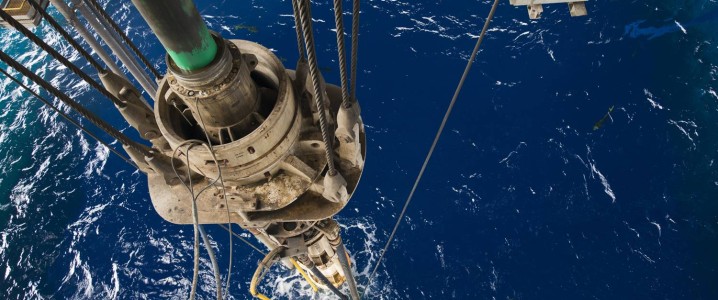
The Wolin East 1 (WE1) well, located approximately six kilometers from Swinoujscie, has revealed an impressive conventional oil and gas deposit. Initial estimates for the WE1 well alone point to 22 million tonnes of recoverable crude oil and condensate, alongside 5 billion cubic metres of commercial-grade natural gas. This is a substantial find, but the true scale becomes apparent when considering the broader concession area, which spans 593 square kilometers. Here, the potential could exceed 33 million tonnes of oil and 27 billion cubic metres of gas. To put this into perspective, Poland’s estimated oil reserves as of 2023 stood at just over 20 million tonnes. This single discovery has the potential to more than double the nation’s total oil reserves, offering an unprecedented boost to its energy security ambitions. Polish officials, including Undersecretary of State and Chief National Geologist Krzysztof Galos, have rightly described this as a “breakthrough” for hydrocarbon exploration, particularly within the country’s underexplored offshore Exclusive Economic Zone. The WE1 well was efficiently drilled using a jack-up rig in 9.5 meters of water, reaching a vertical depth of 2,715 meters, underscoring the technical feasibility of extraction.
Navigating Market Volatility with Strategic Discoveries
In a dynamic global energy market, the timing and scale of new discoveries are critical for investor evaluation. As of today, Brent crude trades at $94.58, reflecting a modest daily decline of 0.37% within a range of $94.42 to $94.91, while WTI crude sits at $90.73, down 0.61%. This snapshot follows a more pronounced trend over the past two weeks, where Brent has seen a notable correction, falling from $108.01 on March 26th to its current level. This downward price pressure, however, underscores the long-term value of substantial new supply sources, especially in geopolitically sensitive regions. Our reader intent data reveals that investors are keenly focused on understanding future price trajectories, with common inquiries centering on building a base-case Brent price forecast for the next quarter and the consensus 2026 Brent outlook. While short-term price movements are influenced by a myriad of factors, including supply-demand balances and geopolitical events, a significant domestic discovery like Wolin East provides a strong hedge against import reliance and price volatility for Poland. It offers a tangible asset that contributes to energy independence, a factor increasingly prized by investors looking beyond immediate market fluctuations to long-term strategic value and regional stability.
Appraisal and Development: Key Catalysts on the Horizon
The “if confirmed through further appraisal” caveat is crucial for this discovery, marking the next critical phase for CEP and the Polish energy sector. The journey from discovery to commercial production is extensive, requiring substantial capital investment and detailed subsurface evaluation. While specific appraisal well dates for Wolin East are not yet public, the broader industry calendar offers important context for the investment climate surrounding such developments. Investors will be closely watching the upcoming OPEC+ meetings, with the Joint Ministerial Monitoring Committee (JMMC) scheduled for April 18th and the full Ministerial Meeting on April 20th. Any shifts in OPEC+ production policy could significantly impact global supply balances and, consequently, the attractiveness and urgency of developing new non-OPEC resources like Wolin East. Furthermore, weekly data releases such as the API Weekly Crude Inventory (April 21st, April 28th) and the EIA Weekly Petroleum Status Report (April 22nd, April 29th) will provide ongoing insights into U.S. supply dynamics, which can influence global crude prices and, indirectly, the financial viability of new projects. The Baker Hughes Rig Count (April 17th, April 24th) offers a gauge of exploration and production activity, reflecting the industry’s overall appetite for new drilling. These events collectively paint a picture of the market conditions that will shape the financial decisions and timelines for bringing Wolin East into full production, a process that could unfold over several years.
Strategic Implications for Europe’s Energy Security and Investment Landscape
The Wolin East discovery is more than just a national triumph for Poland; it represents a meaningful step towards enhancing Europe’s broader energy security. In an era marked by geopolitical uncertainties and a concerted drive to diversify energy sources, a discovery of this magnitude in the EU’s Exclusive Economic Zone is strategically invaluable. Central European Petroleum, a Canadian-based company majority-owned by Norwegian investors and originally founded to explore EU hydrocarbon prospects, demonstrates the international interest and expertise converging on European energy. This find could open up further exploration opportunities in previously underexplored offshore zones within the Baltic Sea, potentially attracting more foreign direct investment into the region. For investors, this creates new avenues for exposure to European upstream assets, particularly in a company like CEP that has proven its exploratory capabilities. The long-term investment thesis here is compelling: a significant, domestically controlled hydrocarbon resource reduces reliance on volatile international markets, provides a stable energy foundation for industrial growth, and potentially enhances Poland’s geopolitical standing. As appraisal continues and development plans solidify, the Wolin East project is poised to become a focal point for energy sector investors seeking strategic value in a transforming European energy landscape.


