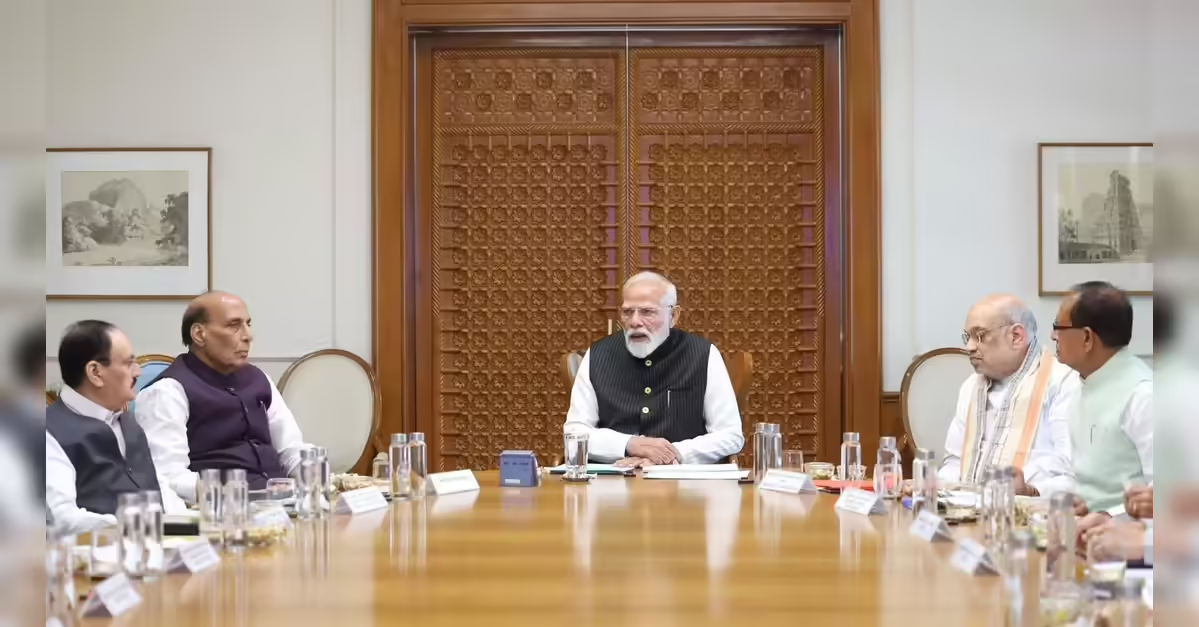
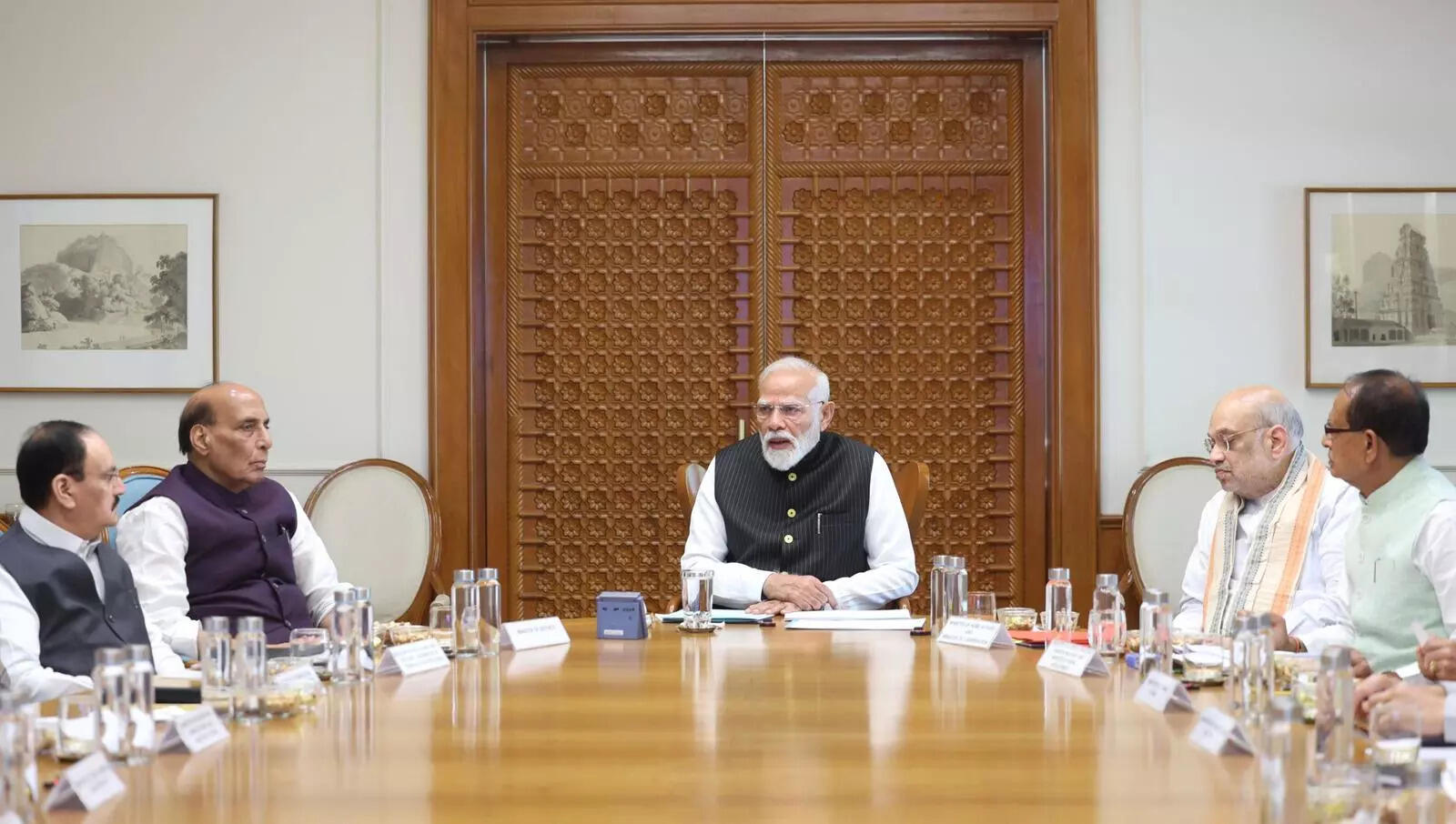
Prime Minister Narendra Modi on Sunday chaired a meeting of the CabinCommittee on Security (CCS) to review the evolving situation arising out of the ongoing West Asia conflict and assess measures to mitigate its impact on India.
The Cabinet Secretary made a detailed presentation on the global situation and steps taken so far, as well as those being planned by various ministries, covering sectors such as agriculture, fertilisers, food security, petroleum, power, MSMEs, trade, shipping and supply chains.
“The ongoing conflict in West Asia will have significant short, medium and long term impact on the global economy and its effect on India were assessed and counter-measures, both immediate and long-term, were discussed,” the government said.
A detailed assessment of availability of essential commodities, including food, energy and fuel, was undertaken, with “short term, medium term and long term measures to ensure continued availability of essential needs” discussed in detail.
The government also reviewed the impact on farmers ahead of the Kharif season and said existing measures would ensure adequate fertiliser availability, while “alternate sources of fertilizers were also discussed to ensure continued availability in the future.”
Coal stocks at power plants were assessed to be sufficient to prevent electricity shortages, while steps to diversify imports for sectors such as chemicals, pharmaceuticals and petrochemicals were also discussed. The government said new export destinations would be developed to promote Indian goods.
PM Modi directed that “a group of ministers and secretaries be created to work dedicatedly in a whole of government approach” and called for sectoral groups to consult all stakeholders.
Emphasising coordination, the Prime Minister said “all arms of government should work together to ensure least inconvenience to the citizens” and asked for close coordination with states to prevent “black-marketing and hoarding of important commodities.”