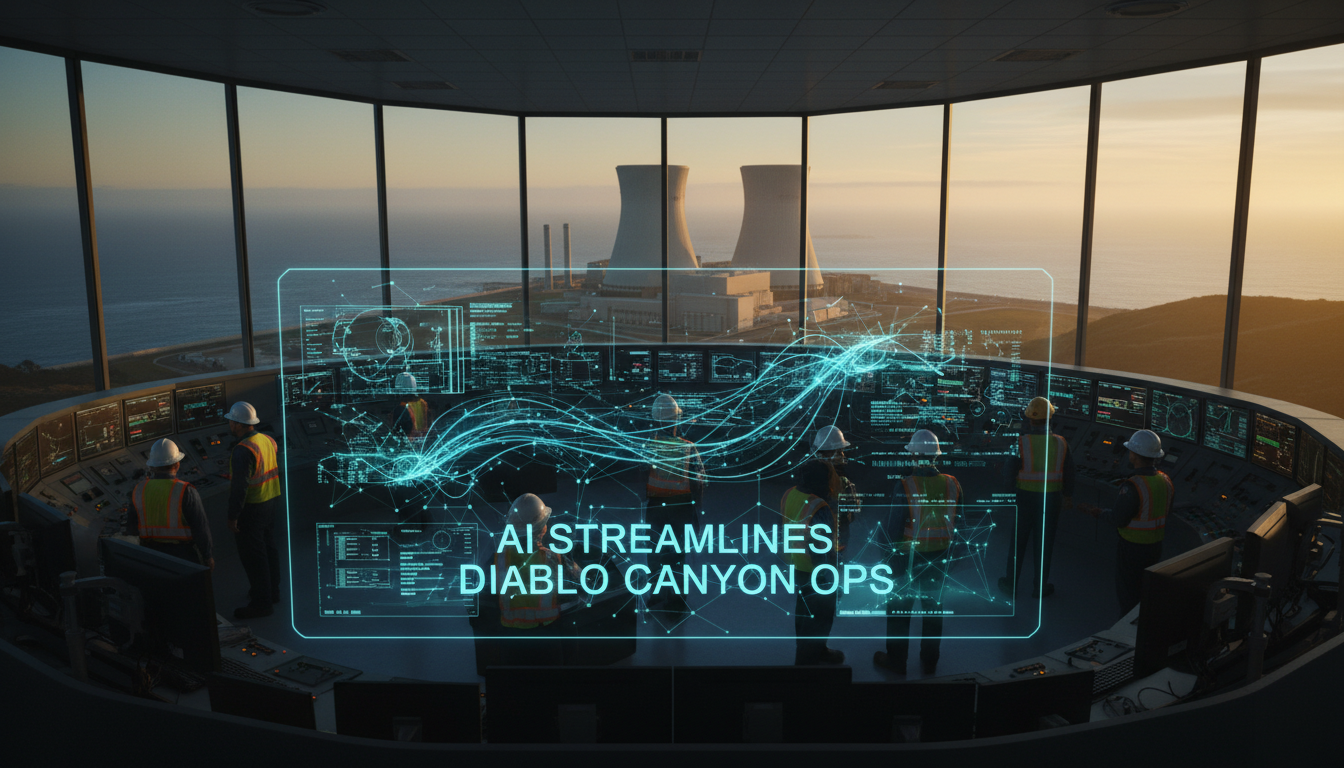
The global energy landscape is undergoing a profound transformation, marked by a dual imperative: ensuring reliable power supply while aggressively pursuing decarbonization. For investors keenly focused on utility stability and long-term asset value, the recent operational pivot at California’s Diablo Canyon Power Plant offers a compelling narrative of resilience, strategic foresight, and the transformative power of cutting-edge technology. Initially facing a premature shutdown, the plant’s extended lifespan, coupled with Pacific Gas and Electric’s (PG&E) innovative embrace of artificial intelligence, is not merely a regional development but a potent case study for the broader energy sector on optimizing critical infrastructure.
The Strategic Pivot: Nuclear’s Unexpected Reprieve and PG&E’s Challenge
Diablo Canyon, a cornerstone of California’s baseload power, was on a path to decommissioning by 2025, a decision rooted in environmental considerations and its coastal location. However, in a significant policy reversal, Governor Gavin Newsom signed SB 846 in September 2022, granting the plant an operational extension through October 2030. This reprieve, while critical for grid stability and decarbonization goals, immediately presented PG&E with substantial operational hurdles. The utility had to rapidly retool an asset that was preparing for closure, address workforce attrition that had naturally occurred, and navigate an accelerated timeline for regulatory applications and compliance. The inherent administrative burden of nuclear operations, with its stringent federal and state oversight, loomed large. This strategic shift underscored the urgent need for a solution that could not only streamline processes but also ensure the plant’s long-term viability and profitability.
AI as an Operational Catalyst: Neutron’s Impact on Efficiency
Recognizing the immense administrative and data management demands, PG&E’s Senior Vice President and Chief Risk Officer, Maureen Zawalick, identified artificial intelligence as a critical enabler. This vision materialized in a groundbreaking collaboration with Atomic Canyon, an AI startup specializing in the nuclear sector, leading to the development of “Neutron.” This first-ever commercial on-site generative AI tool deployed at a U.S. nuclear power facility is designed to empower Diablo Canyon’s workforce by simplifying access to the millions of documents legally mandated for retention. The nuclear industry is a labyrinth of documentation, managing billions of data points encompassing engineering schematics, design updates, and exhaustive regulatory filings, all scattered across six disparate, securely stored on-site systems. Neutron uniquely connects to these various systems over the plant’s internal network, crucially avoiding cloud-based storage to address paramount security and data sovereignty concerns vital for critical national infrastructure. This innovative application of AI directly addresses a core challenge that many investors frequently inquire about: how energy companies can leverage technology to enhance operational efficiency, mitigate risk, and bolster their bottom line in complex regulatory environments.
Navigating Volatility: Stable Nuclear Output vs. Fluctuating Hydrocarbon Markets
The operational stability and enhanced efficiency promised by AI at Diablo Canyon stand in stark contrast to the inherent volatility characterizing global hydrocarbon markets. As of today, Brent Crude trades at $94.96, marking a significant increase of 5.07% within the day’s range of $94.06 to $97.81. Similarly, WTI Crude has seen a 5.47% jump to $87.11, moving within a day’s range of $86.46 to $89.60. Gasoline prices have also trended upward, reaching $3.02, up 3.07% today. This recent uptick, however, follows a period of considerable fluctuation, with Brent experiencing a notable decline of nearly 20% over the past two weeks, dropping from $112.78 on March 30th to $90.38 on April 17th. This sharp oscillation highlights the unpredictable nature of fossil fuel investments, a concern echoed by investor queries about the future direction of WTI and oil prices by the end of 2026. In this environment, the predictable, stable baseload power generated by a nuclear facility, further de-risked and made more efficient by AI, presents a compelling value proposition for investors seeking long-term, stable returns in the energy sector, offering a counterbalance to the often-turbulent conventional energy markets.
Forward Outlook: AI, Regulatory Certainty, and the Broader Energy Mix
The deployment of Neutron at Diablo Canyon sets a precedent for how AI can enhance the profitability and operational longevity of critical energy infrastructure across the United States. For investors, this initiative signifies more than just a technological upgrade; it represents a tangible commitment to operational excellence and regulatory resilience, factors that directly influence a utility’s valuation and long-term dividend potential. The ability of AI to streamline complex compliance and data management processes significantly reduces operational overhead and the risk of costly regulatory missteps, thereby improving PG&E’s bottom line. Looking ahead, the energy calendar is packed with events that will undoubtedly influence market sentiment, including the upcoming OPEC+ JMMC Meeting on April 20th and the full OPEC+ Ministerial Meeting on April 25th, alongside weekly API and EIA inventory reports. While these events directly impact hydrocarbon markets, the underlying message from Diablo Canyon’s AI integration is clear: the energy transition will increasingly rely on technologies that maximize the efficiency and extend the life of all reliable power sources. This long-term strategic advantage, driven by AI, positions companies like PG&E to better navigate future policy shifts and market dynamics, contributing to a more diversified and robust energy portfolio that investors will increasingly value.


