

Petronet LNG Supercharges India’s Gas Capacity with Dahej Terminal Expansion
Petronet LNG, a cornerstone of India’s energy infrastructure, has officially commissioned a significant expansion at its Dahej liquefied natural gas (LNG) terminal, substantially boosting the facility’s regasification capacity. This strategic upgrade, completed at 23:30 hours on March 31, 2026, elevates the terminal’s processing capability from 17.5 million metric tonnes per annum (MMTPA) to an impressive 22.5 MMTPA. The addition of 5 MMTPA marks a critical enhancement for India’s largest LNG import gateway and a vital component of the nation’s natural gas supply chain.
Investors keenly follow such developments, as increased capacity directly translates to enhanced operational throughput and a stronger position in the burgeoning Indian energy market. This expansion reinforces Petronet LNG’s role in fulfilling India’s escalating demand for cleaner fuels, promising sustained growth potential for the company and stability for the national energy grid.
Dahej Terminal: A Legacy of Strategic Growth and Innovation
The Dahej terminal, nestled in Gujarat, holds historical significance as Southeast Asia’s inaugural LNG receiving and regasification facility. Its journey began in 2004 with an initial operational capacity of 5 MMTPA, setting the stage for India’s gas-driven future. Over two decades, the facility has undergone a series of meticulous expansions, demonstrating a consistent commitment to meeting the country’s energy imperatives.
Key capacity milestones include reaching 10 MMTPA by 2009, further increasing to 15 MMTPA by 2016, and then a Phase 1 addition in 2019 which saw capacity climb to 17.5 MMTPA with a 2.5 MMTPA increment. The recently completed Phase 2 expansion, which commenced around 2022 with an original target for late 2025, now adds another crucial 5 MMTPA, propelling Dahej to its current 22.5 MMTPA benchmark. This steady, deliberate growth underscores Petronet LNG’s foresight in anticipating and addressing India’s long-term energy requirements.
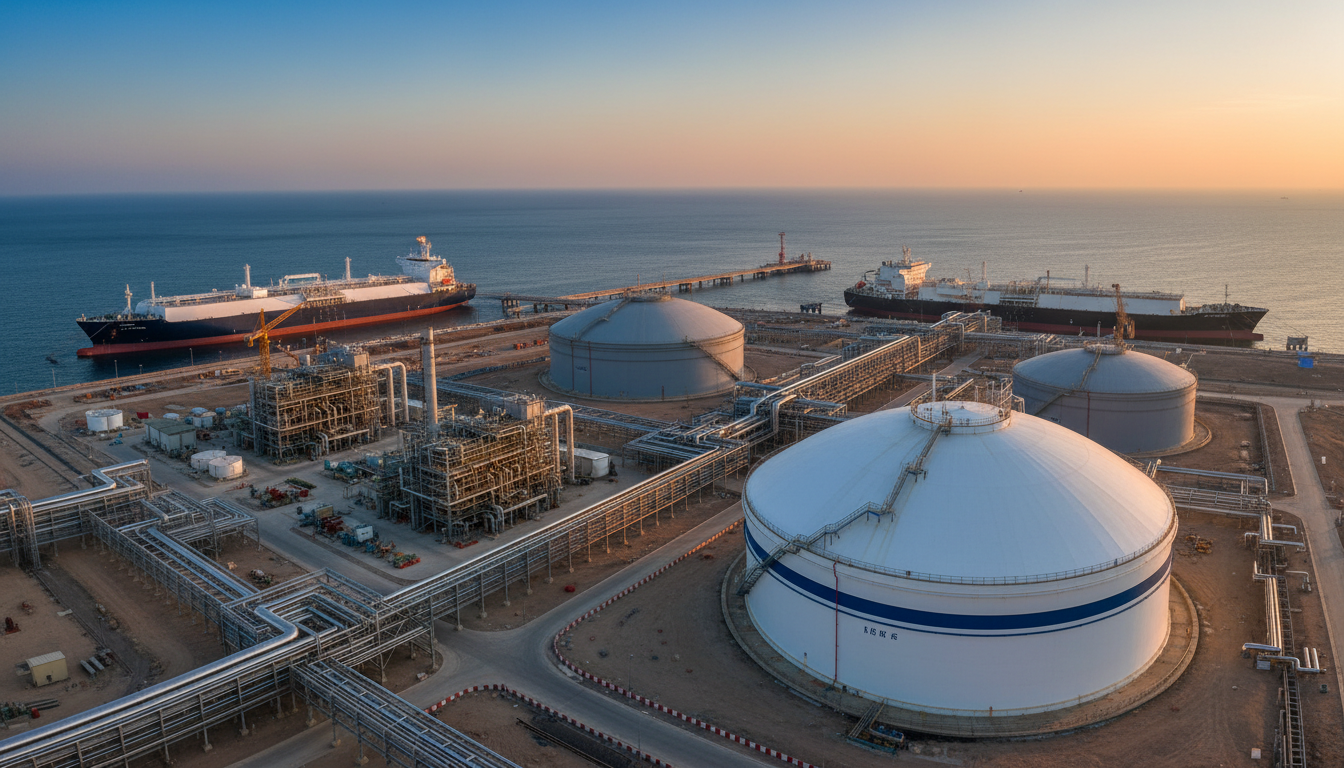
Beyond its sheer scale, the Dahej terminal is equipped with state-of-the-art infrastructure, featuring eight LNG storage tanks and two jetties, one specifically designed to accommodate massive Q-Max vessels. Furthermore, integrated truck loading bays facilitate small-scale LNG supply, broadening the terminal’s reach and utility. These capabilities ensure efficient handling and distribution of LNG, reinforcing its pivotal role in India’s energy security strategy.
Commanding India’s Natural Gas Landscape
The strategic importance of the Dahej terminal for India’s energy matrix cannot be overstated. During the fiscal year 2023-24, this single facility was responsible for managing approximately 74% of India’s total LNG imports. Its influence extends even further, accounting for roughly 34% of the nation’s overall natural gas consumption. This dominant market share positions Petronet LNG as an indispensable player, directly impacting India’s industrial growth, power generation, and urban gas distribution networks.
For investors, this signifies a robust economic moat and a critical leverage point in India’s ongoing energy transition. As the country aims to increase the share of natural gas in its primary energy basket, Dahej’s expanded capacity will be instrumental in supporting this national objective, ensuring a reliable and growing revenue stream for Petronet LNG and its stakeholders.
Navigating Geopolitical Currents: Petronet LNG’s Stock Performance
While the operational news from Dahej is overwhelmingly positive, Petronet LNG shares have recently navigated turbulent waters, reacting sharply to escalating geopolitical tensions in the Middle East. Since the onset of the Iran war in early March 2026, the company’s stock experienced a notable decline, primarily attributed to potential supply disruptions from key gas exporter QatarEnergy, particularly via the critical Strait of Hormuz shipping lane.
The stock, which closed at ₹310.40 on March 2, 2026, witnessed a significant downturn, falling by 10-12% amidst declarations of force majeure and reported production halts by Qatar. By late March 2026, shares plummeted to a 52-week low, trading near ₹235-248, representing a substantial 20-25% contraction from its pre-war levels of approximately ₹310-₹326. This stark movement highlights the market’s acute sensitivity to geopolitical risks impacting global energy supply chains.
However, Wednesday’s trading session (April 1, 2026) brought a positive rebound, with Petronet LNG stock trading nearly 5% higher at ₹260 apiece on the BSE as of 11:54 am. This modest recovery suggests that while geopolitical uncertainties cast a shadow, investors may be starting to factor in the long-term value proposition stemming from the company’s strategic infrastructure expansions and its critical role in India’s energy security.
Investor Outlook: Growth Amidst Volatility in India’s LNG Sector
The commissioning of the Dahej terminal’s expanded capacity firmly anchors Petronet LNG’s growth trajectory, offering a compelling long-term investment narrative within the dynamic Indian energy market. This substantial increase in regasification capability positions the company to capitalize on India’s burgeoning natural gas demand, which is projected to continue its upward trend as the nation decarbonizes its economy and seeks cleaner industrial and residential energy solutions.
For investors, the contrast between recent stock volatility, driven by external geopolitical events, and the fundamental strength of Petronet LNG’s asset base is crucial. While regional conflicts introduce undeniable short-term risks, including potential supply chain disruptions from critical regions like the Persian Gulf, the underlying demand for LNG in India remains robust. The Dahej expansion is a testament to Petronet LNG’s strategic resilience and its commitment to ensuring a stable gas supply for the nation.
The ability to process an additional 5 MMTPA of LNG means greater operational flexibility, increased import volumes, and potentially higher throughput revenues for Petronet LNG. As the global LNG market evolves, influenced by both supply-demand dynamics and geopolitical flashpoints, Petronet LNG’s fortified infrastructure in India provides a vital bulwark. Investors evaluating the company must weigh these powerful domestic growth catalysts against the ever-present, albeit often transient, external market pressures.
