

Pioneering Green Capital: Investing in Sustainable Infrastructure for High-Risk Ecosystems
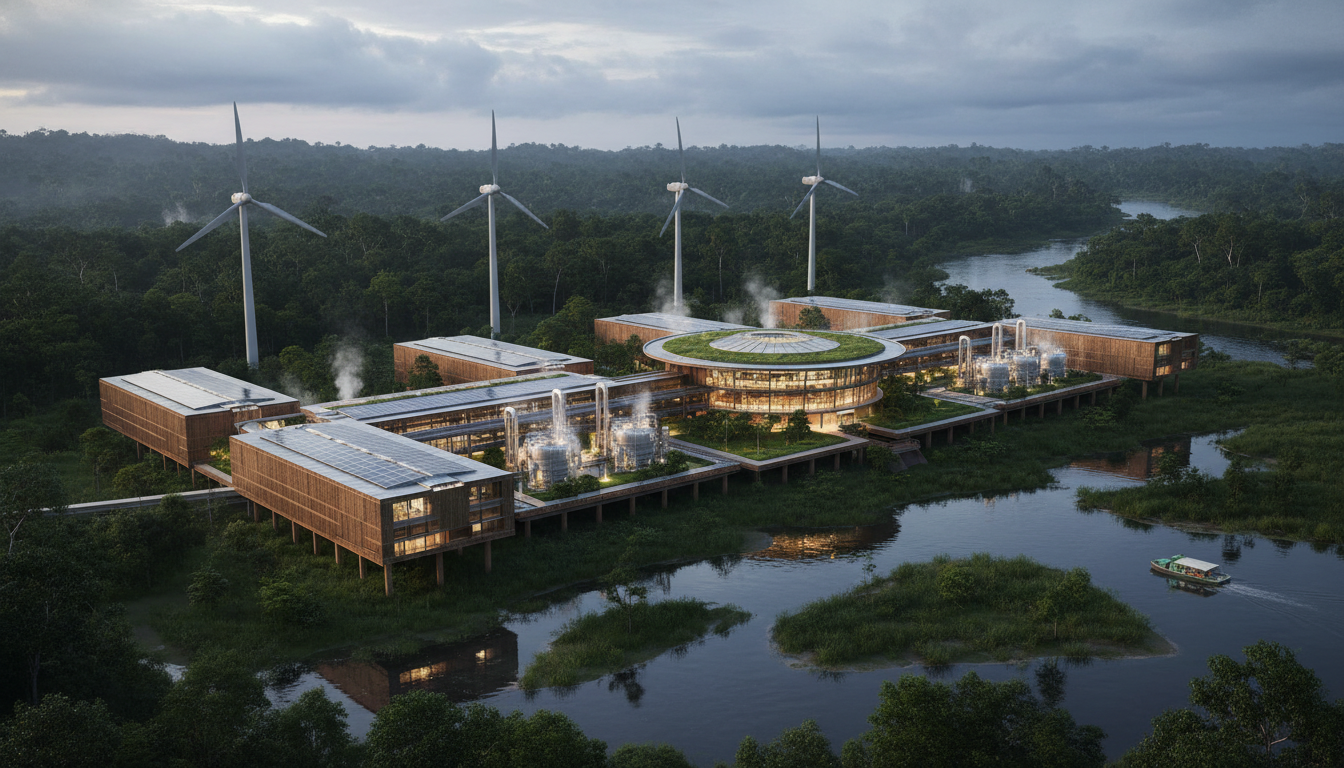
In Peru’s Madre de Dios region, a crucible of unparalleled biodiversity facing escalating environmental threats, an innovative architectural proposal is reshaping the discourse on infrastructure development. Situated strategically near Manu National Park, this conceptual Sustainable Interpretation and Research Center directly confronts intense pressures from deforestation, illicit mining, and pervasive land degradation. For investors tracking the evolving landscape of environmental, social, and governance (ESG) opportunities, this project offers a compelling glimpse into the future of capital deployment in nature-sensitive zones.
A recent study outlining this initiative posits a clear directive: structures within delicate ecosystems must transcend mere existence and actively serve as instruments for safeguarding biodiversity and fortifying climate resilience. This paradigm shift presents fresh avenues for capital allocation, where every dollar invested contributes to both ecological preservation and long-term asset value in a world increasingly focused on climate targets.
Strategic Low-Carbon Design Drives Operational Efficiency
The proposed center champions a low-carbon architectural methodology, prioritizing material efficiency, advanced renewable energy integration, and climate-responsive design. Bamboo, selected for its rapid renewability and minimal embodied carbon footprint, forms a foundational construction material. Crucially, solar power systems are engineered to fulfill nearly all the facility’s energy requirements, significantly curtailing reliance on external power grids or carbon-intensive fossil fuel generation. This commitment to energy independence not only reduces operational emissions but also enhances the center’s long-term sustainability and resilience against energy price volatility.
Equally vital is a bioclimatic design strategy meticulously adapted to the rainforest environment. Passive cooling techniques, natural ventilation, and strategic layouts respond intrinsically to the region’s high humidity and heavy rainfall. This intelligent design allows the structure to function optimally with minimal mechanical intervention, translating into lower operational costs and a significantly reduced environmental footprint. This approach reflects a broader industry movement where performance metrics extend beyond traditional energy efficiency to encompass holistic ecological integration, signaling a maturing market for truly sustainable real assets.
A Research and Community Hub: Anchoring Conservation Investment
Envisioned as a multi-functional platform, the center is poised to support critical scientific research, deliver impactful environmental education, and foster community-led conservation initiatives. Its modular units are meticulously designed to host cutting-edge laboratories, training facilities, and outreach programs, all while maintaining a remarkably low physical impact on the surrounding landscape. This strategic modularity ensures adaptability and future-proofing, crucial considerations for long-term investment viability in dynamic ecological settings.
The facility’s layout draws profound inspiration from the Yakumama, or “mother of water,” a potent cultural symbol that informs the project’s organic architectural form. This thoughtful integration of local knowledge and symbolism extends beyond mere aesthetics; it critically reinforces the project’s alignment with indigenous community identity and fosters long-term stewardship. Researchers adopted a non-experimental methodology, meticulously combining environmental data analysis, sophisticated climate modeling, and thorough site assessments utilizing digital tools like Google Earth Pro and Revit. This rigorous approach aimed to validate feasibility and environmental harmony without direct intervention, de-risking the conceptual phase for potential investors.
Quantifiable Environmental and Financial Gains for Stakeholders
Analytical modeling underscores several tangible environmental and potential financial outcomes, presenting a clear return on ecological investment. The integrated photovoltaic system is projected to generate approximately 15,571.8 kWh annually, a volume sufficient to cover the center’s entire electricity demand. Furthermore, advanced rainwater harvesting systems are designed to capture around 70,675 liters per year, supplying essential water for irrigation and sanitation needs without taxing local water sources. These quantifiable metrics provide a compelling case for the efficiency and self-sufficiency built into the project.
Beyond resource management, the design thoughtfully incorporates reforestation strategies utilizing native species, aimed at restoring degraded land and significantly enhancing carbon sequestration capabilities. While these projections remain theoretical, they vividly demonstrate how interconnected systems can deliver robust, combined benefits across energy, water, and vital ecosystem restoration. The inherent flexibility of the modular design further allows the center to evolve seamlessly over time, adapting to changing environmental conditions and evolving research priorities without necessitating costly, large-scale reconstruction – a critical factor for long-term asset management.
Catalyzing Blended Capital and Policy Innovation
For discerning policymakers and forward-thinking investors, this project offers a practical and scalable framework for deploying sustainable infrastructure within ecologically sensitive regions. It powerfully highlights the necessity of robust regulatory support for low-carbon construction in protected areas, where existing permitting processes and stringent environmental safeguards often present significant development hurdles. Overcoming these challenges through clear policy frameworks can unlock substantial private capital flows.
The interdisciplinary character of the project also stands out as a critical success factor. Collaborative efforts between visionary architects, astute environmental scientists, and engaged local communities ensure that the design robustly reflects both rigorous scientific priorities and vital social realities. This alignment is paramount for securing enduring viability and essential community buy-in, mitigating social license risks that often plague large-scale developments. From a financing perspective, this model presents a prime opportunity to attract sophisticated blended capital from governments, non-governmental organizations, and private investors who are specifically targeting climate and biodiversity outcomes. Demonstrating feasibility and delivering measurable impact in a high-risk region like the Amazon could unlock similar, transformative projects globally, fostering a new asset class focused on natural capital preservation.
A Scalable Model for Nature-Positive Investment Globally
While deeply rooted in the unique context of the Peruvian Amazon, the broader implications of this project resonate far beyond a single site. It furnishes a powerful blueprint for harmonizing essential human activity with critical ecological preservation in biodiversity-rich environments across the globe. For the oil and gas sector and its expanding ESG mandates, understanding such models is crucial for diversification and offsetting strategies, demonstrating commitment to responsible resource management.
This initiative reinforces a growing consensus among global ESG leaders: modern infrastructure must fundamentally evolve to simultaneously meet aggressive climate and nature targets. Buildings are no longer passive elements; they are active instruments capable of either accelerating environmental degradation or powerfully supporting ecological restoration. In this compelling case, the proposed center offers a clear direction for capital. By embedding sustainability into every facet of design, material selection, and foundational purpose, it strategically positions architecture as a frontline tool in the monumental global endeavor to protect precious ecosystems and build formidable climate resilience for future generations, representing a compelling opportunity for impact-driven capital.
