

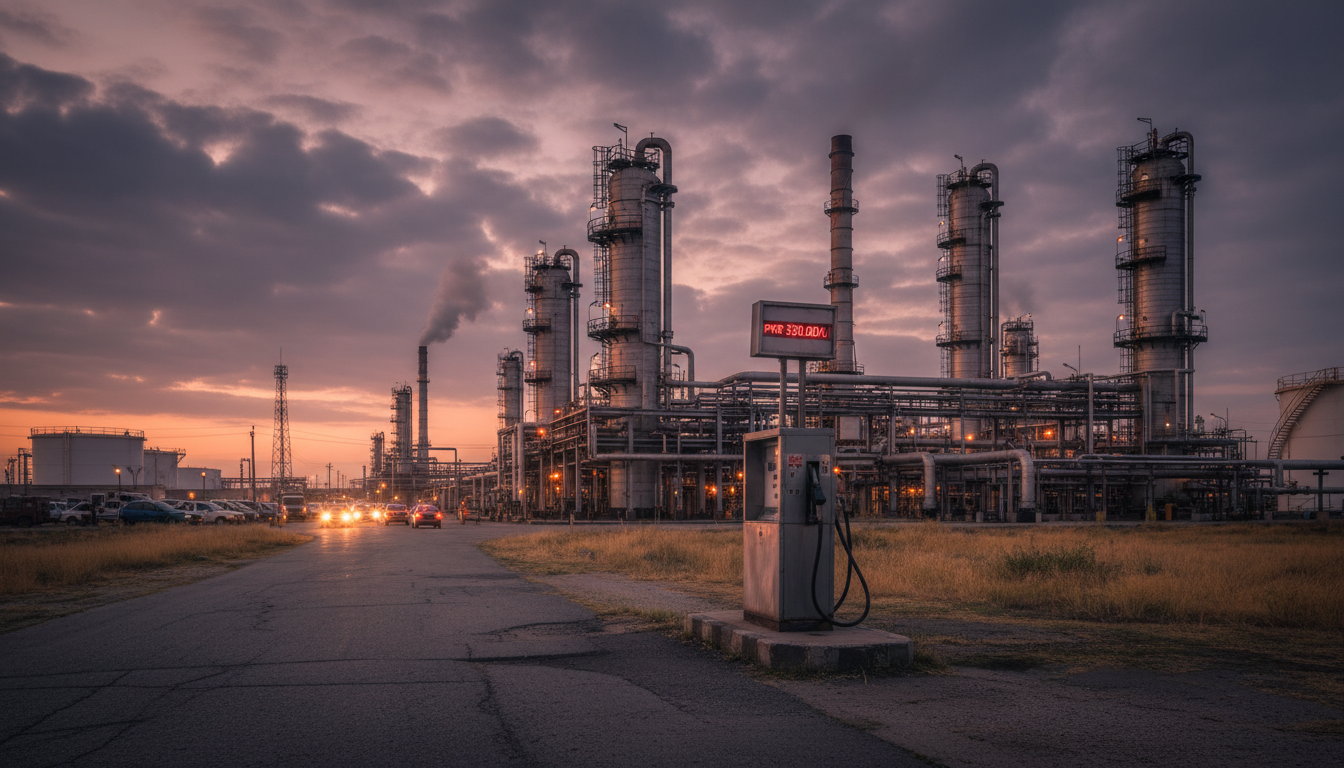
ISLAMABAD – Pakistan’s economy is reeling from unprecedented fuel price hikes, a direct consequence of escalating geopolitical tensions in the Middle East driving global oil prices to new heights. The sharp increases, implemented last Friday, underscore the profound vulnerability of import-dependent nations to energy market volatility and highlight the immediate financial strain on consumers and businesses alike.
For investors tracking energy commodities and emerging market dynamics, Pakistan’s current situation serves as a stark reminder of the interconnectedness of global supply chains and regional instability. The nation, already battling severe inflation and fiscal challenges, now faces an exacerbated economic outlook as higher fuel costs threaten to cascade through every sector.
Market Shockwaves: Fuel Prices Surge
The latest adjustments saw petrol prices jump by 137 rupees, equivalent to approximately 49 U.S. cents, per liter. This follows a significant 20% increase just last month, demonstrating a rapid escalation in consumer fuel costs. Diesel prices witnessed an even more dramatic surge, climbing by 184.49 rupees, or roughly 67 U.S. cents, per liter overnight – a staggering increase of approximately 54.9%.
Petroleum Minister Pervez Malik articulated the government’s difficult position, stating late Thursday that these adjustments were “unavoidable.” He emphasized that the increases were necessitated by global market trends, a direct reference to the upward trajectory of crude oil benchmarks fueled by the conflict in the Middle East. This official stance indicates a clear recognition of external pressures dictating domestic pricing, a critical factor for investors assessing sovereign risk and energy policy.
Economic Fallout and Consumer Burden
The immediate fallout for Pakistan’s cash-strapped economy is dire. Economists are sounding alarms, predicting that these record fuel costs will inevitably drive up food prices and the overall cost of living. Such inflationary pressures disproportionately affect lower-income households, potentially stifling economic activity and dampening consumer confidence.
The cascading effect is already being felt. Reports from major cities describe quiet fuel stations and noticeably lighter traffic, as many citizens, unable or unwilling to bear the higher costs, opted to stay home. Commuters, like Mohammad Zain Alvi in Islamabad, voiced widespread concern: “Life was already very difficult for us, and now everything will become more expensive.” The sentiment reflects a deep-seated anxiety about the erosion of purchasing power and the struggle to meet daily expenses.
For the logistics and transportation sectors, the impact is immediate and severe. Small business owners and daily wage earners, such as Azhar Ali, a government employee relying on a motorcycle for his commute, express frustration at being forced to shoulder the economic burden of distant geopolitical conflicts. Similarly, Sher Khan, a food delivery rider in Peshawar, faces an existential challenge, noting that a significant portion of his meager earnings will now be consumed by fuel expenses, jeopardizing his livelihood.
Government Response and Mitigation Efforts
In an attempt to cushion the blow, the government has announced certain mitigation measures. Petroleum Minister Malik disclosed plans to subsidize fuel for motorcyclists, recognizing their critical role in the country’s transportation matrix. Motorcycles constitute nearly 78% of all vehicles on Pakistan’s roads, serving as the most affordable mode of commuting for a vast majority of the population. However, the exact mechanism for this subsidy is still under development, leaving many questions for investors regarding its fiscal sustainability and administrative efficiency.
Additionally, Interior Minister Mohsin Naqvi announced that public transport in Islamabad would be free for a 30-day period, commencing this Saturday. This initiative, undertaken on the Prime Minister’s instructions, aims to provide immediate relief to commuters, with the ministry covering the associated fuel costs. While offering short-term respite, such measures highlight the government’s struggle to manage the crisis and the significant fiscal outlays required to buffer the public from soaring energy prices.
Geopolitical Dynamics and Supply Security
The Prime Minister, Shehbaz Sharif, explicitly linked the unprecedented price increases to regional instability, acknowledging the profound impact on Pakistan’s fragile economy. His administration is actively pursuing diplomatic channels to de-escalate tensions and foster dialogue among the parties involved, even offering to host peace talks in Islamabad. While no dates have been announced, these diplomatic overtures underscore the government’s recognition of the critical link between regional peace and domestic economic stability.
A key factor influencing Pakistan’s energy security has been the recent closure of the Strait of Hormuz, a vital chokepoint for global oil shipments. This disruption has compelled Pakistan to seek alternate routes for its oil imports, likely incurring higher transportation costs and adding further upward pressure on domestic fuel prices. For energy investors, this situation highlights the critical importance of maritime security and the potential for supply chain vulnerabilities to create significant price volatility in key markets.
Investor Outlook: Navigating Emerging Market Energy Risks
Jabran Sarfraz, a prominent economist in Karachi, reiterated the immediate burden on consumers and warned that the duration of this impact hinges on the trajectory of global oil prices. This assessment underscores a fundamental challenge for investors: Pakistan’s economic fate is currently inextricably linked to external commodity markets and geopolitical stability, areas often beyond its direct control.
For those invested in emerging markets, Pakistan’s fuel crisis serves as a crucial case study in managing exposure to global energy price swings and geopolitical risk premiums. The current environment demands close scrutiny of countries with high energy import dependency, vulnerable currencies, and pre-existing inflationary pressures. The ability of governments to implement effective, sustainable mitigation strategies, manage fiscal deficits in the face of subsidies, and diversify energy sources will be paramount in determining long-term economic resilience and investor confidence. As global crude benchmarks remain elevated, the spotlight on energy policy and economic stability in nations like Pakistan will only intensify.
