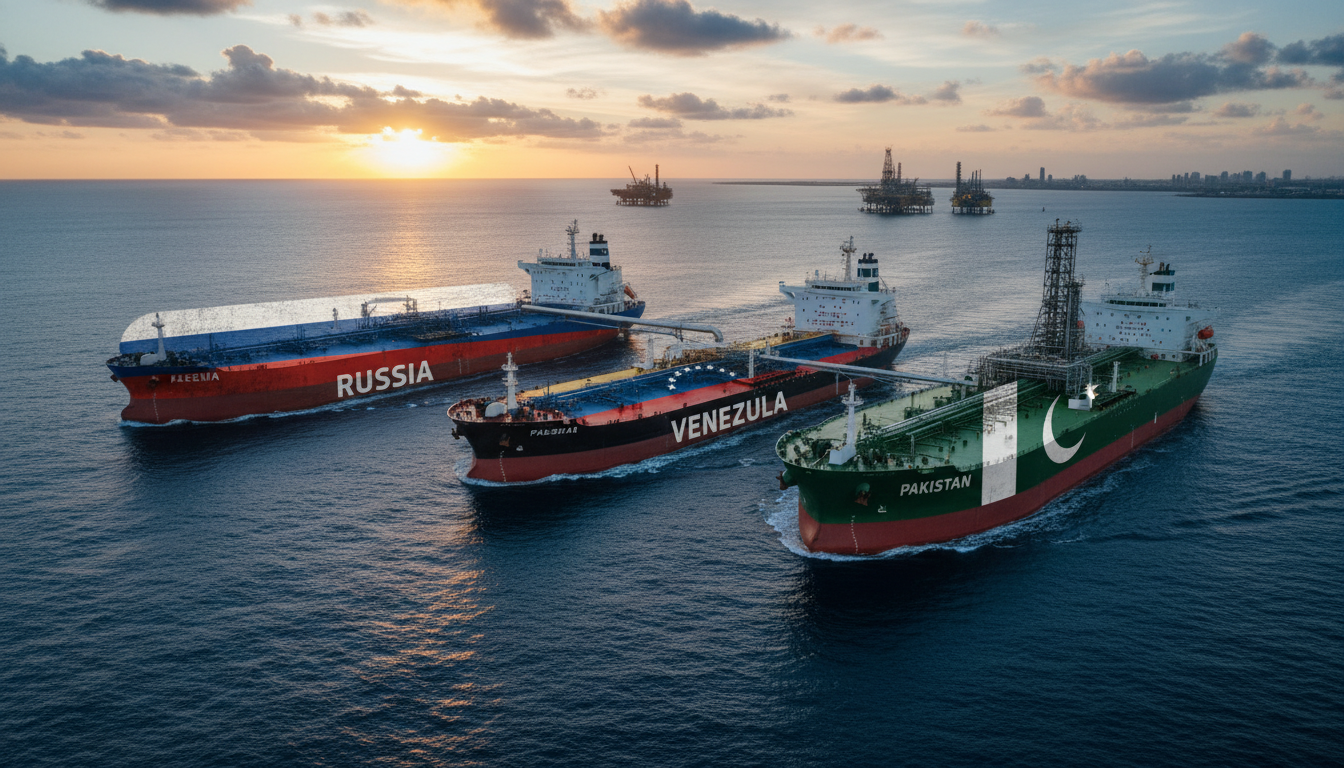
The global energy landscape is undergoing a significant transformation, driven by geopolitical shifts and an unrelenting demand for secure, affordable supply. Pakistan, a nation heavily reliant on imported energy, stands at the forefront of this shift, actively re-evaluating its procurement strategy. Faced with an acute energy crisis, Islamabad is pivoting away from traditional Middle Eastern suppliers to explore new avenues in Russia, Venezuela, and Nigeria, alongside seeking additional Liquefied Natural Gas (LNG) cargoes. This strategic redirection is not merely a localized response to a domestic crunch; it signals a broader recalibration in global energy trade flows, presenting both opportunities and risks for international investors tracking the evolution of crude oil and natural gas markets.
Pakistan’s Urgent Quest for Diversified Energy Supply
Pakistan’s energy challenges have escalated dramatically, manifesting as record-high fuel import price premiums and widespread gas shortages leading to blackouts. The nation’s economy is particularly vulnerable, importing approximately 80% of its crude oil needs. The Pakistan Institute of Development Economics (PIDE) previously warned that every additional $10 increase in international oil prices could inflate the country’s energy import bill by $1.8 billion to $2 billion annually. Currently, the impact is more severe: Pakistan has been paying an unprecedented premium of $34 per barrel on petroleum product imports, a sharp increase from the roughly $12 per barrel premium observed earlier this year. This surge is largely attributed to heightened geopolitical tensions, including the ongoing conflict involving the U.S., Israel, and Iran, which has tightened global supplies and inflated costs.
In response, Pakistan State Oil (PSO), the national energy company, has highlighted these soaring premiums, advocating for governmental intervention to absorb the increased costs rather than passing them directly to consumers. The government’s proactive stance includes not only seeking alternative suppliers like Russia and Venezuela – leveraging temporary sanction suspensions on Russian barrels and the recent freeing of Venezuelan crude – but also initiating a comprehensive review of the national oil supply chain. The Oil and Gas Regulatory Authority (OGRA) has been tasked with building a centralized management system, aiming to enhance supply chain monitoring, prevent hoarding, and ultimately secure more stable and cost-effective energy flows for the nation.
Navigating a Volatile Global Crude Market
Pakistan’s urgent need for diversified supply is set against a backdrop of significant volatility in the global crude oil market. As of today, Brent Crude trades at $112.77, marking a 2.11% increase, with its daily range spanning $110.26 to $114.66. West Texas Intermediate (WTI) Crude similarly saw a rise, reaching $108.67, up 1.67%, within a daily range of $106.45 to $110.93. This upward trajectory is not an isolated event; the 14-day trend for Brent crude shows a notable surge from $95.2 on April 10th to $111.65 on April 29th, representing a substantial gain of $16.45, or 17.3%. Such rapid price appreciation underscores the challenges faced by import-dependent nations like Pakistan, where every dollar increase translates into a heavier financial burden.
The current market dynamics are influenced by a confluence of factors: persistent geopolitical risks in key producing regions, ongoing supply discipline from OPEC+ members, and a resilient global demand outlook. For Pakistan, engaging with new suppliers like Russia and Venezuela, which offer barrels at discounted rates due to various sanctions or market conditions, presents a potential hedge against these high benchmark prices. However, the long-term viability and logistical complexities of such new supply chains, especially in the face of fluctuating global benchmarks and evolving sanction regimes, remain critical considerations for investors monitoring the profitability and stability of these new trade routes.
Anticipating Future Market Shifts: Key Events on the Horizon
For investors tracking the impact of Pakistan’s strategic shift and the broader crude market, several upcoming events will provide crucial insights into supply-demand balances and price trajectories. The first Baker Hughes Rig Count report for May is due on May 1st, followed by another on May 8th. These reports offer a leading indicator of U.S. drilling activity and potential future production, directly impacting global supply expectations. The EIA Short-Term Energy Outlook, slated for release on May 2nd, will provide updated forecasts for global oil supply, demand, and prices, offering a macro perspective that could influence Pakistan’s procurement strategy and budget planning.
Closer to home, the API Weekly Crude Inventory (May 5th, May 12th) and the EIA Weekly Petroleum Status Reports (May 6th, May 13th) will deliver critical data on U.S. crude and product inventories. Significant draws or builds could trigger short-term price movements, directly affecting Pakistan’s real-time import costs. Perhaps most impactful for the global outlook is the IEA Oil Market Report on May 12th. This report often sets the tone for market sentiment, providing comprehensive analysis on global oil supply and demand, including assessments of OPEC+ compliance and non-OPEC production. The findings from these reports will be vital for Pakistan as it finalizes its new supply agreements, determining the cost-effectiveness and stability of its diversified energy portfolio in a rapidly evolving market.
Investor Focus: Addressing Crude Oil Price Trajectories and Geopolitical Risks
Investors are keenly focused on understanding the 2026 weekly trend for crude oil and attempting to build a base-case Brent price forecast for the next quarter. This sentiment, evident from reader inquiries, underscores the market’s current volatility, a volatility that directly impacts nations like Pakistan and the global energy sector as a whole. Questions about which OPEC+ members are over-producing this month also highlight the market’s sensitivity to supply discipline and its implications for price stability. Pakistan’s strategy to engage with non-traditional suppliers like Russia and Venezuela directly challenges the traditional OPEC-centric supply paradigm, introducing new dynamics into the global energy trade matrix.
The geopolitical landscape remains a primary driver of crude oil prices. As the source material indicates, the “war between the United States and Israel, and Iran” has already significantly impacted premiums. Investors are therefore evaluating how ongoing and potential conflicts could further disrupt supply routes, impact tanker insurance rates, and ultimately push prices higher. Pakistan’s move to secure supply from Russia and Venezuela reflects a broader global trend of nations prioritizing energy security by diversifying away from single regions, even if it means navigating complex sanction environments. This creates an environment where geopolitical events, OPEC+ decisions, and the emergence of new supply chains will continue to shape crude oil price forecasts and investment strategies for the foreseeable future.


