Strategic Acquisition Positions Pacific Petroleum for Stable Returns Amidst Market Volatility
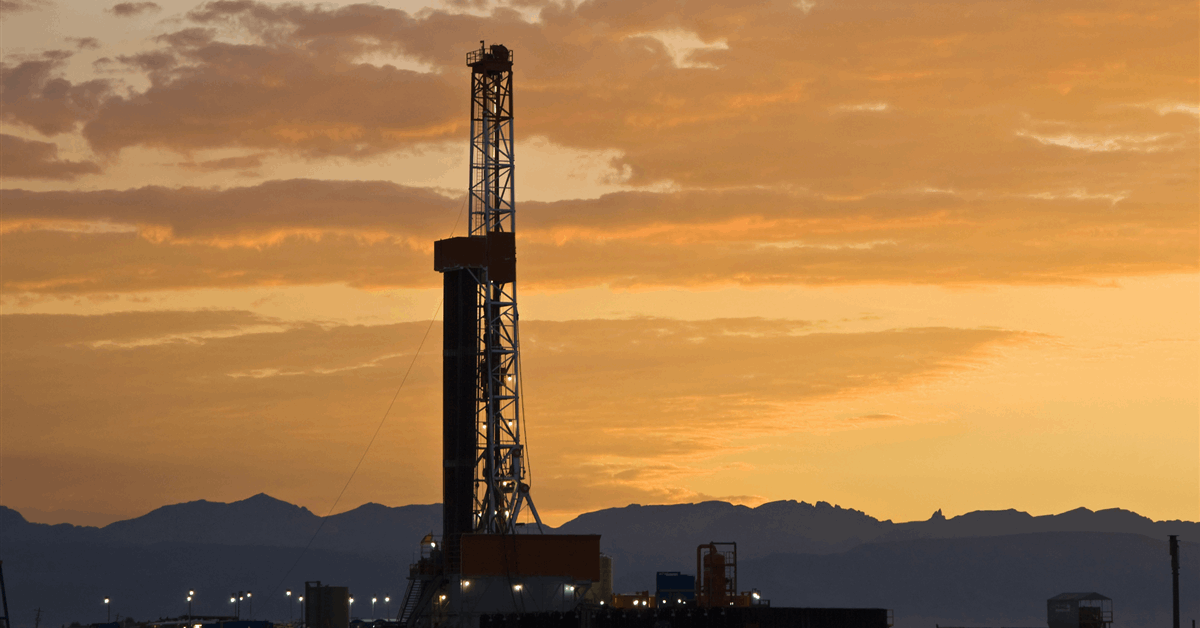
Pacific Petroleum Operating LLC, in collaboration with VCP Operating LLC, has finalized its strategic acquisition of a portfolio of oil-producing assets in Wyoming for $9.65 million. This move, backed by institutional investors from Japan and structured through Pacific Petroleum Holdings LP, signals a clear focus on securing stable, cash-flow-generating assets within the U.S. upstream sector. The acquired properties, encompassing fields like Hunt, Rose Creek, Shoshone North, and West Oregon Basin, are characterized by their consistent base production and notably low decline rates, presenting immediate optimization opportunities. This transaction arrives at a critical juncture in the global energy market, where predictability and operational efficiency are paramount for investor confidence.
Navigating Crude Price Swings: The Allure of Stable Production
The timing of Pacific Petroleum’s acquisition underscores a strategic play for stability amidst pronounced market fluctuations. As of today, Brent crude trades at $90.38, reflecting a notable daily decline of -9.07% and a stark -18.5% drop over the past 14 days, from a high of $112.78 on March 30th. Similarly, WTI crude is priced at $82.59, down -9.41% today, with gasoline also seeing a -5.18% reduction to $2.93. This recent softening across the energy complex makes the appeal of proved developed producing (PDP) assets with “stable base production” and “low decline rates” even more pronounced. In an environment where short-term price discovery can be erratic, assets that reliably generate cash flow become a cornerstone for portfolio resilience. The $9.65 million investment into these Wyoming fields suggests a valuation predicated on long-term, predictable returns rather than speculative price appreciation, aligning with a more conservative, income-focused investment thesis. For investors seeking insulation from the whipsaw movements of the futures market, a well-managed portfolio of low-decline producing assets offers a compelling proposition for steady earnings.
The Web3 Frontier: Unlocking Liquidity and Transparency in Upstream Assets
Beyond the traditional merits of upstream asset acquisition, Pacific Petroleum’s strategy incorporates a forward-thinking technological dimension. O-DE Capital, specializing in Web3 and fintech-enabled asset management, is advising on the potential integration of next-generation technologies, specifically “real-world asset tokenization.” This innovation aims to enhance both operational transparency and investor liquidity, a significant departure from the traditionally opaque and illiquid nature of private oil and gas investments. Koji Muto, General Partner of Pacific Bays Capital and Director of O-DE Capital, articulates a vision of transforming these legacy assets into a “new financial infrastructure” by leveraging digital advancements. This directly addresses questions from our readers, who are increasingly curious about the underlying data sources and technological frameworks powering market insights, and how these might evolve. By tokenizing PDP assets, the firm seeks to lower barriers to entry, democratizing access to a market historically reserved for seasoned operators and select private equity funds. This approach could unlock new capital pools and fundamentally alter how investors engage with physical energy assets, offering fractional ownership and potentially creating secondary markets for greater flexibility and exit opportunities, pushing the boundaries of what constitutes an accessible investment in the energy sector.
Upcoming Market Catalysts and Operational Foresight
The success of Pacific Petroleum’s new Wyoming assets, while inherently stable, will nonetheless be influenced by broader market forces and upcoming industry events. The “near-term optimization opportunities” identified for these fields will be executed against a backdrop of ongoing supply-demand dynamics. Investors are keenly watching the OPEC+ Joint Ministerial Monitoring Committee (JMMC) and Full Ministerial meetings scheduled for April 18th and 19th, respectively. These gatherings are critical for setting global production quotas – a key concern for many of our readers asking about “OPEC+ current production quotas” – and any adjustments could significantly impact crude prices. A decision to further cut or maintain current output levels will directly affect the revenue streams from Pacific Petroleum’s newly acquired assets. Furthermore, the API Weekly Crude Inventory (April 21st, 28th) and the EIA Weekly Petroleum Status Report (April 22nd, 29th) will provide crucial insights into U.S. supply and demand balances, influencing local pricing and the profitability of optimization projects. The Baker Hughes Rig Count reports on April 24th and May 1st will offer a snapshot of drilling activity, indicating future supply trends. While Pacific Petroleum’s assets are producing and low-decline, the broader market’s supply outlook will always factor into the overall value proposition and the strategic decisions around enhancing existing production versus new exploration.
Investor Outlook: Stability, Innovation, and Long-Term Value Creation
Pacific Petroleum’s acquisition represents a well-calculated move to anchor its U.S. energy investment strategy with resilient, cash-generating assets. The focus on stable production, coupled with a sophisticated financial structure leveraging a U.S. tax blocker for cross-border efficiency, positions the firm to deliver dependable returns to its institutional investors. Critically, the integration of Web3 technologies, as championed by Koji Muto, could redefine what “accessible” and “liquid” mean for oil and gas investments. While questions about the precise “price of oil per barrel by end of 2026” remain a top query for our readers, this strategy mitigates some of that inherent price risk by emphasizing stable production and operational efficiency over speculative growth. By creating a transparent and potentially more liquid market for these assets through tokenization, Pacific Petroleum and O-DE Capital are not just acquiring oil fields; they are actively shaping a new model for energy investment. This blend of traditional asset stability with cutting-edge financial technology offers a compelling narrative for investors seeking diversified exposure to the energy sector, potentially transforming a historically closed market into one with broader participation and enhanced transparency.


