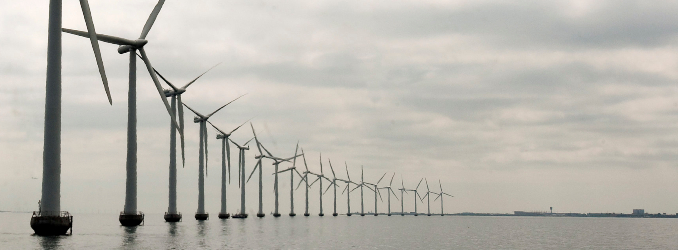
The landscape of energy investment is rarely static, but the recent developments surrounding Orsted’s Revolution Wind farm off the coast of Rhode Island underscore a heightened level of policy-driven uncertainty that demands close attention from investors. As the U.S. Energy Secretary confirms “active discussions” within the administration regarding the future of this 80%-complete offshore wind project, the implications ripple far beyond a single renewable venture, touching upon the broader stability of energy policy and investor confidence in a sector hungry for capital. This situation, playing out against a backdrop of fluctuating crude prices and an upcoming slate of critical oil & gas industry events, highlights the imperative for sophisticated investors to leverage robust, real-time market intelligence and forward-looking analysis to navigate increasingly complex energy markets.
Policy Crosscurrents Threaten Offshore Wind Investment
The halt of Orsted’s Revolution Wind project, a multi-billion dollar undertaking co-owned by Global Infrastructure Partners, sends a chilling message to investors in the nascent offshore wind industry. Despite being 80% complete, the project faces an uncertain future following a stop-work order from the Interior Department. This isn’t an isolated incident; the current administration has demonstrated a pattern of disrupting offshore wind initiatives, echoing a similar scenario with Equinor ASA’s Empire Wind farm near New York. In that instance, work was temporarily halted before a reversal occurred, reportedly after an agreement was reached with New York’s governor to facilitate new natural gas pipeline projects. This “blades-for-pipes” dynamic, as some analysts describe it, suggests that non-energy political factors can heavily influence project approvals and could be at play in the Revolution Wind discussions, particularly given the recent lawsuit filed by Rhode Island, Connecticut, and the Orsted venture against the federal government. For investors, this creates a deeply unpredictable environment where significant capital commitments can be jeopardized by shifting political sands and inter-state disputes, making project valuation and risk assessment an increasingly intricate challenge. Investors are constantly seeking clarity, as evidenced by frequent inquiries regarding market data reliability and analytical tools, a need that stands in stark contrast to the opaque nature of these policy decisions.
Crude Market Dynamics and Broader Energy Context
While the spotlight is currently on offshore wind’s regulatory hurdles, it’s crucial for energy investors to keep a firm grip on the broader commodity market context. As of today, Brent Crude trades at $98 per barrel, marking a 1.4% decline, with its daily range between $97.92 and $98.58. Similarly, WTI Crude stands at $89.74, down 1.57%, having traded between $89.57 and $90.21. This recent dip is part of a more significant trend: Brent has seen a substantial decrease of $14, or 12.4%, over the past 14 days, falling from $112.57 on March 27th to $98.57 on April 16th. Gasoline prices also reflect this softening, currently at $3.08 per gallon. This bearish shift in crude prices could subtly influence the political calculus around diversifying energy sources and the urgency with which renewable projects are pursued or stalled. Investors are acutely aware of these market movements, frequently querying “What is the current Brent crude price and what model powers this response?”, underscoring the demand for precision in volatile markets. This contrasts sharply with the opaque and politically charged decision-making process currently afflicting offshore wind, highlighting the differing risk profiles within the energy sector.
Navigating Policy Uncertainty Amidst Investor Concerns and Upcoming Events
The “active dialogue” surrounding Revolution Wind touches directly on investor confidence, a point acknowledged by Energy Secretary Chris Wright, who noted that “hard dialogues” are underway regarding the billions sunk into wind farms. However, he also underscored “massive environmental and economic opposition” to offshore wind, suggesting that these projects face a dual challenge of political interference and public sentiment. This regulatory uncertainty creates a significant hurdle for long-term capital planning and project financing. Investors, keenly interested in market predictability, are also closely monitoring upcoming events that will shape the traditional oil & gas landscape. The next 14 days are packed with critical insights: the Baker Hughes Rig Count reports on April 17th and April 24th will offer a pulse check on drilling activity, while the API Weekly Crude Inventory (April 21st, April 28th) and EIA Weekly Petroleum Status Report (April 22nd, April 29th) will detail supply-demand dynamics. Most importantly, the OPEC+ JMMC meeting on April 18th, followed by the Full Ministerial meeting on April 20th, will determine future production quotas. Our readers are actively asking “What are OPEC+ current production quotas?”, demonstrating their focus on these pivotal supply-side decisions. The contrast between the clear, scheduled impact of OPEC+ decisions and the unpredictable, politically motivated halts in renewables is stark, necessitating diversified strategies.
Strategic Implications for Energy Portfolios
The Orsted situation serves as a powerful reminder that energy investment is not solely about resource economics; it is deeply intertwined with policy, politics, and public discourse. For investors, the stop-start nature of major renewable infrastructure projects, even those nearing completion, introduces significant risk premium. This environment necessitates a sophisticated approach to portfolio construction and risk management. While the long-term trajectory towards energy transition remains clear, the path is fraught with short-term regulatory and political obstacles that can erode value. Conversely, the traditional oil and gas sector, despite its own cyclical volatility and geopolitical risks, often operates within more established regulatory frameworks and benefits from clearer supply-side signals from entities like OPEC+. Prudent investors must therefore maintain agility, leveraging comprehensive data pipelines and expert analysis to identify opportunities and mitigate risks across the entire energy spectrum. Understanding both the visible market trends and the less transparent political machinations is paramount to securing robust returns in this evolving energy landscape, especially with key industry and OPEC+ events looming.