The energy investment landscape is currently grappling with a potent mix of geopolitical volatility, evolving policy directives, and the persistent drive towards a global energy transition. A recent development, however, introduces a new layer of complexity: the lawsuit filed by offshore wind developers Ørsted and Skyborn Renewables against the U.S. Interior Department. This legal challenge, contesting a stop-work order on the 704-megawatt Revolution Wind project, is more than just a dispute over a single renewable energy initiative; it signals a critical juncture for investor confidence in the predictability and stability of large-scale infrastructure projects across the entire energy spectrum. For oil and gas investors, this event serves as a stark reminder of regulatory risk, potentially influencing capital allocation decisions as the broader energy market seeks clarity amidst uncertainty.
The Revolution Wind Stalemate: A Deep Dive into Project Economics and Risks
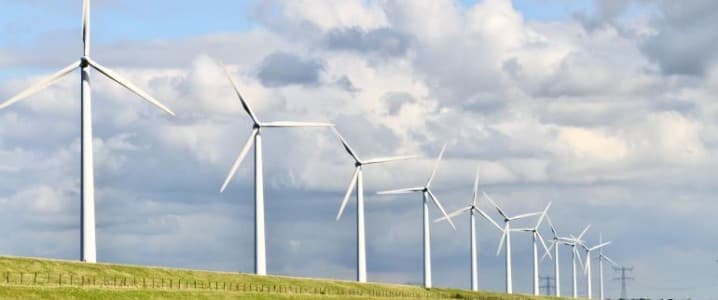
The Revolution Wind project, designed to supply over 350,000 homes in Rhode Island and Connecticut through 20-year offtake agreements, stands at an advanced stage of development. With approximately 80% of construction complete, including all offshore foundations set and 45 of 65 turbines installed, the developers have already invested an estimated $5 billion. The sudden stop-work order from the Bureau of Ocean Energy Management (BOEM), citing national security concerns, has not only halted progress but also threatens an additional $1 billion in costs if the shutdown persists. This financial exposure highlights the immense capital commitments inherent in modern energy infrastructure. The developers warn of potentially losing access to scarce, specialized construction vessels, leading to delays of at least a year or even outright project cancellation. This situation has already sent ripples through the market, with Ørsted’s shares experiencing a nearly 32% decline year-to-date and the company planning a significant $9.4 billion rights issue to bolster its balance sheet. Such a setback, unprecedented for a U.S. offshore wind project this far into construction, underscores the profound impact regulatory shifts can have on shareholder value and project viability.
Geopolitical Undercurrents and US Energy Policy Crossroads
The rationale behind BOEM’s stop-work order—unspecified national security concerns—introduces a significant element of regulatory unpredictability. While the specifics remain undisclosed, the action follows earlier federal clearances, raising questions about the consistency and transparency of the approval process for critical infrastructure. For investors, this creates a challenging environment where even projects with long-standing federal and state approvals can face sudden and costly interventions. This level of regulatory uncertainty is not confined to the renewable sector; it sends a broader signal about the potential for unexpected government intervention in large-scale energy projects across the U.S. Such a development could lead investors to demand higher risk premiums for future projects or re-evaluate the regulatory stability of the U.S. market compared to other global investment destinations. In an era where energy security and supply chain resilience are paramount, the implications of such interventions extend far beyond a single project, influencing the perceived risk profile of all energy investments, including those in traditional oil and gas.
Market Vibrations: Crude Prices and Investor Sentiment Amidst Energy Transition Headwinds
Amidst these developments in the renewable sector, the core oil and gas markets continue to exhibit their own dynamics, which investors are tracking with intense scrutiny. As of today, Brent crude trades at $98.57 per barrel, reflecting a modest 0.83% decline on the day, moving within a tight range of $97.92 to $98.57. Similarly, WTI crude stands at $90.18, down 1.09%, oscillating between $89.57 and $90.21. This recent dip follows a significant correction over the past two weeks, with Brent shedding $14, or 12.4%, from its $112.57 peak on March 27th. Our internal data reveals that investors are keenly focused on core market fundamentals, with recurring questions on current Brent prices and OPEC+ production quotas dominating inquiries this week. This intense focus on traditional crude market drivers highlights a flight to perceived stability. When a major renewable project faces an abrupt halt due to regulatory and national security concerns, it inevitably causes investors to reassess risk across the entire energy complex. This can lead to a reallocation of capital, potentially favoring sectors perceived as more stable or less exposed to sudden policy reversals, even if those are traditional fossil fuels currently experiencing price volatility.
Navigating the Future: Upcoming Catalysts and Strategic Considerations for Energy Investors
The coming days present a flurry of market-moving events that will undoubtedly shape the near-term outlook for energy commodities and influence strategic investment decisions. The upcoming OPEC+ Joint Ministerial Monitoring Committee (JMMC) meeting on April 18th, followed by the full Ministerial meeting on April 20th, will be critical. These gatherings are closely watched for any signals regarding production policy, which could significantly impact global supply and price stability. Beyond OPEC+, weekly inventory reports from the American Petroleum Institute (API) and the U.S. Energy Information Administration (EIA), scheduled for April 21st and 22nd respectively, will offer crucial insights into domestic supply-demand balances. Additionally, the Baker Hughes Rig Count on April 17th and 24th will provide a pulse on drilling activity, signaling future production trends. For investors navigating the current environment, these traditional market catalysts must be weighed against the backdrop of increasing regulatory risk in the energy transition space, as exemplified by the Revolution Wind situation. The confluence of a softening crude market, critical OPEC+ decisions, and heightened regulatory uncertainty in renewables demands a nuanced investment strategy. Capital allocation will increasingly favor projects and companies that demonstrate robust regulatory compliance, clear policy frameworks, and a proven ability to mitigate geopolitical and governmental intervention risks, whether in traditional oil and gas or the evolving renewable sector.


