Orbia Fuels UK’s Critical Mineral Independence with Pioneering Graphite Recycling Initiative
In a strategic move bolstering the United Kingdom’s nascent electric vehicle (EV) battery supply chain, Orbia Fluor & Energy Materials has secured a substantial £1.4 million in government funding. This capital injection targets a critical graphite recycling pilot project slated for Runcorn, aiming to significantly reduce the nation’s reliance on imported graphite and champion robust battery material recovery processes. For investors navigating the complex energy landscape, this initiative represents a pivotal step in securing vital resources for the burgeoning EV sector, a domain increasingly relevant to the broader energy investment thesis.
This multi-phase undertaking, currently in its detailed planning stages, is projected to commence operations in early 2026. Industry watchers anticipate initial product output and facility installation to follow by late 2026. The phased approach underscores a meticulous development strategy, moving from conceptualization to tangible output within a reasonable timeframe, a factor often scrutinized by discerning capital allocators.
Strategic Imperative: Decoupling from Global Supply Vulnerabilities
Orbia’s commitment goes beyond mere technological innovation; it addresses a profound geopolitical and economic vulnerability. The company explicitly states the project’s goal to establish a domestic graphite recycling capability, a direct countermeasure to the current global supply chain dependency. The stark reality reveals that China commands approximately 95% of worldwide graphite production – a statistic that should give any energy investor pause, regardless of their primary focus. Such concentrated control over a critical mineral presents significant supply risk, subject to geopolitical shifts, trade disputes, and logistics disruptions. By fostering internal capacity, the UK aims to insulate its industrial base from these external pressures, enhancing its national energy security posture.
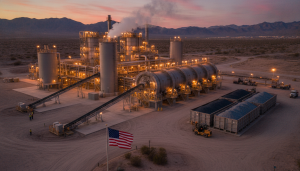
The Runcorn pilot facility will initially focus on processing kilogram-scale batches. This measured approach serves a dual purpose: demonstrating both the technical robustness and commercial viability of advanced graphite recovery techniques. Should these initial phases prove successful, the groundwork will be laid for the consideration and potential development of a future industrial-scale plant, opening doors for substantial private investment in this crucial segment of the energy transition economy.
Government Catalysis: The DRIVE35 Programme’s Impact
The funding itself originates from the UK Government’s ambitious £4 billion DRIVE35 programme. This substantial initiative, delivered through the collaborative efforts of the Department for Business and Trade, the Advanced Propulsion Centre UK (APC), and Innovate UK, signifies a clear governmental mandate to accelerate the domestic development of advanced automotive technologies. For investors, such government backing provides a layer of de-risking for early-stage technologies and signals strong national support for the sector, potentially attracting further private capital inflows.
Orbia’s strategic footprint in the UK extends beyond this new recycling initiative. The company already operates significant battery materials research and development activities from its technology centre in Thornton, Chester. This facility spearheads critical advancements in electrolyte and solvent system development, spearheads innovative lithium-ion battery prototyping, and drives inorganic materials research. This established R&D presence provides a strong foundation for the Runcorn project, demonstrating Orbia’s integrated approach to addressing key challenges in the battery value chain.
Executive Vision: Building a Circular Energy Economy
John Jaddou, Global Director of New Business Development at Orbia Fluor & Energy Materials, articulated the profound implications of this investment. “This investment marks a significant milestone in enabling a huge step toward building a domestic, circular supply chain for battery materials and supporting the UK’s transition to a more sustainable, zero-emission future,” Jaddou stated. His comments underscore a vision where resource efficiency and environmental stewardship converge with economic opportunity. He further emphasized Orbia’s objective to conclusively demonstrate “that graphite recovery can be both technically robust and commercially feasible, laying the groundwork for a future industrial scale facility.”
For investors accustomed to the cyclical dynamics of traditional oil and gas markets, the burgeoning critical minerals sector offers a compelling diversification. The imperative for secure, localized supply chains for materials like graphite reflects a broader global push for energy independence and industrial resilience. As the world transitions towards electrification, the strategic control over raw materials becomes as critical as the control over fossil fuel reserves once was. This project, while specific to graphite, epitomizes the ongoing re-evaluation of energy infrastructure and resource access, presenting both challenges and lucrative opportunities for those positioned to capitalize on the evolving energy matrix. Securing these foundational materials is not merely an environmental endeavor; it is a fundamental pillar of future economic power and geopolitical stability.
The investment in Runcorn is a clear indicator that capital is flowing into crucial areas of the energy transition, moving beyond just renewable energy generation to the foundational materials that enable it. Astute investors will recognize that while oil and gas remain central to global energy for decades to come, understanding and participating in the critical mineral supply chain offers a hedge against evolving market dynamics and a direct pathway into the industrial future.