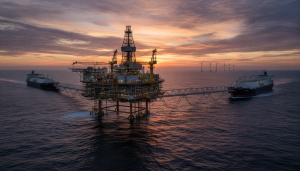
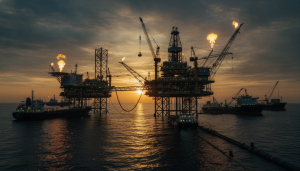
The global oil and gas industry is undergoing a significant transformation, particularly within the deepwater sector. While long-term demand for hydrocarbons remains robust, operators are confronting a landscape marked by persistent capital discipline and the urgent need for accelerated project timelines. Recent industry discussions, featuring insights from leading operators and market analysts, highlight a strategic pivot towards enhanced collaboration, digitalization, and standardized development models. This shift is not merely about efficiency; it’s about unlocking shareholder value in an environment where investment has remained largely flat, even as deepwater continues to be recognized as a critical growth engine for future supply. For investors, understanding these operational changes and their market implications is paramount.
Market Realities and Deepwater’s Strategic Position
The broader energy market currently reflects a cautious sentiment, impacting investment decisions across the board. As of today, Brent Crude trades at $92.9 per barrel, experiencing a modest -0.36% dip within a day range of $92.57-$94.21. Similarly, WTI Crude stands at $89.45, down -0.25%, ranging between $88.76 and $90.71. This follows a notable trend where Brent has seen a decline of $7.07, or 7%, over the past 14 days, falling from $101.16 on April 1st to $94.09 on April 21st. This price volatility underscores the pressure on operators to ensure every capital expenditure yields maximum, swift returns.
Despite these near-term market wobbles, deepwater projects retain their strategic importance. Industry experts emphasize that global investment in oil and gas has remained flat for the third consecutive year, yet there’s a clear consensus among major operators: exploration efforts, particularly in deepwater, must be stepped up to meet future energy requirements. Since 2020, approximately $200 billion has been directed towards deepwater initiatives, with Brazil and Guyana consistently highlighted as the primary drivers of future production growth. However, a key challenge remains: only three significant deepwater projects progressed during 2025, signaling a bottleneck in execution that operators are now aggressively addressing through innovative strategies.
Accelerating Project Execution through Innovation and Collaboration
The imperative for faster project delivery and greater capital discipline dominates the deepwater narrative. Industry leaders, including Adriano Bastos from Galp, Elisabetta Boi from Eni, Pablo Gomes from Petrobras, and Grant McKenzie from Woodside, recently converged to discuss how deepwater development is adapting to a “new era.” Their collective insights point to a fundamental transformation in offshore project execution, driven by three core pillars: enhanced collaboration across the value chain, widespread digitalization, and the adoption of standardized development models. These approaches are critical for managing the inherent complexities, escalating costs, and execution risks associated with deepwater operations.
This strategic pivot is not just theoretical; it’s a response to market demands and operational realities. Operators are leveraging technology to streamline processes, improve data analytics, and reduce decision-making cycles. The focus on standardization, from subsea equipment to project management frameworks, aims to cut down engineering time and reduce custom solutions, thereby accelerating time-to-first-oil. Furthermore, the deepwater sector is making tangible progress on its environmental footprint, with continuous improvements observed, particularly on Floating Production, Storage, and Offloading (FPSO) vessels. This commitment to efficiency and sustainability is further underscored by a robust $20 billion contract backlog among top deepwater drilling contractors, indicating a healthy pipeline of future work despite the broader investment constraints.
Navigating Uncertainty: Upcoming Events and Investor Sentiment
Investors are keenly watching for signals that will dictate the future trajectory of oil prices and, consequently, the profitability of deepwater investments. Our proprietary data indicates a strong interest in price predictions, with common queries ranging from “is WTI going up or down” to “what do you predict the price of oil per barrel will be by end of 2026.” These questions underscore the urgent need for timely, accurate market intelligence.
The coming weeks will offer several critical data points that could influence market sentiment and investor strategies. Tomorrow, April 22nd, investors will scrutinize the EIA Weekly Petroleum Status Report for insights into crude oil inventories and demand trends. This will be followed closely by the Baker Hughes Rig Count on April 24th, providing a pulse on drilling activity. The cycle continues with the API Weekly Crude Inventory on April 28th, another EIA Weekly Petroleum Status Report on April 29th, and another Baker Hughes Rig Count on May 1st. Perhaps one of the most anticipated releases for forward-looking analysis is the EIA Short-Term Energy Outlook on May 2nd, which will offer updated supply, demand, and price forecasts. These events, alongside the API Weekly Crude Inventory on May 5th and the EIA Weekly Petroleum Status Report on May 6th, are essential for investors seeking to refine their market outlook and position their portfolios effectively within the evolving deepwater landscape. The data from these reports will provide crucial context for how operators’ efforts to slash project timelines translate into tangible value in a dynamic price environment.
Investor Value in Accelerated Deepwater Development
For investors, the operational shifts in deepwater project execution represent a significant opportunity for value creation. The emphasis on capital discipline, faster project timelines, and improved efficiency directly addresses key concerns around return on investment and project risk. When operators like Galp, Eni, Petrobras, and Woodside streamline their deepwater strategies, they are not just cutting costs; they are compressing the capital cycle, allowing for quicker realization of cash flows and potentially higher internal rates of return (IRR).
The consolidation observed across key segments of the service sector also plays a role, potentially leading to more integrated and efficient service delivery, further benefiting project economics. By embracing digitalization and standardized models, operators are building more resilient and predictable development pipelines. This “new era” approach to deepwater is fundamentally about de-risking investments and enhancing the predictability of future production volumes. For astute investors, identifying companies that are at the forefront of this operational transformation, particularly those with strong deepwater portfolios in high-growth regions like Brazil and Guyana, could yield substantial long-term returns as global energy demand continues to be underpinned by robust hydrocarbon supply.