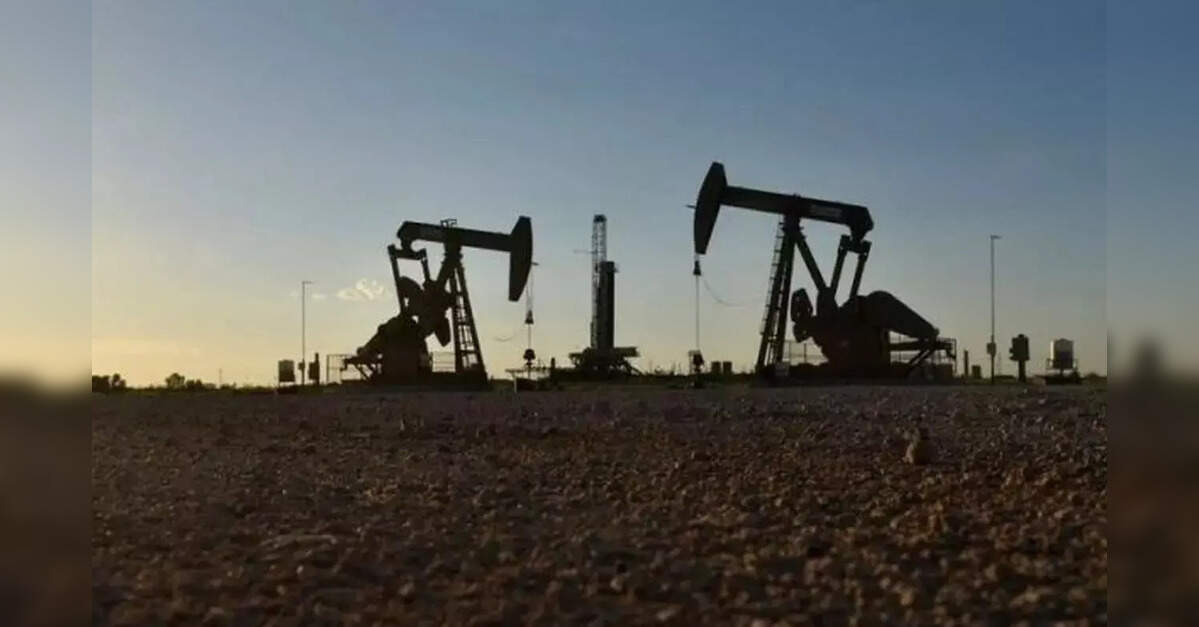
OPEC+ has long navigated a complex web of internal politics and market forces, consistently aiming to stabilize global oil supply. A recent decision, anticipated by delegates in early 2026, saw the cartel maintain steady output, specifically pausing previously planned output hikes for January, February, and March. This move came despite a challenging 2025, which witnessed oil prices plummet by over 18% – the steepest decline since 2020 – fueled by growing oversupply concerns. More notably, this decision was made amidst high-stakes geopolitical tensions between key members Saudi Arabia and the UAE over the protracted conflict in Yemen. As investors evaluate the implications of this steadfast approach, our proprietary data offers critical insights into current market sentiment and crucial upcoming events that will undoubtedly shape the energy investment landscape.
OPEC+’s Strategic Stability Amidst Geopolitical Friction
The early 2026 decision by OPEC+ to maintain stable oil output, effectively extending a pause on incremental hikes, underscores the group’s long-standing commitment to market management over political divisions. This pause for the first quarter of 2026 followed a period where the eight primary members – including Saudi Arabia, Russia, and the UAE – had already raised output targets by approximately 2.9 million barrels per day (bpd) from April to December 2025. This significant increase, representing nearly 3% of global oil demand, undoubtedly contributed to the “oversupply concerns” that plagued the market last year. Despite the escalating political friction between Saudi Arabia and the UAE, which saw public disagreements and military maneuvers in Yemen, OPEC+ delegates indicated no intention for these disputes to sway output policy. Historically, the cartel has demonstrated a remarkable capacity to preserve cohesion even during severe internal rifts, such as the Iran-Iraq War, by prioritizing collective market stability. This precedent reinforces the expectation that despite current tensions, the group’s strategic focus remains on navigating the global supply-demand balance.
The Market’s Verdict: Persistent Downward Pressure
While OPEC+ leadership has projected a stable output strategy, the market’s recent performance suggests a more volatile reality. As of today, Brent crude trades at $90.01 per barrel, marking a 0.46% decline within its daily range of $93.87-$95.69. Similarly, WTI crude is priced at $86.38, down 1.19%, fluctuating between $85.50 and $87.49. These figures represent a continuation of significant downward pressure. Our proprietary 14-day Brent trend analysis reveals a sharp depreciation, with prices falling from $118.35 on March 31st to $94.86 on April 20th – a substantial drop of $23.49, or 19.8%. This recent market weakness comes *after* the OPEC+ decision to maintain steady output in early 2026, suggesting that either the market anticipated this stability or that the current output levels are still perceived as insufficient to address demand-side concerns or persistent oversupply. The earlier 18% price drop in 2025 and current declines indicate that the “oversupply concerns” highlighted in the source material remain highly relevant, challenging the effectiveness of the current production strategy to underpin prices.
Navigating Critical Junctions: Today’s JMMC and Beyond
For investors, the near-term calendar is packed with events that could provide further clarity on market direction and OPEC+’s evolving strategy. Critically, the OPEC+ Joint Ministerial Monitoring Committee (JMMC) is scheduled to meet today, April 21st. Given the significant price depreciation observed in Brent crude over the past two weeks, all eyes will be on any statements or signals emerging from this meeting. While delegates previously anticipated steady output, the current market reality might prompt discussions on potential adjustments or at least a firm reiteration of policy to calm investor nerves. Beyond today’s crucial JMMC, a series of data releases will offer deeper insights into market fundamentals. The EIA Weekly Petroleum Status Reports on April 22nd and April 29th will provide vital updates on U.S. crude inventories, refinery utilization, and demand indicators. These will be complemented by the Baker Hughes Rig Count on April 24th and May 1st, offering a snapshot of North American drilling activity. Additionally, the EIA Short-Term Energy Outlook on May 2nd will present a broader forecast for supply, demand, and prices, directly influencing investor sentiment and portfolio positioning. Any divergence from anticipated trends in these reports, or any unexpected signals from the JMMC, could trigger significant market shifts.
Investor Sentiment: Seeking Clarity in a Volatile Landscape
Our first-party intent data reveals that investors are keenly focused on the trajectory of crude prices and the stability of their energy portfolios. Questions like “is WTI going up or down?” and “what do you predict the price of oil per barrel will be by end of 2026?” underscore a desire for clarity in what remains a highly volatile environment. The OPEC+ decision to maintain steady output, while aimed at stability, must be weighed against the backdrop of persistent oversupply concerns and the significant market declines witnessed recently. For investors, the challenge lies in reconciling OPEC+’s stated policy with the actual market response. The ongoing geopolitical tensions in the Gulf, though historically contained by OPEC+’s market-first approach, introduce an additional layer of risk. A stable output policy might offer a floor for prices if demand strengthens, but it could also exacerbate downward pressure if global economic growth falters or if non-OPEC supply continues to expand. Monitoring the outcomes of today’s JMMC meeting and subsequent inventory reports will be crucial for discerning short-term trends. For the longer term, the interaction between OPEC+’s commitment to market management, global demand recovery, and the resolution (or escalation) of geopolitical flashpoints will define the potential for crude oil to reclaim higher price levels by the end of 2026.


