

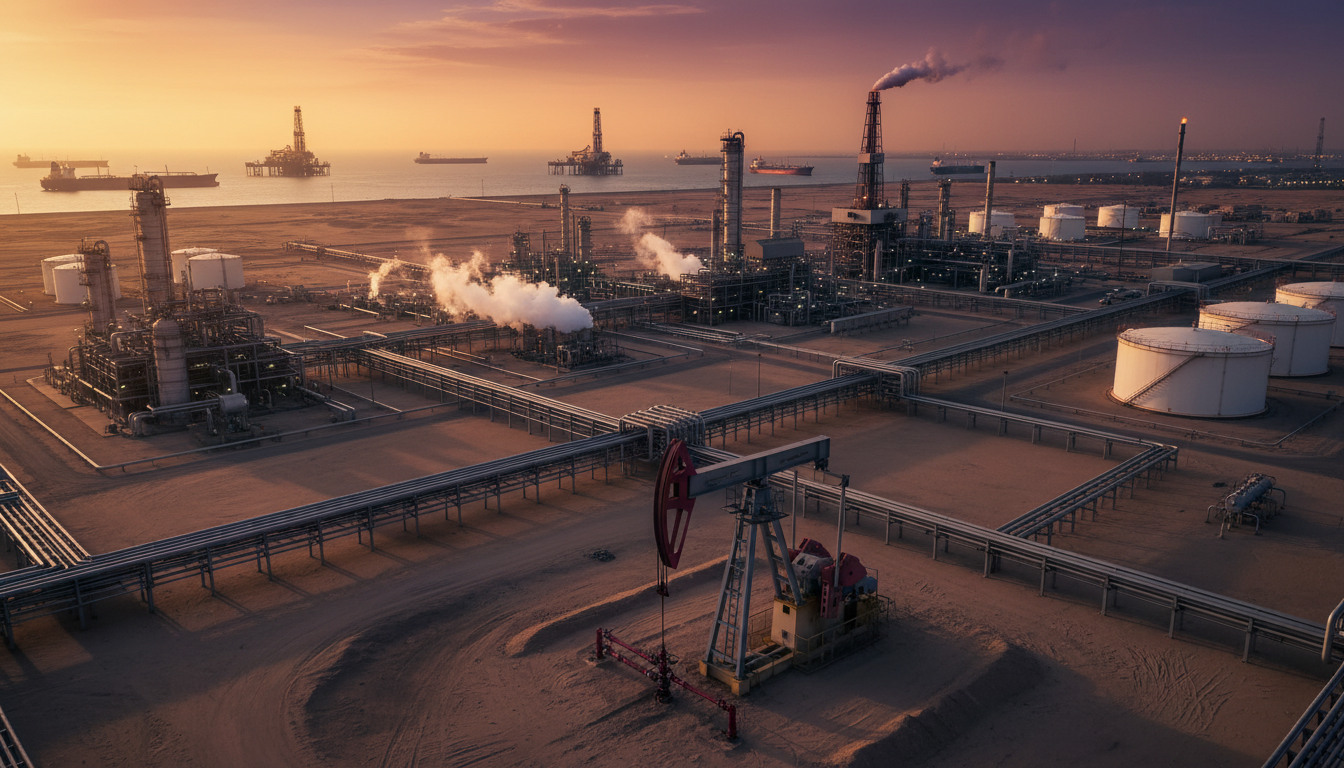
OPEC+’s Symbolic Output Hike Overshadowed by Critical Hormuz Shutdown
In a move that has largely been interpreted as a gesture of intent rather than a practical solution, OPEC+ nations collectively agreed on Sunday to modestly increase their oil production quotas by 206,000 barrels per day for the month of May. This decision emerges against a backdrop of severe geopolitical instability, where an escalating conflict involving the US, Israel, and Iran has critically impacted global energy flows. The pivotal Strait of Hormuz, an indispensable chokepoint for global oil trade, has remained effectively shut since late February, drastically curtailing crude exports from key Gulf producers and sending shockwaves through the international energy markets. This confluence of events presents a complex and high-stakes scenario for investors tracking the volatile oil and gas sector.
The closure of the Strait of Hormuz has crippled the ability of major oil-exporting nations, including Saudi Arabia, the United Arab Emirates, Kuwait, and Iraq, to deliver their crude to global buyers. This unprecedented disruption has triggered a dramatic surge in crude prices, pushing benchmarks to nearly four-year highs, hovering around the $120 a barrel mark. The ripple effect is palpable, translating into escalating fuel costs worldwide and compelling governments across continents to initiate measures aimed at conserving dwindling supplies and mitigating economic fallout. From strategic petroleum reserve releases to incentivizing alternative energy sources, global policymakers are reacting with urgency. For astute investors, understanding the dichotomy between OPEC+’s theoretical pronouncements and the stark reality of physical supply constraints is paramount for informed decision-making.
The Critical Chokepoint: Strait of Hormuz’s Unprecedented Closure
The Strait of Hormuz represents the world’s most vital oil transit route, through which an estimated one-fifth of global oil consumption passes daily, equating to millions of barrels. Its effective closure, a direct consequence of the ongoing geopolitical strife, presents an existential challenge to global energy security. The inability of Gulf producers to access this maritime artery means a significant volume of crude is effectively stranded, creating an immediate and substantial deficit in the global market. This logistical bottleneck fundamentally undermines any theoretical increases in production capacity elsewhere, as the primary conduits for export remain impassable. Investors must recognize the profound, structural impact of this closure, which transcends mere short-term market sentiment and points to a deeper, more enduring supply-side crisis.
Industry analysts have widely dismissed the announced 206,000 bpd increase as largely “academic” or “irrelevant” given the persistent disruptions. This increment accounts for less than two percent of the already curtailed supply, offering minimal relief to a market grappling with a significant deficit that could stretch into millions of barrels per day. The group’s decision, while signaling a theoretical readiness to boost output once the strait reopens, provides no immediate practical solution to the current supply crunch. As one expert from Rystad Energy succinctly put it, “In reality, it adds very few barrels to the market. With Hormuz shut, additional OPEC+ supply is largely irrelevant.” This sentiment underscores the prevailing skepticism regarding the efficacy of the group’s current strategy, highlighting the vast disconnect between paper agreements and physical market realities. The market, therefore, continues to price in extreme risk rather than anticipate any immediate softening of supply conditions.
Geopolitical Headwinds and Production Capacity Constraints
The virtual meeting saw eight OPEC+ members endorse the higher quotas. However, the dynamics within the alliance itself reflect broader geopolitical challenges. Russia, a major OPEC+ partner, faces severe limitations in its ability to increase oil output. A confluence of international sanctions and war-related infrastructure damage continues to hinder its production capabilities, effectively sidelining it from any meaningful supply expansion efforts. Its crude, while still flowing to certain markets, often trades at a discount and faces logistical hurdles, preventing it from compensating for the wider global shortfall. This effectively concentrates the pressure on other producers, many of whom are themselves compromised by regional instabilities and domestic capacity issues.
Beyond the Strait, the conflict’s destructive footprint extends directly to critical oil infrastructure within the Gulf region. Missile and drone attacks have inflicted considerable damage, further compromising production capacity in key exporting nations like Saudi Arabia and Iraq. Officials have issued stark warnings, indicating that even if the conflict were to conclude swiftly, restoring normal operations could demand several months of extensive repairs and reconstruction efforts. This reality suggests a prolonged period of reduced supply from a region historically crucial for market stability, adding another layer of complexity for investors assessing long-term energy outlooks and potential supply shocks. The sustained damage signals that even a diplomatic resolution might not immediately restore pre-conflict production levels, perpetuating tightness in the market well into the future.
Navigating the Investor Landscape: Risks and Opportunities in Oil and Gas
The current market environment, characterized by crude prices near $120 a barrel and rampant global fuel cost inflation, creates a volatile yet potentially lucrative landscape for energy investors. While consumer nations scramble to implement conservation strategies – from promoting electric vehicles to subsidizing public transport – the fundamental supply-demand imbalance, exacerbated by the Hormuz closure and regional production impediments, continues to underpin elevated prices. This sustained high-price environment could present significant opportunities for exploration and production companies operating outside the immediate conflict zone, particularly those with diversified transport routes, robust refining capabilities, or strong positions in alternative energy sources that are now gaining renewed urgency.
Conversely, the immense geopolitical risk associated with the Middle East remains a dominant factor. The possibility of further escalation, or indeed, the prolonged closure of critical shipping lanes, could introduce further volatility and unpredictable price spikes, potentially pushing crude well past current levels. Investors must critically evaluate their exposure to these risks, considering the potential for supply chain disruptions, increased operational costs, and regulatory interventions aimed at stabilizing domestic energy markets. Strategic asset allocation, focusing on companies with strong balance sheets, operational resilience to geopolitical shocks, and a clear path to generating free cash flow, becomes paramount in this turbulent period. The oil market is currently a battleground where physical supply realities decisively outweigh theoretical production adjustments, demanding a highly informed and cautious approach from every investor keen on navigating the complex dynamics of global oil and gas investing.
