

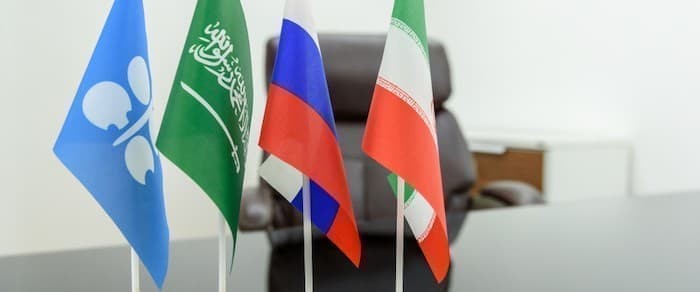
OPEC+ agreed on Sunday to raise oil output by a modest 206,000 barrels per day (bpd) in April, opting for a cautious supply increase even as the U.S.-Israeli war on Iran disrupts shipments across the Middle East.
The decision, confirmed in an official statement after the group’s meeting, involves eight core members: Saudi Arabia, Russia, the UAE, Iraq, Kuwait, Kazakhstan, Algeria and Oman. The increase ends a three-month pause in production hikes but falls well below the larger boosts of up to 411,000–548,000 bpd that had been discussed in recent days.
The move comes as oil flows through the Strait of Hormuz — which accounts for more than 20% of global crude transit — have been severely disrupted. Shipowners have halted voyages after receiving warnings that the waterway was closed, with hundreds of vessels reportedly anchored on either side of the Strait. Several ships have also come under attack amid escalating hostilities.
Despite fears of oversupply earlier this year, Brent crude has rallied sharply on geopolitical risk, climbing toward $80 per barrel in over-the-counter trading on Sunday after hitting $73 on Friday — its highest level since July.
Analysts say the modest increase may do little to calm markets. OPEC+ has historically raised output to cushion supply disruptions, but spare capacity outside Saudi Arabia and the UAE is limited. Even those producers may struggle to export additional barrels until Gulf navigation stabilizes.
Saudi Arabia had already ramped up production by roughly 500,000 bpd in recent weeks in preparation for potential disruptions tied to U.S. strikes on Iran, according to sources. The UAE has also increased exports.
Iran, an OPEC member producing around 3.3 million bpd, has seen its export infrastructure come under strain amid the conflict. With tensions high and shipping constrained, traders say prices will depend less on quota decisions and more on whether oil can physically move through the Gulf.
By Tom Kool for Oilprice.com
More Top Reads From Oilprice.com
