

OPEC’s Unprecedented Output Plunge Reshapes Global Energy Landscape
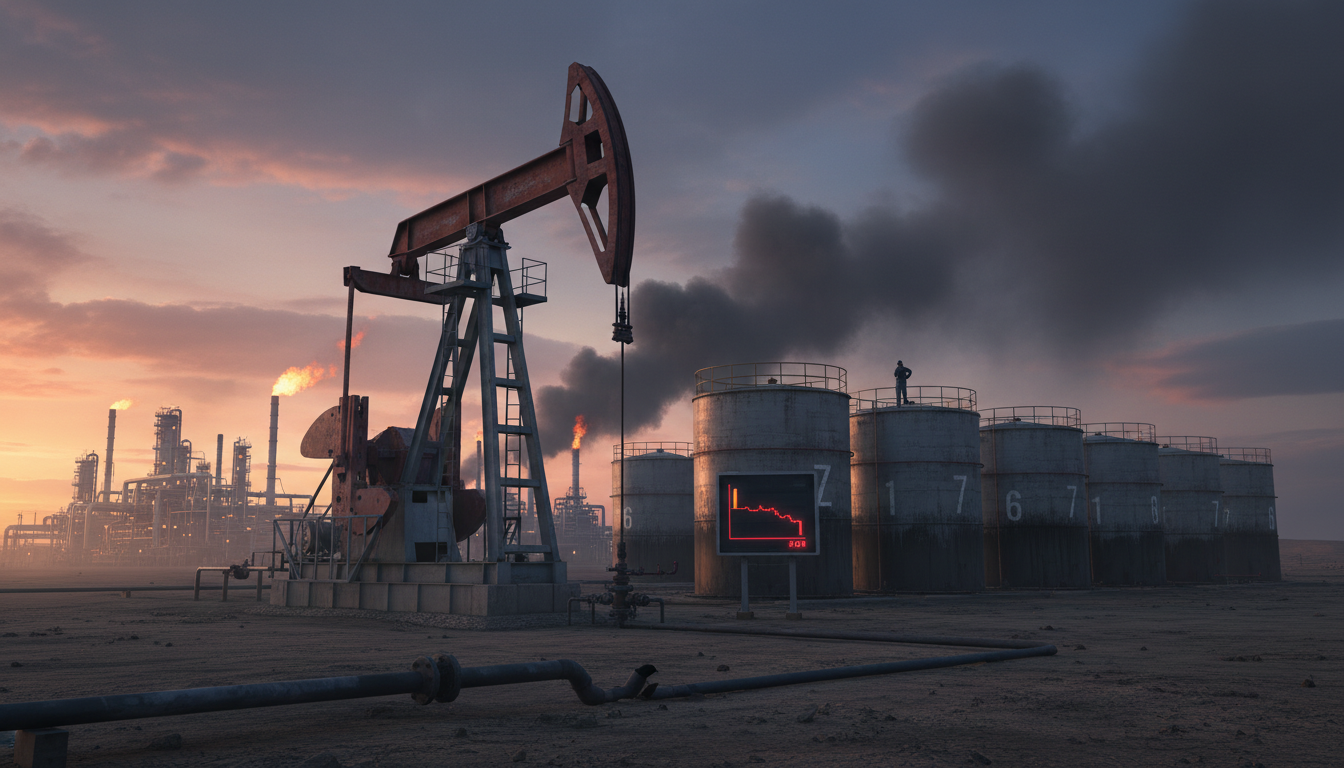
Global crude oil markets are reeling from a dramatic reduction in supply as OPEC members slashed production by a staggering 7.2 million barrels per day last month. This precipitous decline pushed the cartel’s total output in March to just 21.57 million barrels daily, marking its lowest production rate recorded since June 2020. This significant contraction in supply is sending shockwaves through the energy sector, prompting investors to reassess market stability and future price trajectories.
Major Producers Drive Steep Cuts
The bulk of these substantial production cuts originated from key Middle Eastern oil powerhouses. Iraq experienced the most significant reduction among its peers, with its daily output plummeting from 4.15 million barrels in February to a mere 1.4 million barrels in March. This unprecedented drop highlights the severe operational challenges confronting the nation’s energy infrastructure.
Kuwait also implemented drastic measures, curtailing its oil production to approximately half a million barrels daily. This represents a massive decrease from its previous levels of over 3 million barrels per day, a reduction directly attributable to the recent shutdown of the vital Strait of Hormuz by Iran, following escalating tensions fueled by U.S. and Israeli actions. Such geopolitical flashpoints underscore the inherent volatility and risk associated with crude oil supply routes in the region.
The United Arab Emirates further contributed to the supply contraction, scaling back its output by nearly half. From an average of 3.56 million barrels daily, the UAE’s production fell to around 2 million barrels daily. Concurrently, Saudi Arabia, the de facto leader of OPEC, enacted its own substantial cutback, reducing its daily output by approximately 2 million barrels. These coordinated, albeit individually driven, reductions by major producers signify a deep and widespread disruption across the cartel’s membership.
Amidst these widespread cutbacks, only two OPEC nations managed to buck the trend. Venezuela and Nigeria, both facing their own unique internal and external pressures, saw their oil production modestly increase during March, a minor counterpoint to the broader, dramatic decline.
A Crisis of Unprecedented Scale
The gravity of the current situation has not gone unnoticed by industry titans. Amin Nasser, the Chief Executive of Saudi Aramco, articulated the prevailing sentiment last month, stating, “Although we have experienced disruptions in the past, this crisis is the largest ever faced by the oil and gas industry in this region.” His remarks resonate deeply within the investment community, signaling that the current market turmoil transcends typical cyclical downturns or localized supply interruptions.
Analysts are widely asserting that the recovery from this profound oil and gas supply disruption will be protracted and complex. The cascading effects of reduced output, heightened geopolitical risks, and potential supply chain bottlenecks are painting a grim picture for the global economy. This sentiment has led leading economists to now forecast an impending global recession, with projections indicating its emergence by the middle of this year.
Economic Fallout and Fuel Shortage Warnings
The implications of such a severe energy shock extend far beyond crude oil prices. Ben May, Head of Global Macro Research at Oxford Economics, issued a stark warning recently, emphasizing the uncharted territory into which the world is rapidly moving. “The speed and scale of this energy shock push us into uncharted territory, and it’s possible that diesel, jet fuel, and shipping fuel shortages could inflict greater damage to activity this year,” May cautioned.
This warning is particularly pertinent for investors monitoring refining margins, transportation costs, and the broader industrial sector. A scarcity of critical refined products like diesel, essential for trucking and logistics, or jet fuel, indispensable for air travel and cargo, could severely impede economic activity, stifle growth, and exacerbate inflationary pressures. The ripple effect across global supply chains could be profound, impacting everything from manufacturing to consumer goods distribution.
Navigating the Volatile Energy Investment Landscape
For investors, the current environment presents both significant risks and potential opportunities. The dramatic reduction in OPEC supply, coupled with geopolitical instability in crucial production regions, suggests a sustained period of elevated oil prices. While this could benefit upstream exploration and production companies, it simultaneously poses challenges for energy-intensive industries and may dampen global demand growth in the long run.
Understanding the interplay between production quotas, geopolitical events, and global economic health is paramount. The current crisis demands a meticulous approach to portfolio management, emphasizing diversification, robust risk assessment, and a keen eye on developing supply-demand dynamics. As the world grapples with the fallout from this unprecedented energy shock, the resilience and adaptability of energy investments will be severely tested.
