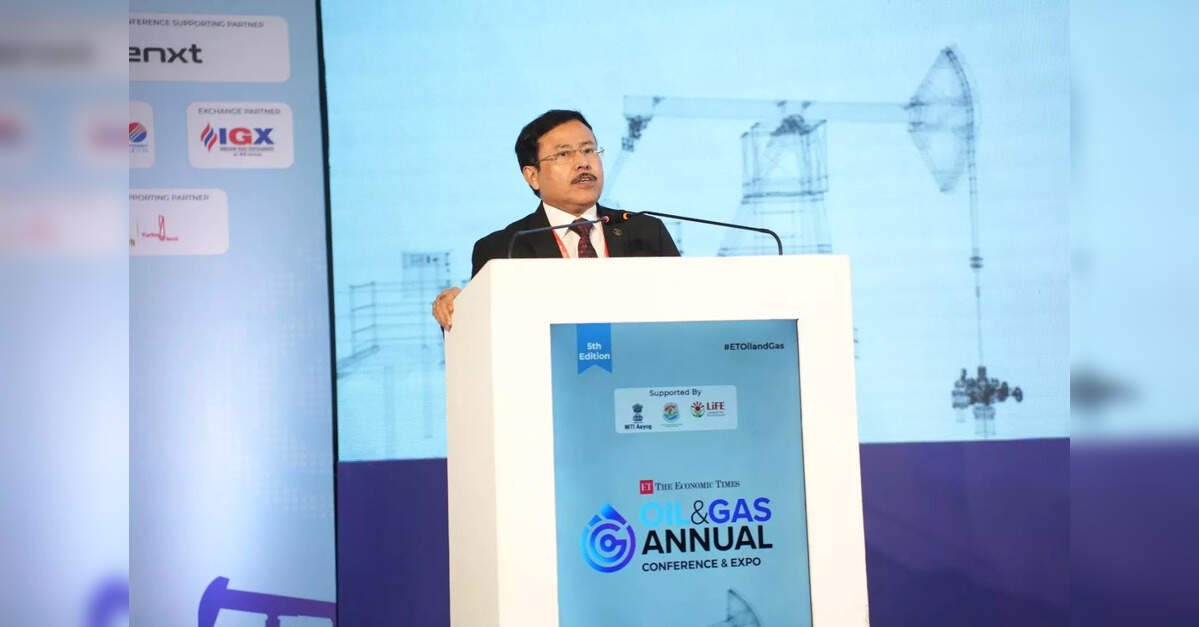
India’s energy landscape is undergoing a profound transformation, moving beyond a simplistic “energy transition” narrative to one of “energy addition,” a strategic shift articulated by Rajarshi Gupta, Managing Director and CEO of ONGC Videsh. This perspective, delivered at a recent industry conference, highlights India’s burgeoning demand for all forms of energy, positioning the nation as a critical driver of global commodity markets. For investors, understanding this nuanced approach, coupled with ONGC Videsh’s expansive international operations and India’s long-term growth trajectory, offers a compelling framework for evaluating future opportunities in the oil and gas sector.
India’s Unstoppable Demand Fuels “Energy Addition” Thesis
The core of India’s energy strategy, as emphasized by ONGC Videsh’s CEO, is not a zero-sum game of replacing fossil fuels with renewables, but rather an aggressive expansion across all energy vectors. India’s refining capacity is projected to surpass 300 million metric tonnes per annum (mmtpa) by 2030, while natural gas demand is expected to reach nearly 300 million standard cubic meters per day (mmscmd). Simultaneously, renewable capacity is rapidly scaling towards an ambitious 500 GW target. These figures underscore a national imperative for “multiple components coexisting” to meet an insatiable appetite for energy. With crude imports accounting for 85-87% and gas imports close to 50% of domestic consumption, ensuring uninterrupted and affordable access to energy remains a paramount national priority. Indeed, third-party assessments suggest that approximately 25% of all incremental global energy demand will originate from India alone, signaling a structural shift that will inevitably influence production patterns, supply chains, and commodity pricing worldwide.
Navigating Global Supply Amidst Persistent Market Volatility
The global energy market continues its dance between supply concerns and demand fluctuations, a reality that directly impacts strategic players like ONGC Videsh. As of today, Brent crude trades at $95.49, showing marginal gains within a day range of $93.87 to $95.69. WTI crude, meanwhile, stands at $87.29, experiencing a slight dip. This relative stability follows a period of significant market correction; Brent crude, for instance, has shed nearly 20% from $118.35 on March 31st to $94.86 just yesterday. Such volatility underscores the challenges in securing energy supplies. India, in response, has strategically diversified its crude imports from around 40 destinations, a testament to the need for robust and resilient supply chains. For large-scale projects, rising capital costs and tightening schedules mean that success now hinges on early risk mitigation, leveraging licensed design packages, and standardizing equipment specifications. Investors will be closely monitoring upcoming catalysts for market direction, including the OPEC+ JMMC Meeting scheduled for April 21st, which could provide crucial signals on production policy. Further insights into near-term supply and demand dynamics will come from the EIA Weekly Petroleum Status Reports on April 22nd and 29th, and the Baker Hughes Rig Count on April 24th and May 1st.
ONGC Videsh’s Global Footprint and Investor Outlook
ONGC Videsh stands as a crucial pillar in India’s energy security strategy, operating across 19 countries with active assets in 16. The company currently produces over 100,000 barrels per day from its jointly operated projects, contributing a total annual output of 10.5 million tonnes, making it India’s second-largest upstream producer after its parent company, ONGC. This expansive global presence mitigates regional risks and secures diversified supply streams essential for India’s burgeoning economy. Many investors are currently asking about the trajectory of oil prices, specifically if WTI is going up or down, and what the price of oil per barrel might be by the end of 2026. While predicting precise future prices is inherently complex, ONGC Videsh’s strategy provides a clear long-term value proposition. By investing in and operating global assets, the company is directly addressing India’s structural energy deficit, ensuring a steady flow of resources critical for sustained economic growth. This operational resilience and strategic alignment with national priorities offer a compelling investment thesis, focusing on the fundamental demand drivers rather than just short-term price fluctuations.
India’s Gas Economy Transformation and Future Growth Engines
Beyond traditional oil, India’s gas economy is undergoing a significant transformation, presenting another layer of investment opportunity. The CEO highlighted five key developments reshaping this sector: expanded regasification capacity, accelerated pipeline connectivity across the nation, and near-complete coverage of city-gas distribution. These initiatives are systematically building the infrastructure necessary to support India’s increasing reliance on natural gas as a cleaner transition fuel. Furthermore, the future growth vectors extend into petrochemicals, critical minerals, and compressed biogas. Recent government policies, such as the National Critical Minerals Mission and Cabinet approvals for permanent magnet manufacturing, underscore a concerted effort to foster domestic capabilities in these strategic areas. For investors, these developments point to substantial long-term growth potential in sectors that are foundational to India’s industrial and energy independence, offering diversified exposure within the broader energy complex.


