

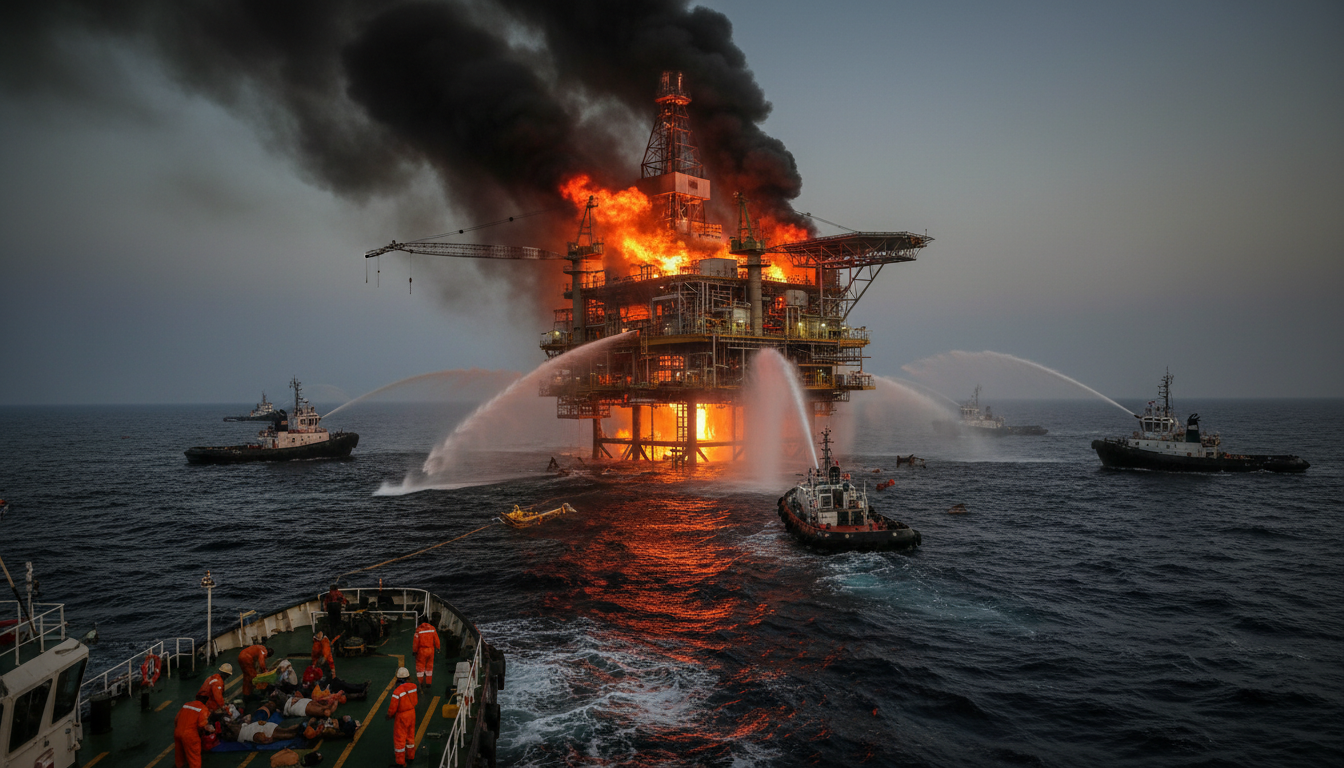
A recent fire incident at an offshore platform operated by the state-run energy giant, Oil and Natural Gas Corporation (ONGC), in the Mumbai High region, serves as a stark reminder of the inherent complexities and risks within the upstream oil and gas sector. While such events naturally draw scrutiny from stakeholders and the financial markets, ONGC’s swift response and immediate normalization of operations are critical takeaways for investors assessing the stability and resilience of India’s largest crude oil and natural gas producer.
Rapid Response Mitigates Incident Impact at SHP Platform
The incident, which occurred at approximately 5:45 PM IST on a recent Friday evening, involved the SHP Platform, a key component of ONGC’s Mumbai High Asset. Reports indicate that a fire broke out, prompting an immediate and coordinated emergency response from the company’s dedicated safety teams. Crucially, the blaze was brought under control and extinguished with remarkable speed, preventing what could have been a far more serious disruption to production or a greater threat to personnel.
Financial markets closely monitor operational incidents, especially within critical energy infrastructure. In this instance, ONGC’s ability to quickly contain the fire underscores the efficacy of its established safety protocols and emergency preparedness mechanisms. This rapid resolution is a vital signal to investors, suggesting that while operational challenges can arise, the company possesses the capability to manage them effectively, thereby safeguarding asset integrity and ensuring production continuity.
Personnel Safety Prioritized, Operations Restored Swiftly
The immediate aftermath of the fire saw 10 personnel sustain minor injuries. These individuals received prompt medical attention and are currently reported to be in stable condition, undergoing necessary care. The paramount importance of human safety in high-stakes offshore environments cannot be overstated, and the fact that injuries were minor and quickly addressed reflects well on the adherence to safety standards and the availability of emergency medical facilities on site.
Perhaps the most reassuring development for the investment community is ONGC’s confirmation that operations at the SHP Platform have been fully normalized following the incident. This means that any potential downtime or impact on the asset’s production capacity for crude oil or natural gas was minimal and short-lived. For a company of ONGC’s scale, maintaining consistent output from its core assets is fundamental to its financial performance and its role in meeting India’s burgeoning energy demand.
Broader Context: ONGC’s Strategic Growth and Energy Security Initiatives
This localized incident on the SHP Platform occurs against a backdrop of significant strategic advancements for ONGC. Just last month, the company announced the successful commencement of gas monetization from its Platform B-12-24P, a pivotal component of the Daman Upside Development Project in the Arabian Sea. This ambitious initiative, representing a substantial investment of $1 billion, is designed to significantly boost India’s domestic natural gas supply, contributing directly to the nation’s energy security objectives.
The Daman Upside Development Project is strategically located approximately 180 kilometers northwest of Mumbai and about 80 kilometers south of Pipavav in Gujarat. Its successful commissioning highlights ONGC’s ongoing commitment to exploring, developing, and producing vital hydrocarbon resources from India’s offshore basins. For investors, the long-term revenue streams and strategic importance of projects like Daman offer a compelling growth narrative, even as isolated operational incidents periodically occur on other, established assets.
Investor Confidence and Operational Resilience in Upstream Ventures
The upstream oil and gas sector is inherently capital-intensive and subject to various operational risks, from geopolitical instability to technical failures. For investors evaluating ONGC, a state-owned enterprise with a dominant position in India’s energy landscape, the ability to demonstrate robust operational resilience is paramount. The swift management of the SHP Platform fire, coupled with minimal impact on personnel and operations, reaffirms ONGC’s capacity to navigate complex challenges while maintaining its core production objectives.
Market analysts will likely view this incident as a test of ONGC’s operational readiness, a test that the company appears to have passed with a focus on containment and continuity. While full details are still emerging, the initial reports suggest that the event will not have a material impact on ONGC’s overall financial outlook or its ambitious growth trajectory, particularly given the successful rollout of projects like Daman. For those investing in India’s energy future, ONGC’s proven ability to manage such situations is a critical factor in assessing its long-term viability and attractiveness as an investment.
In conclusion, the fire at ONGC’s SHP Platform, though a serious operational event, was managed with remarkable efficiency, resulting in minor injuries and a rapid return to normal operations. This outcome reinforces investor confidence in ONGC’s robust safety protocols and operational resilience, allowing the market to remain focused on the company’s significant contributions to India’s energy independence and its strategic growth initiatives in the broader context of its vast offshore portfolio.
