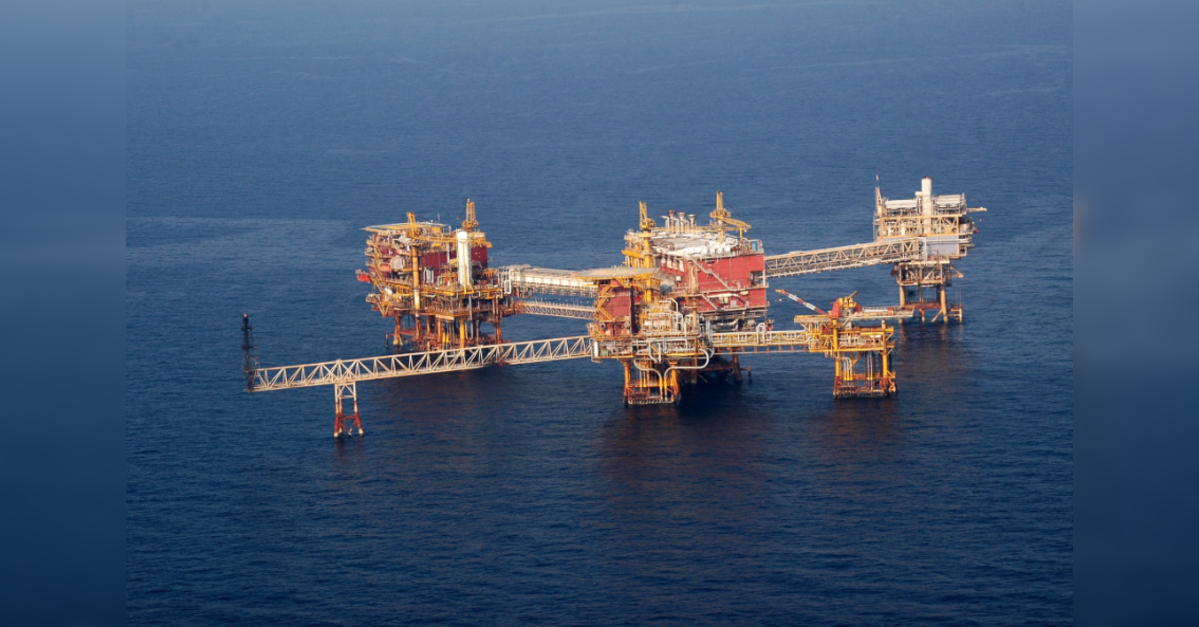
The intricate world of oil and gas investing demands constant vigilance, not just on geopolitical shifts and supply-demand fundamentals, but also on the granular operational realities that underpin sector performance. A prime example is the recent critical milestone achieved in ONGC’s well control operations at the RDS site. While headline crude prices often dominate investor conversations, the successful navigation of complex, high-stakes incidents like this offers a crucial lens into operational competence, risk management, and ultimately, shareholder value. As the industry grapples with significant market volatility, understanding the implications of such technical successes, or failures, becomes paramount for capital allocation decisions.
Navigating Critical Milestones in Well Control Operations
ONGC’s recent progress at the RDS site underscores the advanced engineering and coordinated effort required to mitigate risks in upstream operations. The successful deployment of an extra-long boom crane alongside a 40-ton crane to remove 42 tubing stands from the derrick marks a pivotal step. This precision work has effectively cleared the path for the safe removal of the rig base from the wellhead, moving the operation into its decisive final phases. The subsequent steps, involving the dismantling of the existing Blowout Preventer (BOP) and the installation of a capping stack, are meticulously planned. Investors should note the company’s transparent communication regarding the anticipated temporary increase in gas discharge during this sequence. Assurance that the gas is non-toxic, with significantly reduced volume and no risk to communities beyond a 500-meter radius, is vital for maintaining public and regulatory confidence, directly impacting a company’s social license to operate and its long-term valuation.
Beyond the immediate technical challenges, the operation highlights resilient logistical planning. Rising water levels in the Dikhow River introduced unforeseen hurdles, necessitating the proactive relocation of high-capacity pumps to ensure continuous support for safety systems. Such adaptability in the face of environmental challenges, alongside continuous water blanketing and rigorous ambient air quality monitoring, speaks volumes about the operational integrity and safety culture. In an era where ESG metrics increasingly influence investment decisions, an operator’s capacity to manage such incidents safely and effectively, in partnership with technical experts like CUDD, offers a tangible demonstration of responsible stewardship.
Market Headwinds and Operational Resilience in a Volatile Landscape
The success of specific operational milestones like ONGC’s at RDS gains added significance against the backdrop of a highly volatile global energy market. As of today, Brent Crude trades at $90.38 per barrel, reflecting a sharp 9.07% decline within the day, with its range fluctuating between $86.08 and $98.97. Similarly, WTI Crude stands at $82.59, down 9.41%, having seen a daily range from $78.97 to $90.34. This aggressive daily downturn follows a broader trend; Brent has shed $20.91, or 18.5%, from $112.78 on March 30th to $91.87 just yesterday, April 17th. Gasoline prices, currently at $2.93, also reflect a 5.18% dip for the day. This swift depreciation in crude values creates significant pressure on E&P companies, impacting project economics, capital expenditure plans, and investor sentiment.
In such a turbulent environment, the ability to execute complex and costly well control operations efficiently and without further incident becomes even more critical. Unforeseen delays, cost overruns, or safety breaches during incidents like RDS can disproportionately impact a company’s financials and market perception when commodity prices are already under duress. For investors, the successful management of high-risk operations demonstrates a company’s inherent resilience and operational discipline, factors that provide a crucial hedge against market downturns and support long-term stability in shareholder returns, even as the broader market experiences significant headwinds.
Strategic Implications of Upcoming Energy Events
Looking ahead, the next two weeks are packed with events that could further shape the trajectory of crude prices and investment sentiment in the oil and gas sector. Investors are particularly focused on the upcoming OPEC+ Joint Ministerial Monitoring Committee (JMMC) meeting tomorrow, April 18th, followed by the Full Ministerial meeting on April 19th. Market participants are keenly awaiting signals regarding production quotas, a key question our readers are consistently asking, as demonstrated by queries like “What are OPEC+ current production quotas?” Any unexpected shifts in policy could either stabilize the market or exacerbate current volatility. These decisions will undoubtedly influence the outlook for the remainder of 2026, directly addressing investor inquiries about long-term oil price predictions.
Beyond OPEC+, the regular cadence of inventory reports and rig counts will provide granular insights into supply and demand dynamics. The API Weekly Crude Inventory report on April 21st and 28th, followed by the EIA Weekly Petroleum Status Report on April 22nd and 29th, will offer crucial data points on U.S. crude stocks. Furthermore, the Baker Hughes Rig Count on April 24th and May 1st will serve as a proxy for drilling activity and future supply trends. For E&P investors, monitoring these indicators is essential for understanding short-term market movements and adjusting portfolio strategies. In this context, a company like ONGC demonstrating robust operational execution provides a fundamental layer of stability, irrespective of the macro-market’s daily gyrations.
Investor Focus: Risk, Returns, and Responsible Operations
Our proprietary reader intent data reveals a consistent investor focus on company-specific performance and the broader market outlook, with questions ranging from “How well do you think Repsol will end in April 2026?” to “What do you predict the price of oil per barrel will be by end of 2026?” These inquiries underscore the dual challenge faced by E&P companies: delivering consistent operational performance while navigating external market forces. The successful handling of the RDS well control operation positions ONGC favorably, showcasing its capability to manage significant operational risks. This directly contributes to investor confidence, as robust risk management minimizes potential liabilities and preserves capital.
Moreover, in an environment where capital is increasingly allocated based on environmental, social, and governance (ESG) factors, ONGC’s commitment to safety protocols, community welfare (medical and relief camps), and environmental monitoring (air quality within limits, non-toxic gas discharge) provides a strong narrative. For investors seeking long-term value, these elements are no longer secondary considerations but integral components of a company’s sustainable growth strategy and its ability to attract diverse capital. The ability to complete such complex operations effectively, while maintaining stringent safety and environmental standards, becomes a critical differentiator, influencing how analysts and investors perceive a company’s intrinsic value and its potential for future returns amidst persistent market uncertainties.


