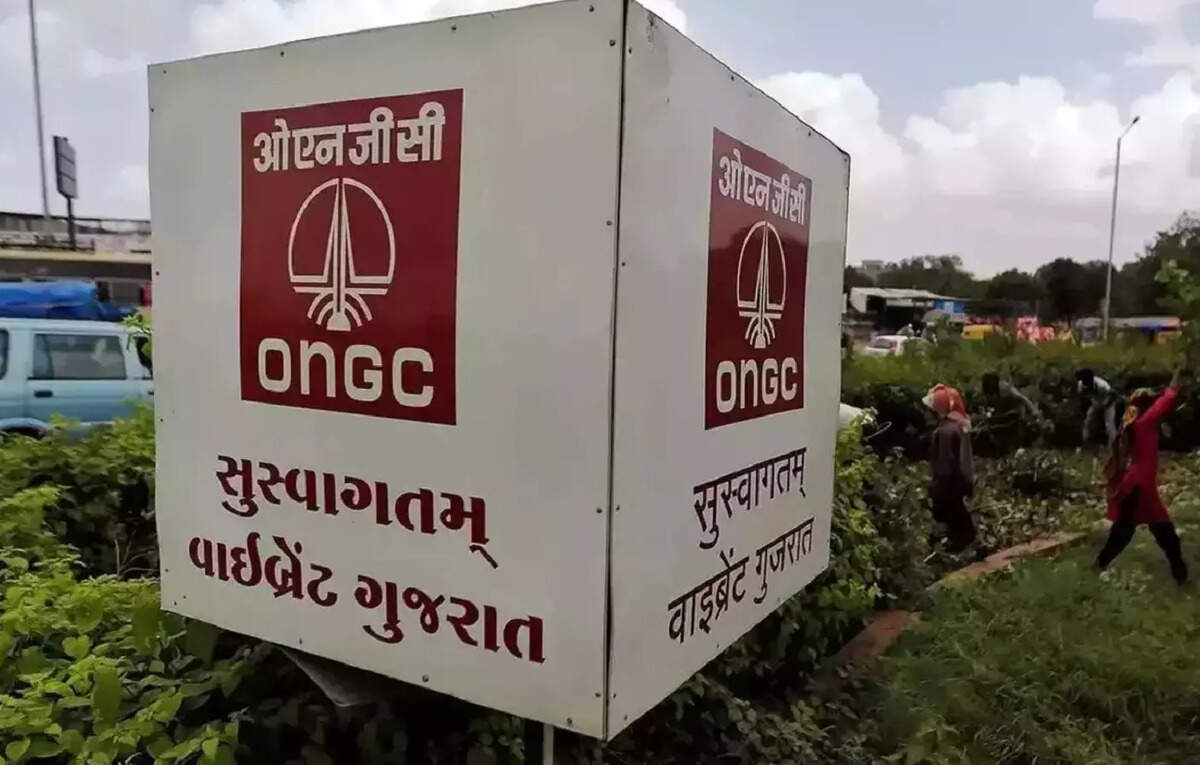
India’s leading oil and gas producer, ONGC, finds itself at a critical juncture in its Assam operations, publicly acknowledging financial losses stemming from a confluence of low production and an elevated employee headcount. This challenge is further complicated by ongoing staff protests, primarily over discontinued overtime payments, painting a vivid picture of the operational complexities inherent in managing a national energy giant. For investors, this localized friction in a key producing region raises questions about long-term asset profitability and the delicate balance between social mandates and commercial viability, especially within an oil market currently demonstrating significant price volatility and an uncertain forward trajectory. Understanding these micro-level pressures is crucial for evaluating the broader investment thesis for ONGC and other national oil companies navigating similar terrains.
Assam Asset: A Microcosm of Operational Headwinds
ONGC’s candid admission of financial losses in its Assam Asset underscores a fundamental challenge many legacy oil and gas fields face: maintaining profitability in mature basins. The company attributes these losses directly to a combination of persistently low production volumes and an unoptimized employee structure. This situation has been exacerbated by recent employee unrest, with members of the ONGC Purbanchal Employees’ Association (OPEA) staging protests over the discontinuation of certain overtime payments, which management deems “not admissible.” Furthermore, concerns regarding medical facilities, though countered by ONGC as a shift from direct credit to reimbursement aimed at curbing misuse, highlight the deep-seated operational and welfare issues that can erode efficiency. These internal pressures persist even as the global energy market offers a generally supportive price environment. As of today, Brent crude trades at $96.08 per barrel, marking a 1.36% gain, while WTI sits at $92.70, up 1.56%. However, this current strength follows a significant dip, with Brent having trended down by approximately $9, or 8.8%, over the past 14 days, from $102.22 to $93.22. This backdrop of fluctuating but generally elevated prices means that for an asset to still operate at a loss, the underlying cost structure and production efficiency issues must be substantial, making the Assam situation a point of concern for investors closely monitoring ONGC’s operational integrity.
Balancing Social Mandates with Commercial Imperatives
The operational difficulties in Assam also bring into sharp focus the unique role of national oil companies like ONGC, which often carry a dual mandate: contributing to national energy security and economic development, alongside generating commercial returns. ONGC has vociferously defended its presence and commitment to Assam, citing extensive local hiring initiatives and significant investment in Corporate Social Responsibility (CSR) projects. Flagship initiatives like the Siu-Ka-Pha Hospital at Sivasagar are showcased as proof of deep engagement in local education, healthcare, infrastructure, and skill development. While these investments undeniably contribute to the socio-economic fabric of the region, they also introduce a layer of complexity to the cost structure that purely commercial entities might avoid. For investors, the challenge lies in discerning how these social overheads impact the core profitability metrics and shareholder value. The company’s assertion that current changes, such as the shift in medical facility payment modes, are aimed at long-term sustainability suggests an internal recognition of the need to streamline operations without entirely abandoning its social contract. This balancing act is a constant theme for NOCs, and the Assam situation serves as a tangible example of the friction that can arise when commercial imperatives clash with established local expectations and welfare provisions.
Forward Outlook: Operational Efficiency Meets Market Dynamics
Looking ahead, the resolution of ONGC’s challenges in Assam will be crucial for its overall performance, particularly within the context of an evolving global oil market. While the immediate focus remains on internal dialogues and operational adjustments, the broader market environment will inevitably shape the financial impact of these efforts. Investors are keenly watching upcoming events that could influence crude price trajectories. The OPEC+ Joint Ministerial Monitoring Committee (JMMC) meeting on April 18, followed by the Full Ministerial meeting on April 20, are critical dates on the calendar. Decisions from these gatherings regarding production quotas could significantly impact global supply, thereby affecting benchmark prices and ONGC’s top-line revenue potential. Furthermore, the weekly API and EIA crude inventory reports, scheduled for April 21, 22, 28, and 29, will provide fresh insights into demand-supply dynamics in key consuming regions. If global prices remain robust, or even ascend, it could provide some buffer for ONGC to absorb the high operational costs in Assam. Conversely, any significant downturn would amplify the urgency for deeper operational efficiencies. The Baker Hughes Rig Count reports on April 17 and 24 will also offer a pulse on drilling activity, signaling future supply trends. ONGC’s ability to drive profitability in its Assam assets will thus depend not only on internal reforms but also on favorable external market conditions, making these upcoming dates highly relevant for the company’s financial outlook.
Addressing Investor Sentiment: Price Forecasts and Risk Mitigation
Our proprietary reader intent data reveals a consistent theme among investors this week: a strong focus on crude price forecasts, particularly a base-case Brent price for the next quarter and the consensus 2026 Brent forecast. While current market momentum sees Brent at $96.08 and WTI at $92.70, the recent 14-day trend showing Brent dropping $9, or 8.8%, from over $102, highlights significant underlying volatility and uncertainty. For the near term, the upcoming OPEC+ meetings are pivotal. Should the group maintain or even tighten supply discipline, a floor around the current price levels, with potential for upside toward the upper $90s, might be a reasonable base-case for Q2, absent major demand shocks. However, the broader 2026 consensus forecast remains more varied, with geopolitical tensions, global economic growth, and the pace of energy transition all acting as significant variables. For ONGC, specifically, the micro-level operational risks in Assam inject another layer of complexity into this macro price outlook. Even if crude prices remain elevated, persistent losses due to inefficiencies and labor disputes can cap the company’s upside potential and erode investor confidence. Conversely, a substantial drop in crude prices would exacerbate these existing challenges, placing further pressure on asset profitability. Investors are therefore asking not just about where prices are headed, but how companies like ONGC are actively mitigating operational risks and ensuring asset-level profitability to capitalize on any favorable market conditions. The ongoing dialogue and commitment to sustainable operations in Assam, while vital, must translate into tangible financial improvements to reassure the market.


